The Evolution of Precision Manufacturing in Tijuana: The 3kW Fiber Laser
Tijuana has established itself as a cornerstone of North American manufacturing, serving as a vital hub for the aerospace, medical device, and electronics industries. As the “maquiladora” sector continues to evolve, the demand for high-precision components—specifically those made from non-ferrous metals like brass—has surged. To meet this demand, the 3kW fiber laser cutting machine has emerged as the industrial standard for shops requiring a balance of speed, precision, and cost-effectiveness. In the context of Tijuana’s competitive landscape, adopting 3kW fiber technology is no longer an option but a necessity for facilities aiming to maintain global quality standards.
The transition from traditional CO2 lasers to fiber laser technology represents a paradigm shift in metal fabrication. While CO2 lasers struggled with the high reflectivity of yellow metals, fiber lasers operate at a wavelength of approximately 1.06 microns. This wavelength is absorbed much more efficiently by brass, allowing for cleaner cuts, higher speeds, and significantly lower operational costs. For a manufacturer in Tijuana, where energy costs and throughput are critical KPIs, the 3kW fiber laser cutting machine provides the ideal power density to tackle a wide range of material thicknesses typical in regional supply chains.

Understanding the 3kW Power Threshold for Brass Applications
In the realm of laser cutting, power is the primary determinant of both maximum material thickness and processing speed. A 3000W (3kW) fiber source is widely considered the “sweet spot” for brass fabrication. Brass, an alloy of copper and zinc, possesses high thermal conductivity and high reflectivity. These two characteristics make it notoriously difficult to cut with lower-wattage systems. A 1kW or 2kW machine may struggle to initiate the pierce or maintain a stable kerf in thicker brass plates, often leading to “back-reflection” which can damage the laser source.
With 3kW of power, the energy density at the focal point is sufficient to instantaneously vaporize the brass, creating a stable keyhole for the laser cutting process. This power level allows for the efficient processing of brass sheets ranging from 1mm up to 8mm or even 10mm, depending on the machine’s optical configuration and the assist gas used. For the Tijuana market, which often produces intricate electrical connectors and decorative architectural hardware, the 3kW capacity ensures that the edge quality remains burr-free, reducing the need for secondary finishing processes.
The Physics of Laser Cutting High-Reflectivity Metals
The primary challenge when laser cutting brass is its inherent ability to reflect light. In the early days of laser technology, brass was often avoided because the reflected beam could travel back through the delivery fiber and destroy the laser diodes. Modern 3kW fiber lasers are equipped with advanced back-reflection protection systems. These systems utilize optical isolators and sensors that can detect reflected light and shut down the beam in microseconds, or more commonly, they are designed to handle the reflected energy safely.
Furthermore, the 3kW fiber laser utilizes a high-quality beam with a low M2 factor. This means the beam can be focused into an incredibly small spot size. For brass, a smaller spot size increases the power density (watts per square millimeter), which is crucial for overcoming the material’s thermal conductivity. Because brass dissipates heat rapidly away from the cut zone, the laser must deliver energy faster than the material can conduct it away. The 3kW threshold provides the necessary intensity to stay ahead of this thermal dissipation, ensuring a narrow heat-affected zone (HAZ) and preserving the structural integrity of the part.
Operational Excellence: Gas Selection and Nozzle Dynamics
In Tijuana’s industrial environment, operational efficiency is tied to the choice of assist gases. When laser cutting brass with a 3kW system, the two primary choices are Oxygen (O2) and Nitrogen (N2). Oxygen acts as a catalyst, creating an exothermic reaction that adds heat to the cutting process. This allows for cutting thicker brass at lower power but results in an oxidized edge that may require cleaning before plating or welding.
Nitrogen, on the other hand, is the preferred choice for high-precision brass components. Nitrogen acts as a shielding gas, blowing away the molten metal before it can react with atmospheric oxygen. This results in a “bright” or “clean” cut edge. Given that many brass parts manufactured in Tijuana are destined for the electronics or medical sectors, the oxide-free edge provided by N2 cutting is a significant competitive advantage. A 3kW machine provides the necessary power to maintain high speeds while using Nitrogen, which typically requires more laser energy than Oxygen-assisted cutting.
Tijuana’s Supply Chain and the Role of 3kW Fiber Lasers
The proximity of Tijuana to the United States creates a unique “just-in-time” manufacturing environment. Local shops often serve as Tier 2 or Tier 3 suppliers to OEMs in California and Arizona. In this context, the reliability and speed of the laser cutting process are paramount. A 3kW fiber laser cutting machine offers a significant throughput advantage over mechanical CNC milling or waterjet cutting, especially for thin-to-medium gauge brass sheets.
Moreover, the integration of CNC software with fiber laser systems allows Tijuana-based engineers to move from CAD design to finished part in minutes. This agility is vital for prototyping and short-run production, which are increasingly common in the region’s medical device cluster. The 3kW system’s ability to handle intricate geometries with tight tolerances (often within +/- 0.05mm) ensures that local manufacturers can meet the stringent specifications required by international clients.
Maintenance and Longevity in an Industrial Setting
One of the most compelling reasons for Tijuana factories to invest in 3kW fiber technology is the low maintenance requirement compared to older laser types. Fiber lasers are “solid-state,” meaning they have no moving parts or mirrors in the light-generating source. The laser is delivered via a flexible fiber optic cable directly to the cutting head. This eliminates the need for beam path alignments and bellows maintenance, which were frequent points of failure in CO2 systems.
However, cutting brass does require specific maintenance protocols. Because brass contains zinc, the cutting process can generate fine dust and fumes. High-quality filtration and dust extraction systems are essential for protecting the machine’s linear guides and optical components. Furthermore, the protective window (cover glass) in the cutting head must be inspected daily. Even a tiny speck of brass dust on the lens can absorb the 3kW energy, leading to thermal cracking. For shops in Tijuana, establishing a rigorous preventative maintenance schedule is the key to achieving a machine lifespan of 100,000+ hours.
Economic Impact and ROI for Local Manufacturers
The capital investment in a 3kW fiber laser cutting machine is significant, but the Return on Investment (ROI) in the Tijuana market is often realized within 12 to 24 months. This rapid ROI is driven by three factors: energy efficiency, labor savings, and material utilization. Fiber lasers are roughly 3 to 4 times more energy-efficient than CO2 lasers, a critical factor given the industrial electricity rates in Mexico.
Furthermore, the high speed of the 3kW laser cutting process means that a single machine can often replace two or three older units, reducing the required floor space and the number of operators. Advanced nesting software also plays a role, allowing manufacturers to pack parts tightly on a brass sheet, minimizing waste. Given the high cost of brass as a raw material, even a 5% improvement in material utilization can result in thousands of dollars in monthly savings for a high-volume shop.
Technical Specifications to Consider
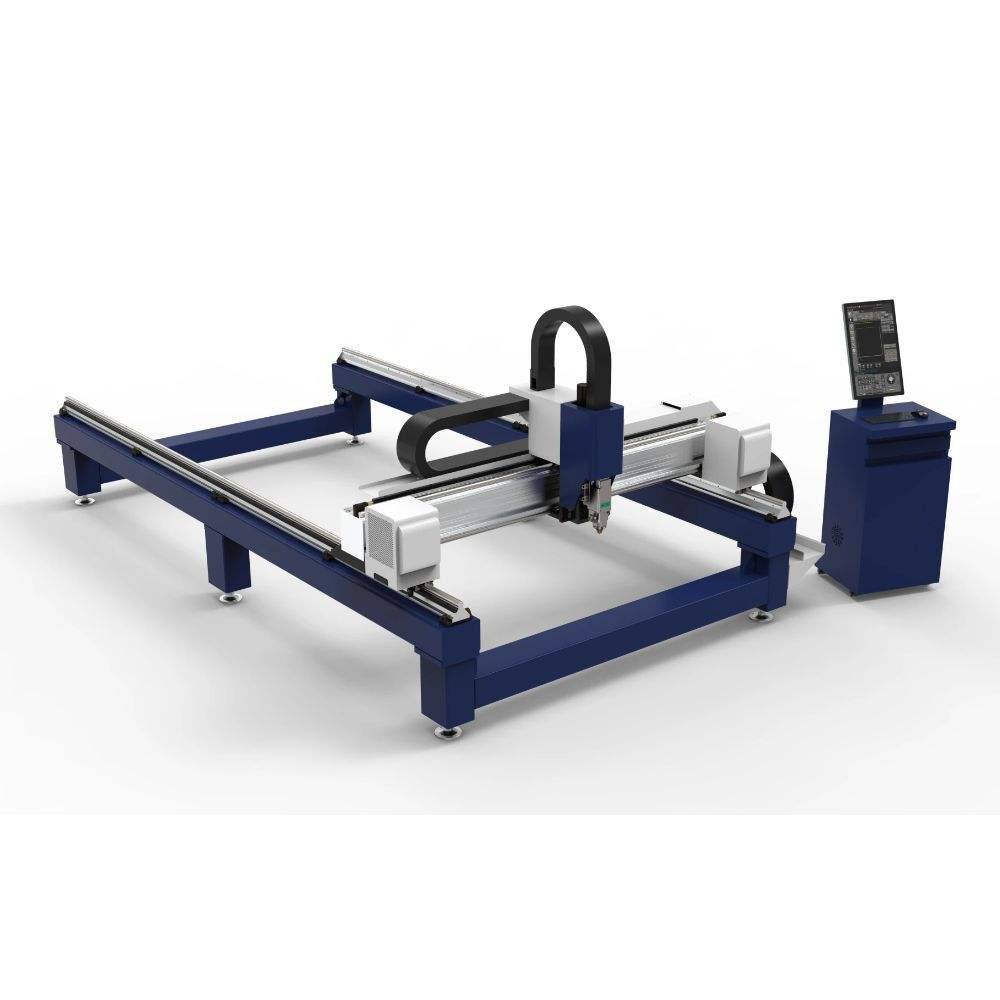
When selecting a 3kW fiber laser cutting machine for brass applications in Tijuana, several technical specifications must be prioritized. First is the choice of the laser source (e.g., IPG, nLIGHT, or Raycus). For high-reflectivity materials like brass, sources with built-in back-reflection protection are mandatory. Second is the cutting head; an autofocus head is highly recommended for 3kW systems, as it can automatically adjust the focal point during the piercing and cutting phases, ensuring consistent quality across the entire sheet.
The motion system is equally important. To capitalize on the speed of a 3kW laser, the machine should be equipped with high-precision rack-and-pinion systems or linear motors capable of high acceleration (1.0G to 2.0G). In an environment like Tijuana, where humidity and temperature can fluctuate, a robust gantry design and a high-quality water chiller are necessary to maintain the thermal stability of the laser source and the cutting head.
Conclusion: The Future of Metal Fabrication in Tijuana
The 3kW fiber laser cutting machine represents the pinnacle of versatility for the modern fabrication shop. For the industrial sector in Tijuana, it provides the bridge between high-volume production and high-precision engineering. By mastering the nuances of laser cutting brass—from managing reflectivity to optimizing gas flow—local manufacturers can position themselves as indispensable partners in the global supply chain.
As technology continues to advance, we may see higher power levels becoming more common, but the 3kW system remains the most balanced investment for those focused on brass and other non-ferrous metals. It offers the perfect combination of power, precision, and operational economy, ensuring that Tijuana remains at the forefront of the international manufacturing stage for decades to come.