Comprehensive Engineering Guide to 3kW Fiber laser cutting for Brass in Leon
The industrial landscape in Leon has undergone a significant transformation with the integration of high-precision thermal processing technologies. Among these, the 3kW fiber laser cutting machine stands out as a pivotal tool for manufacturers dealing with non-ferrous metals, particularly brass. As a copper-zinc alloy, brass presents unique challenges due to its high thermal conductivity and optical reflectivity. However, the 1.06-micron wavelength of fiber laser technology provides an efficient solution that was previously unattainable with traditional CO2 systems.
In the context of Leon’s diverse manufacturing sector—ranging from automotive components to decorative architectural hardware—the 3kW power rating represents the “sweet spot” for efficiency. It offers enough power density to overcome the initial reflectivity of brass while maintaining a narrow kerf width and high edge quality. This guide explores the technical nuances, operational parameters, and economic advantages of utilizing a 3kW fiber laser cutting system for brass fabrication.

The Physics of Fiber Laser Interaction with Brass
The primary hurdle in brass laser cutting is the material’s inherent reflectivity. In its solid state, brass reflects a significant portion of infrared light. For older CO2 lasers (10.6-micron wavelength), this often resulted in beam back-reflection, which could catastrophically damage the resonator. Fiber lasers operate at a much shorter wavelength, which is absorbed more readily by yellow metals. A 3kW output provides the necessary irradiance—measured in watts per square centimeter—to instantaneously transition the brass from a solid to a molten state, thereby drastically reducing its reflectivity and allowing the beam to “couple” with the material.
Once the beam has coupled, the high thermal conductivity of brass becomes the next engineering challenge. Heat dissipates rapidly away from the cut zone, which can lead to dross formation on the underside of the workpiece if the cutting speed is not optimized. The 3kW threshold allows for high-speed processing, ensuring that the heat-affected zone (HAZ) remains localized. This results in cleaner edges and minimal metallurgical alteration of the alloy.
Technical Specifications and Machine Configuration
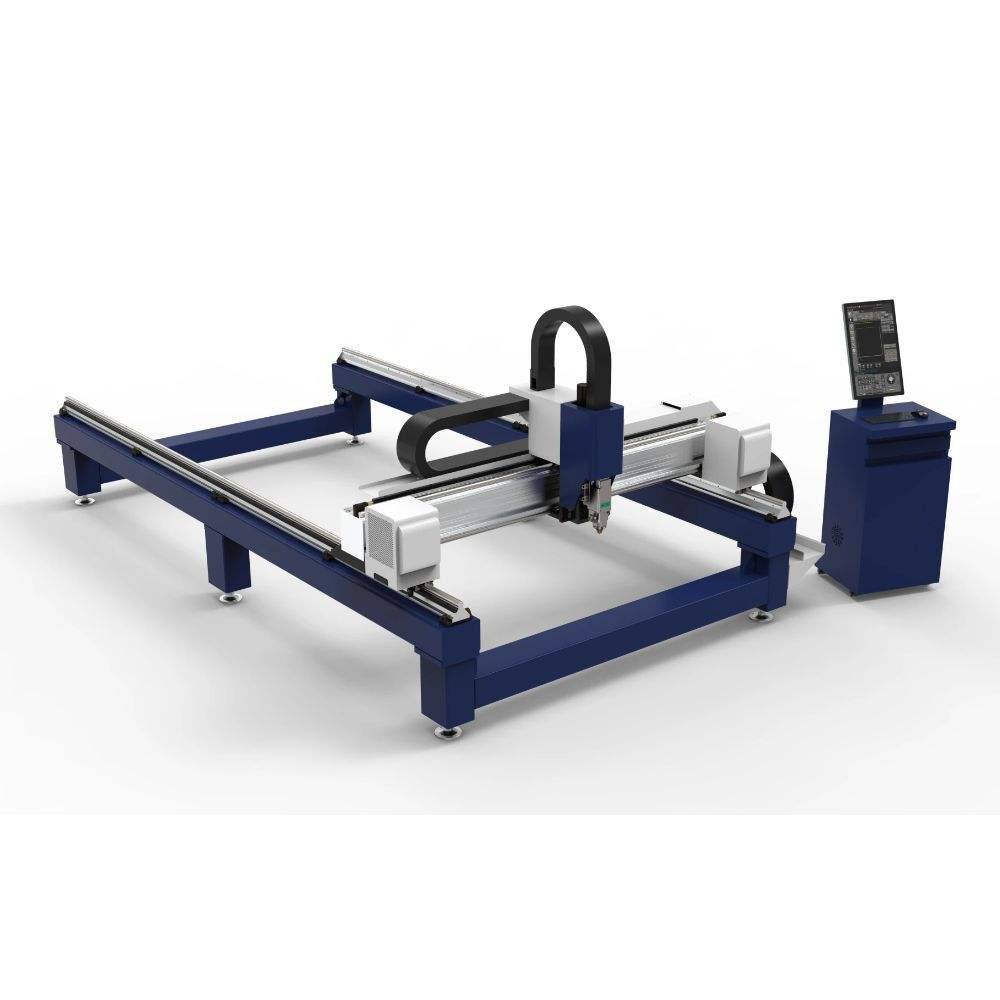
For a 3kW system operating in Leon’s industrial environments, the machine configuration must be robust. A heavy-duty gantry system and a reinforced frame are essential to handle the high accelerations required for thin-to-medium gauge brass. Since brass is often used for aesthetic or precision electrical components, the motion control system must offer micron-level positioning accuracy.
Key components of a 3kW fiber laser cutting machine include:
- Laser Source: A high-stability fiber oscillator (such as IPG, Raycus, or nLIGHT) with built-in back-reflection protection.
- Cutting Head: An autofocus head equipped with specialized optics to handle the specific beam profile required for non-ferrous metals.
- Cooling System: A dual-circuit industrial chiller to maintain the temperature of both the laser source and the cutting head, ensuring consistent beam quality during long production runs.
- Gas Control: High-pressure proportional valves to manage assist gases, which are critical for edge quality in brass.
Optimizing Cutting Parameters for Brass Alloys
When laser cutting brass, the choice of assist gas and the specific parameters used are the deciding factors in the quality of the finished part. For most applications in Leon, nitrogen is the preferred assist gas. Nitrogen acts as a shielding agent, preventing oxidation and leaving a bright, clean edge that often requires no secondary finishing. This is particularly important for the electrical industry, where oxide layers can interfere with conductivity.
For a 3kW machine, the typical thickness capacity for brass ranges from 0.5mm to 8mm. While thicker sections up to 10mm are possible, the 1mm to 6mm range is where the 3kW source achieves maximum efficiency. For material under 3mm, cutting speeds can exceed 15 meters per minute. As the thickness increases, the focal point must be adjusted deeper into the material, and the nozzle diameter increased to ensure adequate melt expulsion.
Strategic Advantages for the Leon Manufacturing Hub
Leon has established itself as a center for high-value manufacturing. The adoption of 3kW fiber laser cutting technology provides local shops with a competitive edge in several ways. Firstly, the ability to process brass allows shops to diversify their service offerings beyond standard carbon and stainless steel. This is vital for serving the regional automotive supply chain, which utilizes brass for connectors, sensors, and bushings.
Furthermore, the high precision of laser cutting eliminates the need for expensive stamping dies for low-to-medium volume production runs. In a market where rapid prototyping and “Just-In-Time” (JIT) delivery are standard, the flexibility of a fiber laser is indispensable. A 3kW machine can switch from cutting 1mm decorative brass inlays to 5mm industrial brass plates with only a software profile change, maximizing machine uptime.
Maintenance and Longevity in Non-Ferrous Applications
Processing brass generates a specific type of fine dust and metallic vapor. To ensure the longevity of a 3kW laser cutting system, a rigorous maintenance schedule is required. The filtration system must be rated for the fine particulates produced by brass. Failure to manage these fumes can lead to contamination of the external optics, resulting in “thermal lensing” and a degradation of cut quality.
Engineers must also monitor the condition of the copper nozzles. While brass is a copper alloy, the friction and heat of high-pressure nitrogen cutting can wear down nozzles faster than when cutting steel. Regular calibration of the height sensor is also necessary, as the reflective nature of the brass surface can sometimes interfere with capacitive sensing if the material is not properly grounded or if the surface finish is highly polished.
Safety Protocols for High-Power Fiber Lasers
Safety is paramount when operating a 3kW fiber laser. The 1070nm wavelength is invisible to the human eye and can cause permanent retinal damage even from a reflected beam. In Leon’s workshops, it is mandatory that these machines are housed in fully enclosed Class 4 laser safety cabins. These enclosures feature specialized laser-rated glass windows that allow operators to monitor the process safely.
Additionally, because brass contains zinc, the cutting process can release zinc oxide fumes. High-volume extraction and filtration systems are not just a maintenance requirement but a health and safety necessity. Proper ventilation ensures that the workspace remains within air quality standards, protecting the operators from “metal fume fever” and other respiratory issues associated with non-ferrous metal processing.
Economic Impact and ROI Analysis
From an investment perspective, a 3kW fiber laser cutting machine offers an impressive Return on Investment (ROI) for Leon-based enterprises. While the initial capital expenditure is significant, the operational costs are lower compared to CO2 lasers or waterjet cutting. Fiber lasers boast electrical efficiency of over 30%, compared to the 10% seen in CO2 systems. Furthermore, the absence of laser gas (He, CO2, N2 for the resonator) and the lack of moving parts in the light source (no turbos or blowers) significantly reduce maintenance costs.
In the brass market, where material costs are high, the narrow kerf of the laser cutting process allows for tighter nesting of parts. This reduces scrap rates, which is a critical factor in maintaining profitability when working with expensive alloys. For a typical fabrication shop in Leon, the transition to 3kW fiber technology can result in a 40-60% increase in throughput for brass components.
Conclusion: The Future of Metal Fabrication in Leon
The 3kW fiber laser cutting machine is more than just a tool; it is a catalyst for industrial growth in Leon. By mastering the complexities of brass processing, local manufacturers can elevate their production standards to meet global demands. As fiber laser technology continues to evolve, with improvements in beam shaping and intelligent sensor feedback, the capabilities of the 3kW platform will only expand.
For engineers and business owners in Leon, investing in this technology means embracing precision, efficiency, and versatility. Whether for intricate decorative work or high-tolerance industrial components, the fiber laser remains the gold standard for modern brass fabrication, ensuring that Leon remains at the forefront of the manufacturing sector for years to come.