
Introduction to 3kW Fiber laser cutting Technology
The manufacturing landscape in Leon has seen a significant shift toward high-precision automation, with the 3kW fiber laser cutting machine emerging as a cornerstone for local fabrication shops. As industries ranging from automotive components to architectural metalwork demand higher throughput and tighter tolerances, the 3kW power bracket has become the “sweet spot” for processing non-ferrous metals. Specifically, when dealing with aluminum alloy, a 3kW system offers the ideal balance of electrical efficiency, cutting speed, and edge quality.
Fiber laser technology utilizes an optical fiber doped with rare-earth elements as the gain medium. Unlike traditional CO2 lasers, the fiber laser operates at a wavelength of approximately 1.06 microns. This shorter wavelength is more readily absorbed by reflective metals like aluminum, making the 3kW fiber laser cutting process significantly more efficient than its gas-based predecessors. For businesses in Leon looking to upgrade their production lines, understanding the nuances of this technology is essential for maintaining a competitive edge in the regional market.
The Industrial Significance of Aluminum Alloy in Leon
Leon has established itself as a critical hub for industrial excellence, particularly in sectors that prioritize lightweight and corrosion-resistant materials. Aluminum alloy is prized for its high strength-to-weight ratio, making it indispensable for the automotive and aerospace sectors prevalent in the region. However, aluminum presents unique challenges during the laser cutting process due to its high thermal conductivity and high reflectivity.
A 3kW fiber laser cutting machine provides the necessary power density to overcome the initial reflectivity of the aluminum surface. Once the beam pierces the material, the 3kW intensity ensures a stable melt pool, allowing for high-speed traversal. In Leon’s competitive manufacturing environment, the ability to process aluminum alloys like 5052, 6061, and 7075 with minimal dross and high precision is a major operational advantage.

Overcoming Material Reflectivity
One of the primary engineering hurdles when laser cutting aluminum is its tendency to reflect the laser beam back into the optics. In the early days of laser technology, this “back-reflection” could cause catastrophic damage to the laser source. Modern 3kW fiber lasers are equipped with advanced back-reflection protection systems and isolators. These components monitor the return light and can shut down the system in milliseconds if a dangerous level of reflection is detected.
In Leon’s fabrication facilities, operators are trained to use specific piercing techniques to mitigate this risk. By using a “ramped” power approach or specialized coatings on the aluminum sheet, the 3kW fiber laser cutting machine can safely initiate the cut, ensuring the longevity of the machine’s internal components while maintaining a high-quality finish on the workpiece.
Technical Specifications of the 3kW Fiber Laser System
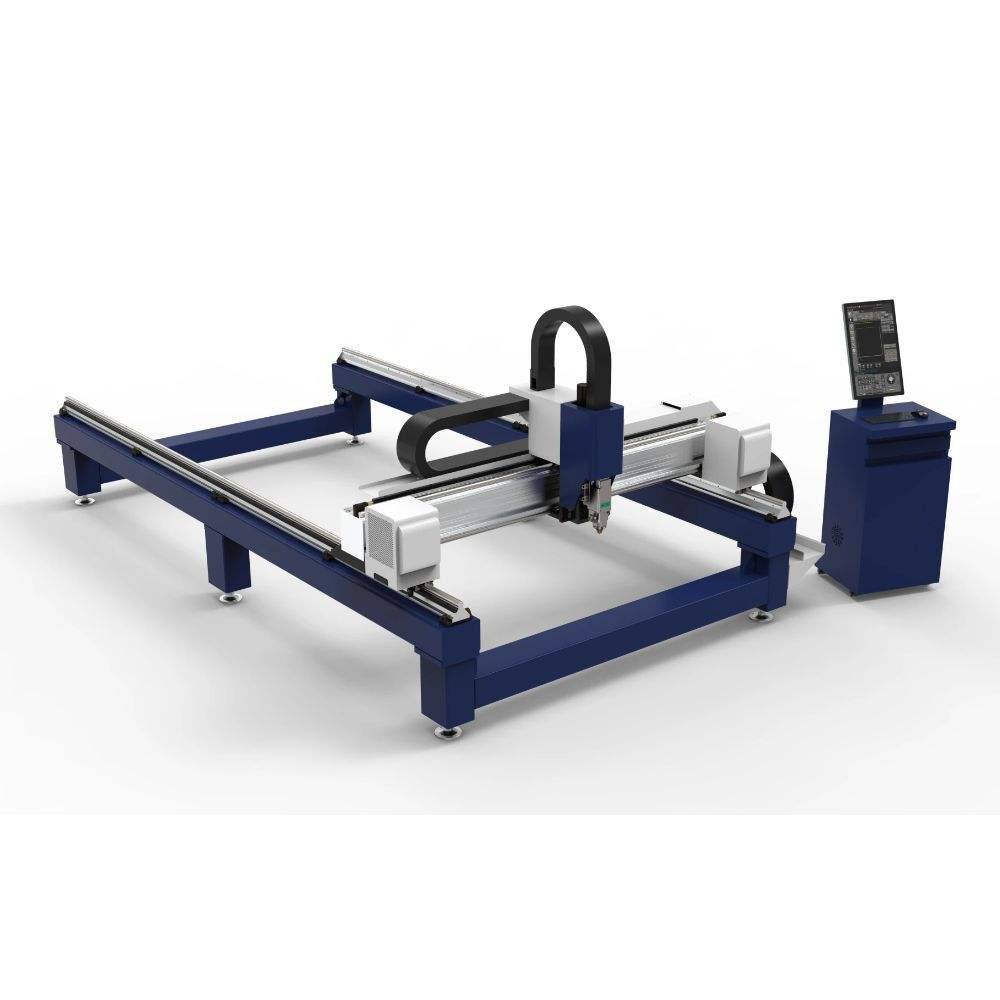
A standard 3kW fiber laser cutting machine is engineered for versatility. At this power level, the machine can typically handle aluminum alloy thicknesses up to 10mm or 12mm with high precision, and even thicker for non-aesthetic structural parts. The system consists of the laser source, a cutting head with autofocus capabilities, a CNC controller, and a robust gantry system designed for high acceleration.
The motion system is particularly important for aluminum. Because aluminum is a “soft” metal with high thermal conductivity, the laser must move quickly to prevent excessive heat-affected zones (HAZ). A 3kW system in a Leon-based factory usually features a rack-and-pinion drive system capable of accelerations exceeding 1.2G, ensuring that the laser cutting path remains precise even at high velocities.
Auxiliary Gas Selection for Aluminum Alloys
The choice of auxiliary gas is a critical factor in the success of 3kW laser cutting. For aluminum, the two primary choices are Nitrogen and Oxygen, though Compressed Air is increasingly used for cost-sensitive projects. Nitrogen is the preferred choice for high-quality finishes in Leon’s precision shops. It acts as a shielding gas, preventing the aluminum from oxidizing during the melt process, which results in a clean, silver-colored edge that is ready for welding or painting without further treatment.
Oxygen, while providing an exothermic reaction that can increase cutting speeds in carbon steel, is rarely used for aluminum because it creates a heavy oxide layer on the cut edge. For many industrial applications in Leon, high-pressure Nitrogen (often exceeding 15-20 bar) is utilized to “blow” the molten aluminum out of the kerf, ensuring a dross-free bottom edge.
Optimizing Cutting Parameters for 3kW Power
To achieve the best results with a 3kW fiber laser cutting machine, engineers in Leon must fine-tune several variables. These include the focal position, nozzle diameter, and cutting speed. For aluminum alloy, the focal point is typically set “negative,” meaning the beam focuses inside or toward the bottom of the material. This helps create a wider kerf at the bottom, making it easier for the auxiliary gas to evacuate the molten metal.
Nozzle selection also plays a vital role. A double-layer nozzle is often used when cutting with Oxygen, but for high-pressure Nitrogen cutting of aluminum, a large-diameter single-layer nozzle is standard. This allows for a higher volume of gas flow, which is necessary to overcome the surface tension of molten aluminum. In the context of Leon’s industrial standards, achieving a surface roughness (Ra) of less than 12.5 microns is the benchmark for a well-optimized 3kW laser cutting process.
Speed vs. Quality Trade-offs
In a high-volume production environment like Leon, the temptation is always to maximize speed. However, with aluminum alloy, exceeding the optimal speed for a 3kW laser can lead to “striation” patterns on the cut edge or the formation of “beards” (dross) at the bottom. Conversely, moving too slowly allows heat to build up, which can cause the material to warp or the cut to widen unnecessarily. Finding the “sweet spot” requires a deep understanding of the specific alloy’s metallurgical properties and the 3kW laser’s power curve.
Maintenance and Longevity in Leon’s Industrial Environment
The environment in Leon can be demanding, with dust and temperature fluctuations affecting machine performance. For a 3kW fiber laser cutting machine, the most critical maintenance task is protecting the optical path. The protective window (cover glass) in the cutting head must be inspected daily. Even a microscopic speck of aluminum dust on the lens can absorb the 3kW of energy, leading to thermal lensing or the destruction of the lens.
Furthermore, the water cooling system (chiller) must be strictly maintained. A 3kW laser generates significant heat within the laser source and the cutting head. In Leon, where ambient temperatures can rise significantly, the chiller must be capable of maintaining the deionized water at a precise temperature (usually around 22-25°C) to prevent frequency shifts in the laser beam and ensure consistent cutting performance across long shifts.
Software Integration and Nesting
Modern 3kW systems are only as good as the software that drives them. In Leon, fabricators use advanced CAD/CAM nesting software to maximize material utilization. Since aluminum alloy can be expensive, reducing scrap through intelligent nesting is vital for profitability. These software packages also include “lead-in” and “lead-out” strategies specifically designed for aluminum, preventing the “blow-out” that can occur at the start or end of a laser cutting path.
The Future of Laser Cutting in Leon
As the industry in Leon continues to evolve, the integration of Industry 4.0 features into 3kW fiber laser cutting machines is becoming standard. Real-time monitoring of gas consumption, power usage, and cutting head health allows for predictive maintenance, reducing unplanned downtime. For local manufacturers, the 3kW fiber laser is not just a tool but a data-driven asset that enhances the entire production ecosystem.
The transition toward more sustainable manufacturing also favors the 3kW fiber laser. Compared to traditional mechanical punching or older CO2 lasers, the fiber laser cutting process is significantly more energy-efficient and produces less waste. As environmental regulations tighten in the region, the efficiency of the 3kW system provides both economic and compliance benefits.
Conclusion
The 3kW fiber laser cutting machine represents a pivotal technology for the processing of aluminum alloy in Leon. By combining high power density with precision control, it addresses the inherent challenges of cutting reflective and thermally conductive materials. For the engineering and manufacturing sectors in Leon, mastering the parameters of laser cutting—from gas selection to focal optimization—is the key to producing high-quality components that meet global standards. As technology advances, the 3kW fiber laser will remain a fundamental pillar of the region’s industrial infrastructure, driving innovation and efficiency in metal fabrication.
















