
The Evolution of Industrial Laser Cutting in the Monterrey Automotive Hub
The industrial landscape of Monterrey, Nuevo León, has undergone a radical transformation. As the “Sultan of the North” solidifies its position as a global automotive powerhouse—driven by the influx of Tier 1 suppliers and the expansion of electric vehicle (EV) manufacturing—the demand for high-precision metal fabrication has reached an unprecedented peak. In this environment, the 30kW Precision Laser System represents more than just a tool; it is a strategic asset for engineers and factory owners aiming to meet the rigorous standards of the North American automotive market.
For Monterrey-based manufacturers, the transition from traditional 6kW or 12kW systems to 30kW ultra-high-power fiber lasers is dictated by the need for throughput and edge quality. Stainless steel, a staple in automotive exhaust systems, structural reinforcements, and decorative trim, requires a delicate balance of high energy density and thermal management. This guide examines the engineering advantages of 30kW systems, focusing on the structural integrity of tube-welded beds and the specific metallurgical outcomes of high-power stainless steel processing.
Engineering the Foundation: The Tube-Welded Standard Bed
In high-power laser cutting, the mechanical stability of the machine bed is the primary determinant of long-term accuracy. A 30kW laser generates significant dynamic forces during high-speed acceleration and deceleration of the gantry. To counteract these forces, the system utilizes a high-strength tube-welded standard bed.
Unlike lower-tier frames, the tube-welded bed is engineered through a process of heavy-duty carbon steel pipe welding. This structure undergoes a rigorous thermal treatment process, including stress-relief annealing at temperatures exceeding 600°C. This ensures that the internal stresses generated during welding are neutralized, preventing structural deformation over decades of operation.
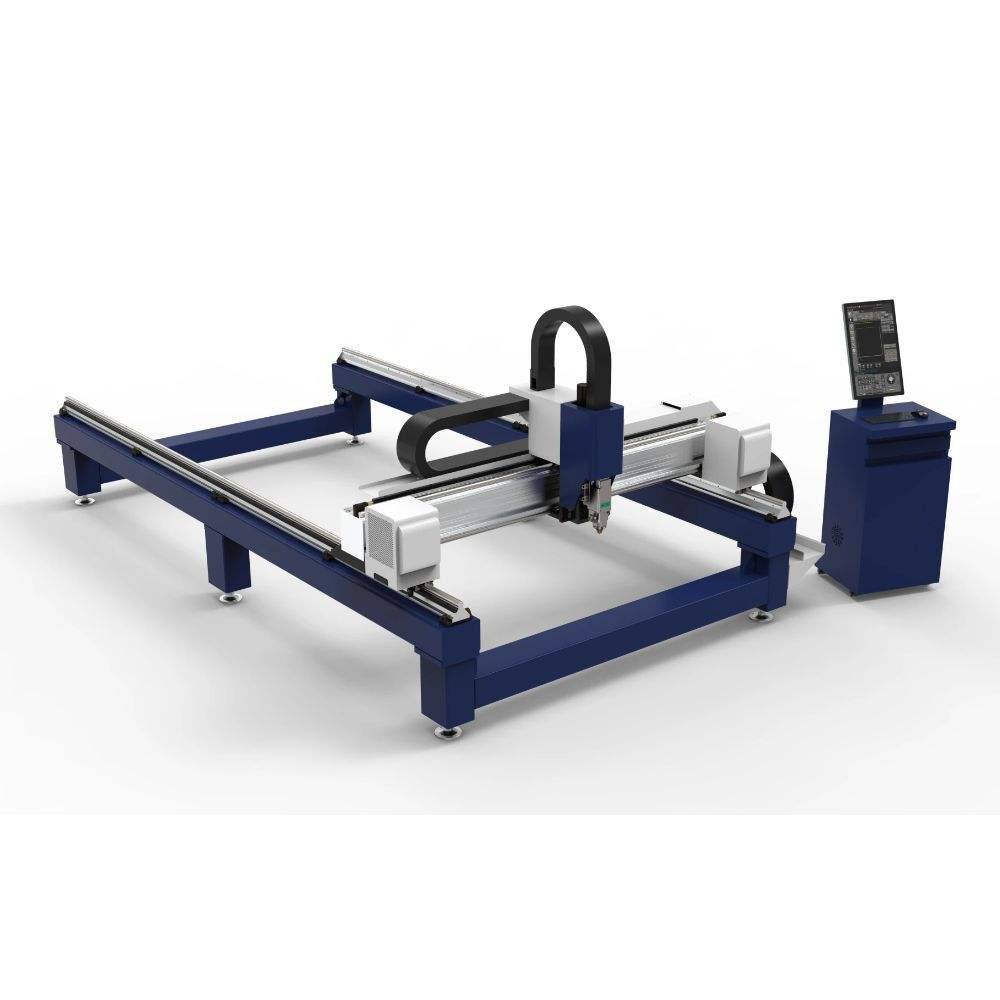
The technical advantage of the tube-welded design lies in its vibration damping characteristics. In Monterrey’s high-output factories, machines often run 24/7. The hollow-core geometry of the welded tubes provides a superior strength-to-weight ratio compared to solid cast iron beds, allowing for higher gantry acceleration (up to 2.0G) without inducing harmonic resonance. For the engineer, this translates to a “kerf” that remains consistent across the entire 3000mm x 1500mm or 6000mm x 2500mm working area, ensuring that every stainless steel component meets the tight tolerances required by automotive assembly lines.
30kW Power Dynamics: Redefining Stainless Steel Processing
The jump to 30kW is a game-changer for stainless steel fabrication. While a 12kW system can cut thick stainless steel, it often does so at the limit of its capacity, resulting in a larger Heat Affected Zone (HAZ) and significant dross (burr) formation. A 30kW system, however, operates with a massive power reserve.
1. High-Speed Nitrogen Cutting: For stainless steel, nitrogen is the preferred assist gas to prevent oxidation. At 30kW, the energy density is sufficient to vaporize the metal almost instantaneously. This allows for “high-speed melting” where the nitrogen gas flushes the molten material out of the cut so quickly that the surrounding metal has no time to absorb excess heat. This results in a bright, mirror-like finish on the cut edge, eliminating the need for secondary grinding or polishing.
2. Thickness Versatility: In the Monterrey market, versatility is key. A 30kW system can effortlessly process 3mm stainless steel at speeds exceeding 60 meters per minute, while still maintaining the capability to cut 50mm to 80mm stainless steel plates for heavy industrial applications or specialized automotive tooling.
3. Precision Kerf Control: With 30kW of power, the beam diameter can be more tightly controlled through advanced collimation. This allows for the cutting of intricate geometries and small holes (where the hole diameter is less than the material thickness), a requirement often found in specialized automotive brackets and sensor mounts.
Data-Driven Performance: Efficiency and ROI for Factory Owners
From a management perspective, the investment in a 30kW system must be justified by the Return on Investment (ROI). In the competitive Monterrey corridor, where labor costs are rising and delivery windows are shrinking, the 30kW laser offers several data-driven advantages:
* Throughput Increase: On average, a 30kW laser is 200% to 300% faster than a 15kW laser when cutting 10mm to 20mm stainless steel. This allows a single machine to do the work of three older units, saving floor space and reducing the headcount required for machine operation.
* Gas Efficiency: While the hourly consumption of nitrogen may be higher, the cost per meter of cut is actually lower. Because the machine moves significantly faster, the total volume of gas required to complete a part is reduced.
* Power Stability: Modern 30kW fiber sources are modular. If one module fails, the system can continue to operate at reduced power, ensuring that production lines in Monterrey do not come to a complete standstill—a critical factor for Just-In-Time (JIT) manufacturing.

Optimizing for the Monterrey Automotive Supply Chain
The Monterrey market is unique due to its proximity to the United States and its adherence to international quality standards such as IATF 16949. To integrate a 30kW laser into this supply chain, engineers must focus on software integration and automation.
Most 30kW systems are now equipped with intelligent nesting software that minimizes material waste—a vital feature when dealing with expensive stainless steel alloys like Grade 304 or 316. Furthermore, the integration of automatic nozzle changers and focus calibration ensures that the machine can switch between different gauges of stainless steel with minimal human intervention, maintaining the high OEE (Overall Equipment Effectiveness) expected by automotive plant managers.
Thermal Management and Long-Term Durability
A common concern with 30kW systems is the heat generated by the laser source and the cutting head. Precision engineering addresses this through a dual-circuit water cooling system. One circuit cools the fiber laser source, while the other focuses on the optical components of the cutting head.
In the warm climate of Monterrey, industrial-grade chillers are essential. The 30kW system utilizes high-capacity refrigeration units that maintain a constant temperature within ±0.5°C. This thermal stability is what allows the machine to maintain micron-level precision during a mid-afternoon shift in July as easily as it does during a cool morning.
The tube-welded bed also plays a role in thermal management. The design includes heat-resistant shields and a high-efficiency dust extraction system. When cutting stainless steel, the fine metallic dust can be hazardous and abrasive; the integrated multi-chamber extraction system ensures that the linear guides and ball screws remain uncontaminated, preserving the machine’s accuracy over time.
Conclusion: The Future of Precision Fabrication
For automotive factory owners and engineers in Monterrey, the adoption of 30kW precision laser technology is no longer optional—it is a requirement for staying competitive in a globalized economy. The combination of a robust, tube-welded standard bed and the raw processing power of a 30kW fiber laser provides a platform that is both stable and incredibly fast.
By focusing on high-precision stainless steel cutting, manufacturers can deliver parts that meet the most stringent aesthetic and structural requirements of the automotive industry. As Monterrey continues to grow as a hub for innovation, the 30kW laser stands as the cornerstone of the modern, automated, and highly efficient fabrication shop. Investing in this technology today ensures the scalability and reliability needed to power the vehicles of tomorrow.
















