
30kW Precision laser cutting Systems for Brass: A Technical Guide for Mexico City’s Industrial Sector
The industrial landscape of Mexico City (CDMX) and its surrounding metropolitan areas, such as the Vallejo industrial zone and the State of Mexico, is undergoing a profound technological transformation. As the demand for high-precision components in the automotive, aerospace, and electrical sectors grows, manufacturers are increasingly turning to ultra-high-power fiber laser systems. Among the most challenging materials to process in these industries is brass—a highly reflective, non-ferrous alloy that requires specialized handling. The introduction of the 30kW precision laser cutting system has redefined the boundaries of what is possible, offering unprecedented speed, edge quality, and thickness capabilities for brass fabrication in high-altitude environments like Mexico City.
The Engineering Challenge of Brass in Laser Processing
Brass, an alloy primarily composed of copper and zinc, presents unique physical properties that historically made it difficult to process with traditional CO2 lasers and even early-generation fiber lasers. Its high thermal conductivity and high reflectivity mean that a significant portion of the laser energy is reflected back toward the source rather than being absorbed by the material. This “back-reflection” can cause catastrophic damage to the laser source if not managed correctly.
A 30kW fiber laser system overcomes these challenges through sheer power density and advanced optical isolation. At 30,000 watts, the energy delivered to the surface of the brass is so intense that it bypasses the reflective phase almost instantaneously, initiating a stable melt pool. This allows for the laser cutting of thick brass plates—up to 50mm or more—with a level of precision that was previously unattainable. For Mexico City’s manufacturers, this means the ability to produce complex electrical busbars, decorative architectural elements, and heavy-duty industrial valves with minimal secondary processing.
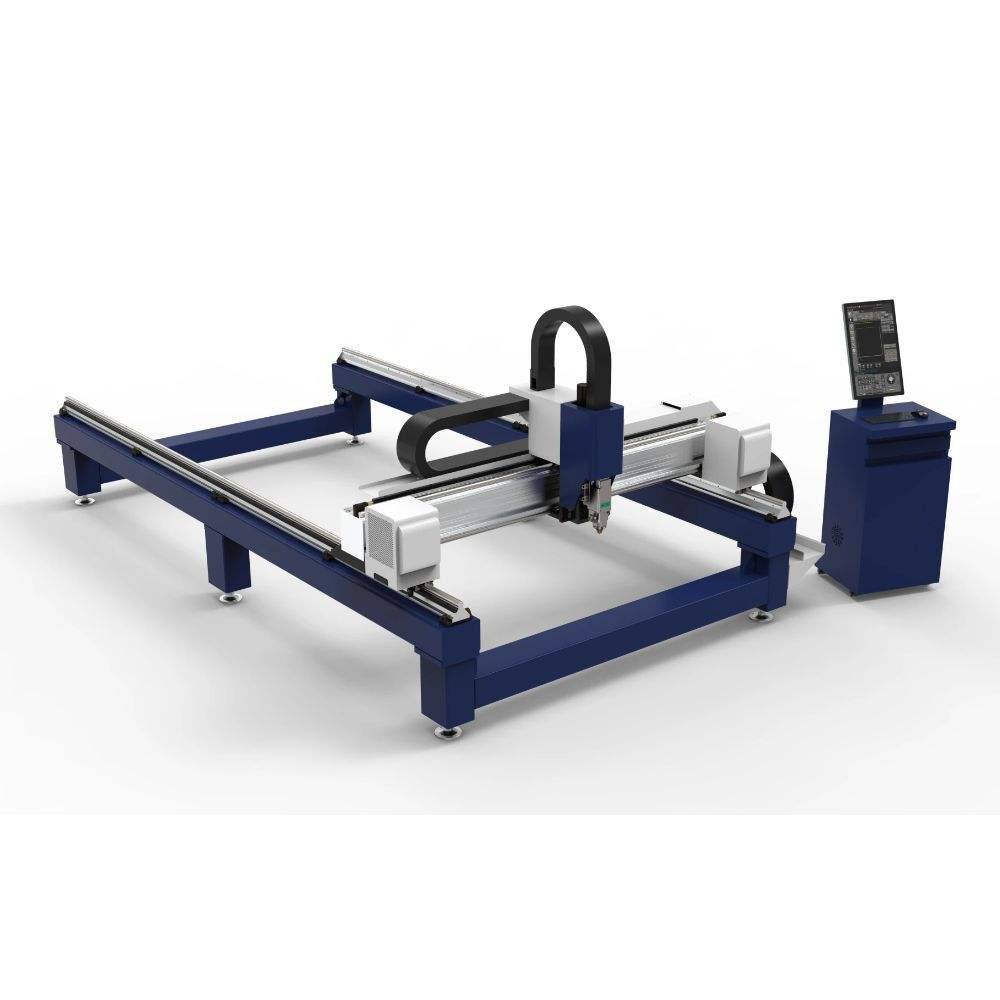
 laser cutting machine” style=”width: 100%; max-width: 800px; height: auto; margin: 20px 0;”>
Operational Considerations at High Altitude: The Mexico City Factor
Operating a 30kW laser cutting system in Mexico City requires specific engineering adjustments due to the city’s elevation of approximately 2,240 meters (7,350 feet) above sea level. The atmospheric pressure at this altitude is roughly 25% lower than at sea level, which directly impacts the physics of the cutting process and the cooling requirements of the machine.
First, the density of the auxiliary gases (Nitrogen or Oxygen) used in laser cutting is lower. To achieve the same mass flow rate required to clear molten brass from the kerf, operators must often increase the delivery pressure or utilize high-flow nozzles designed for low-pressure environments. Second, the cooling efficiency of air-cooled chillers is reduced in thinner air. A 30kW system generates significant heat within the laser source and the cutting head. In Mexico City, it is imperative to spec the system with oversized, high-efficiency water-cooling units that can maintain stable temperatures despite the lower heat-exchange capacity of the ambient air. Failure to account for these variables can lead to beam instability and reduced component lifespan.
Technical Specifications of the 30kW System
A precision 30kW laser cutting system is not merely a high-power version of a standard machine; it is a specialized piece of hardware designed for extreme thermal loads. Key components include:
- The Fiber Laser Source: Utilizing multi-module technology, the 30kW source combines several laser modules into a single delivery fiber. Modern sources include advanced back-reflection protection, which is critical when processing “yellow metals” like brass.
- The Intelligent Cutting Head: At 30kW, the optical elements inside the head are subject to immense pressure. Precision systems utilize autofocus heads with motorized lens positioning and integrated sensors that monitor the temperature of the protective windows in real-time.
- The Motion Control System: To maintain precision at high speeds, the gantry must be driven by high-torque linear motors or precision rack-and-pinion systems capable of accelerations exceeding 2.0G. This ensures that the laser cutting path remains accurate even when navigating tight radii in thick brass plate.
Optimizing Gas Dynamics for Brass
The choice of auxiliary gas is paramount when laser cutting brass with a 30kW system. While oxygen can be used for a faster “burn” in some applications, it often results in a heavily oxidized edge that requires cleaning. Nitrogen is the preferred choice for high-precision brass components. At 30kW, the laser provides enough energy to melt the material entirely, while high-pressure nitrogen acts as a mechanical force to eject the melt, leaving a clean, oxide-free edge.
In the context of Mexico City’s industrial standards, achieving a “burr-free” finish is essential for the electrical industry. Brass components used in high-voltage switchgear must have perfectly smooth edges to prevent electrical arcing. The 30kW system, when tuned with the correct nozzle diameter and gas pressure, produces a kerf so narrow and an edge so smooth that it meets these stringent requirements directly off the machine bed.
Economic Impact and Throughput in the Mexican Market
The transition to 30kW laser cutting represents a significant capital investment for Mexican fabricators, but the Return on Investment (ROI) is driven by a massive increase in throughput. For a 10mm brass plate, a 30kW laser can cut up to 3 to 4 times faster than a 6kW or 10kW system. In a high-volume production environment, this allows a single machine to replace multiple lower-power units, reducing the total footprint required in expensive industrial real estate within Mexico City.
Furthermore, the efficiency of the 30kW system reduces the cost per part. Because the cutting speed is so high, the time the machine spends consuming electricity and auxiliary gas per linear meter of cut is significantly reduced. For Mexican exporters looking to compete in the USMCA (United States-Mexico-Canada Agreement) framework, this efficiency is a critical factor in maintaining a competitive edge against global manufacturers.
Maintenance and Safety Protocols
Operating a 30kW system requires a rigorous maintenance schedule, especially in the dusty or high-traffic environments common in urban industrial hubs. The optical path must be kept under positive pressure with ultra-clean, dry air to prevent contamination. Even a microscopic dust particle on a lens can be vaporized by a 30kW beam, leading to an expensive failure of the cutting head.
Safety is equally critical. The laser cutting of brass produces fine metallic dust and fumes that must be extracted efficiently. High-capacity filtration systems are required to comply with Mexico’s environmental regulations (NOM standards). Additionally, the high-power beam requires a fully enclosed “Class 1” safety housing to protect operators from reflected radiation, which is particularly intense when the laser first pierces thick brass plate.
Future-Proofing Fabrication with Ultra-High Power
As we look toward the future of manufacturing in Mexico City, the role of the 30kW laser cutting system will only expand. We are seeing a trend toward “smart manufacturing” or Industry 4.0, where these machines are integrated into fully automated production lines with robotic loading and unloading. The 30kW system’s ability to handle a wide range of thicknesses and materials—not just brass, but also copper, aluminum, and stainless steel—makes it a versatile cornerstone for any high-end fabrication shop.
For engineers and business owners in Mexico City, adopting 30kW technology is about more than just power; it is about precision, reliability, and the ability to tackle the most demanding materials in the world. By understanding the specific challenges of brass and the environmental variables of the region, manufacturers can harness the full potential of these systems to deliver world-class components to the global market.
Conclusion
The 30kW precision laser cutting system is a transformative tool for the Mexican industrial sector. By mastering the complexities of brass—its reflectivity, its thermal properties, and its behavior at high altitudes—local manufacturers can achieve levels of productivity and quality that were previously impossible. As Mexico City continues to solidify its position as a premier manufacturing hub, the adoption of ultra-high-power fiber lasers will be the catalyst for the next generation of engineering excellence.
















