The Evolution of Bridge Engineering in the Hanseatic Hub
Hamburg, often called the “City of Bridges,” is home to over 2,500 structures—more than London, Amsterdam, and Venice combined. As Germany’s infrastructure ages, the demand for rapid, precise, and sustainable bridge reconstruction has reached a critical tipping point. Traditional methods of steel fabrication, involving mechanical sawing, manual drilling, and plasma cutting, are increasingly viewed as bottlenecks. The introduction of the 30kW Fiber Laser Universal Profile System represents a technological revolution tailored to the specific demands of the Elbe region’s heavy industry.
The 30kW power threshold is significant because it moves laser technology from the realm of sheet metal into the domain of heavy structural steel. In bridge engineering, where I-beams, H-beams, and thick-walled hollow sections are the primary building blocks, the ability to cut through 40mm or 50mm carbon steel with clean edges and minimal heat distortion is a game-changer.
The Mechanics of 30kW Fiber Laser Power
To understand why 30kW is the “sweet spot” for modern bridge engineering, one must look at the physics of laser-matter interaction. At 30,000 watts, the energy density at the focal point is immense. The fiber laser, delivered through a flexible transport fiber, allows for a high-quality beam that maintains its focus over long distances.
For bridge components, which often require thick-plate structural steel (S355 or S460 grades), the 30kW source provides the “punch” necessary to vaporize steel almost instantly. This speed reduces the time the heat source spends on any single point of the material, which leads to a significantly narrower Heat Affected Zone (HAZ). In civil engineering, a smaller HAZ is vital; it ensures that the metallurgical properties of the high-strength steel are preserved, maintaining the structural integrity and fatigue resistance required for bridges that must withstand decades of heavy traffic and maritime winds.
Universal Profile Processing: Beyond Flat Sheets
Unlike standard laser cutters, a Universal Profile Steel Laser System is designed for 3D geometry. Bridge components are rarely flat. They consist of complex profiles—circular hollow sections (CHS), rectangular hollow sections (RHS), and massive universal beams.
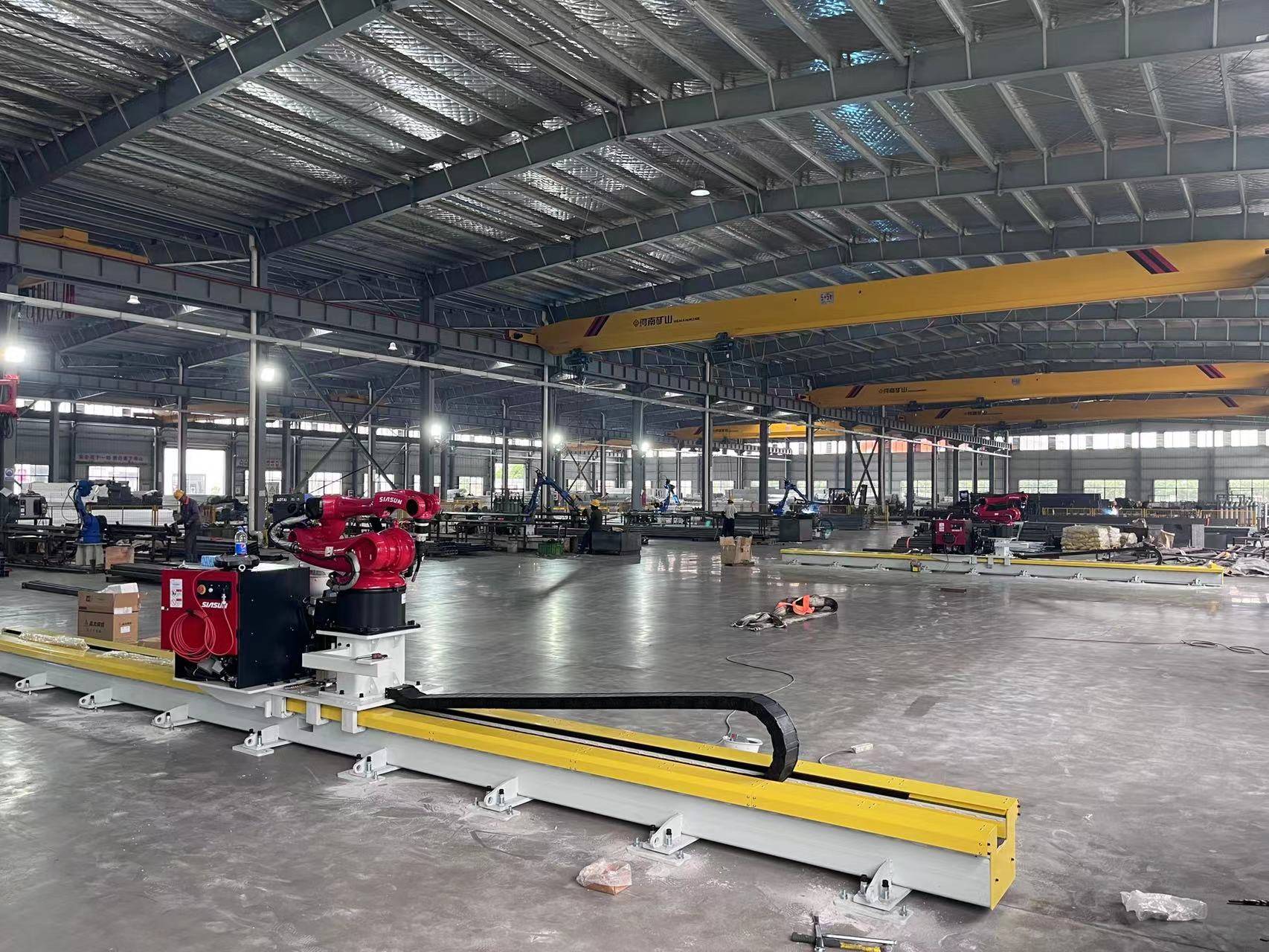
In Hamburg’s specialized fabrication facilities, these systems utilize multi-axis robotic heads (often 5-axis or 6-axis) that can rotate around the profile. This allows for complex bevel cuts, weld preparations (V, Y, and X joints), and precise bolt-hole patterns to be cut in a single pass. In the context of the Köhlbrandbrücke replacement or the renovation of port railway bridges, this means that a 15-meter steel beam can be loaded into the machine, processed with all necessary structural apertures and connection geometries, and unloaded ready for assembly without any secondary machining.
Zero-Waste Nesting: The Architecture of Efficiency
Perhaps the most economically significant feature of the new systems being deployed in Hamburg is “Zero-Waste Nesting” software. Historically, cutting complex shapes from linear profiles resulted in significant “drops” or scrap pieces. In a project as massive as a suspension or cable-stayed bridge, material waste can account for 15% to 20% of the total steel budget.
Zero-waste nesting utilizes advanced heuristic algorithms to arrange parts along the length of the steel profile. The software considers the kerf (the width of the laser cut) and common-line cutting techniques, where a single laser pass creates the edge for two adjacent parts.
Furthermore, “remnant management” allows the system to recognize the exact dimensions of leftover pieces and store them in a digital library. When a smaller bracket or gusset plate is needed for a future bridge project, the system automatically suggests using a remnant rather than a new beam. In a city like Hamburg, which prides itself on its “Green Port” initiatives, this reduction in raw material consumption aligns perfectly with sustainability mandates.
Precision and Weld Preparation in Bridge Construction
The structural failure of a bridge is often traced back to poor weld penetration or fatigue cracks originating at bolt holes. The 30kW laser system mitigates these risks through sheer precision.
When cutting weld preparations, the laser can be tilted to exact angles with a tolerance of ±0.1 degrees. This ensures that when two massive steel sections are brought together on-site in the Port of Hamburg, the fit-up is perfect. A perfect fit-up requires less filler material during welding, results in fewer weld defects, and significantly speeds up the on-site assembly time. In an environment where tidal windows and shipping traffic restrict construction hours, every minute saved on-site is worth thousands of Euros.
Economic Impact on Northern Germany’s Construction Sector
The capital investment for a 30kW universal profile laser is substantial, but the ROI (Return on Investment) for Hamburg-based firms is driven by labor reduction and throughput. A single laser system can replace the output of three separate traditional machines (a saw, a drill line, and a manual oxy-fuel station).
Moreover, the “Hamburg Factor”—the high cost of industrial real estate and labor—makes automation essential. By utilizing a system that can run “lights-out” or with minimal supervision, local fabricators can compete with international steel suppliers while maintaining the “Made in Germany” quality standard. The ability to produce bridge components just-in-time also reduces the need for massive storage yards in the expensive port area.
Digital Twin Integration and the BIM Workflow
Modern bridge engineering in Germany relies heavily on Building Information Modeling (BIM). The 30kW laser systems are fully integrated into this digital ecosystem. The bridge designer’s 3D CAD model is converted directly into NC (Numerical Control) code for the laser.
This “File-to-Factory” workflow eliminates manual layout errors. In Hamburg, where historical bridge aesthetics must often be balanced with modern load requirements, the laser’s ability to cut intricate, decorative shapes out of heavy structural steel allows architects more creative freedom without increasing fabrication costs. The digital twin of the bridge exists before the first beam is even cut, with the laser system providing feedback to the BIM software to confirm that every hole and cut matches the engineering specifications.
Environmental Considerations and the Future of the Elbe
As we look toward the future of bridge engineering in the Elbe region, the environmental footprint of construction cannot be ignored. The 30kW fiber laser is significantly more energy-efficient than older CO2 lasers or plasma systems. When combined with zero-waste nesting, the carbon footprint per ton of fabricated steel is drastically reduced.
The “Zero-Waste” philosophy extends to the gases used during cutting. High-pressure nitrogen or oxygen assist gases are optimized by the system to ensure minimal consumption. The dust and fumes generated during the 30kW cutting process are captured by high-efficiency filtration systems, ensuring that Hamburg’s air quality standards are met even within heavy industrial zones.
Conclusion
The deployment of 30kW Fiber Laser Universal Profile systems in Hamburg is more than just a mechanical upgrade; it is a strategic repositioning of the city’s engineering capabilities. By solving the dual challenges of complex 3D geometry and material waste, these systems allow for the creation of bridges that are lighter, stronger, and more sustainable. As the Elbe continues to serve as a vital artery for global trade, the steel structures that span it will increasingly be the product of this high-power, high-precision laser revolution, ensuring that Hamburg remains at the forefront of global civil engineering.