The Dawn of Ultra-High Power: The 30kW Fiber Laser Advantage
As we move into the third decade of the 21st century, the fiber laser industry has transcended the “power wars” and entered an era of practical high-output application. A 30kW fiber laser source is not merely about raw force; it is about the transformation of energy into efficiency. In the context of railway infrastructure, where steel thicknesses often exceed 25mm (1 inch), traditional 6kW or 10kW lasers were often pushed to their physical limits, resulting in slower feed rates and larger kerf widths.
The 30kW resonator changes this calculus. At this power level, the laser achieves “high-speed melt-blowing” even in thick-plate carbon steel. For Charlotte’s heavy industrial fabricators, this means cutting 20mm structural steel at speeds that were previously reserved for thin sheet metal. The increased power density allows for a smaller spot size relative to the energy delivered, which translates to a narrower kerf and a significantly reduced Heat Affected Zone (HAZ). In railway engineering, where fatigue resistance is paramount, minimizing the thermal impact on the steel’s grain structure is a critical safety advantage.
Universal Profile Processing: Beyond the Flatbed
Railway infrastructure does not live in a 2D world. It is built on I-beams, H-beams, C-channels, and heavy-walled square tubing—collectively known as universal profiles. Historically, processing these required a disjointed workflow: mechanical sawing for length, radial arm drilling for bolt holes, and manual oxy-fuel or plasma torching for complex notches and bevels.
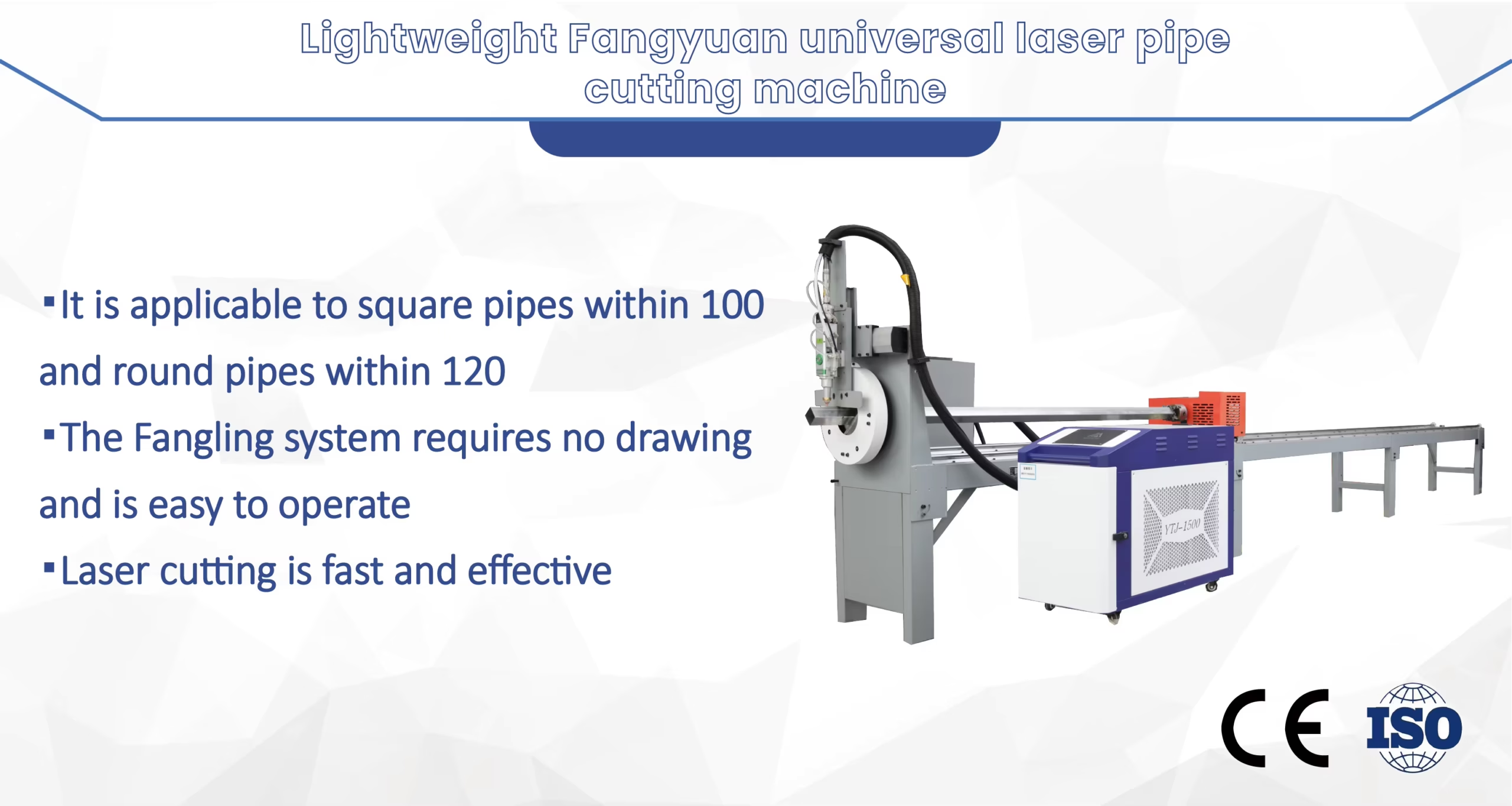
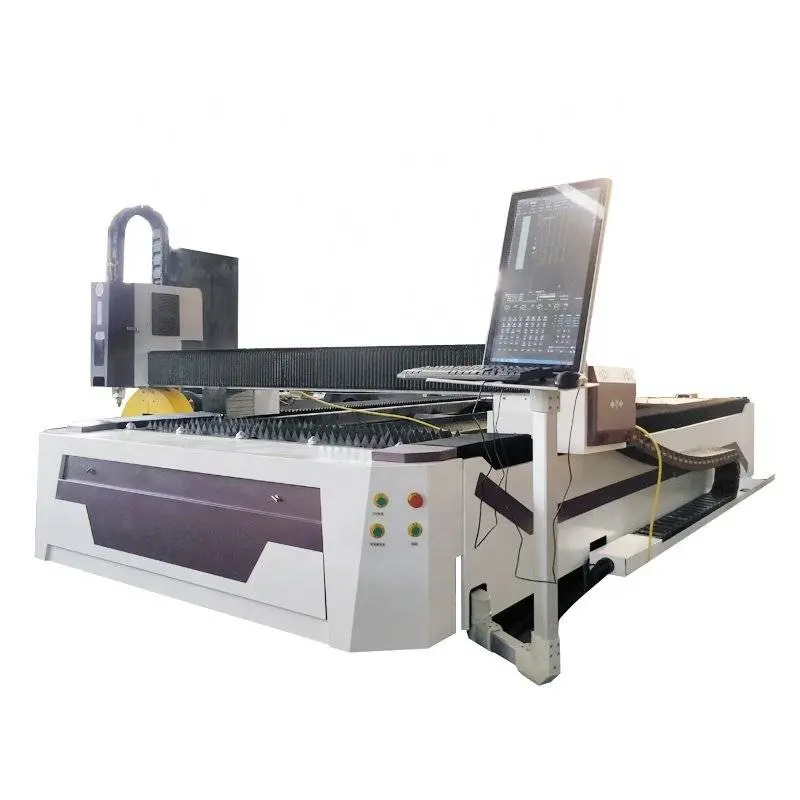
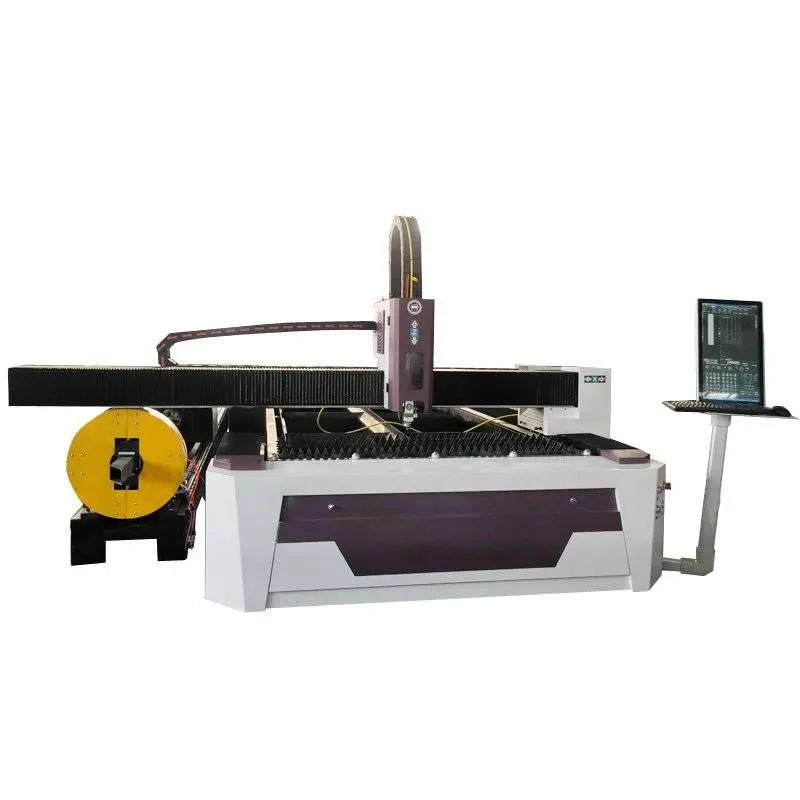
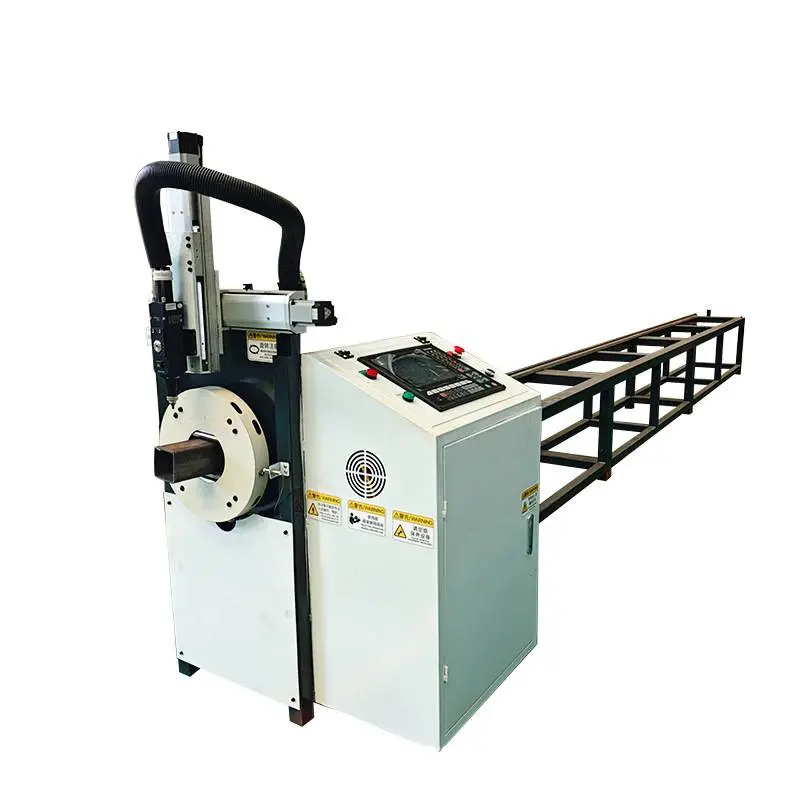
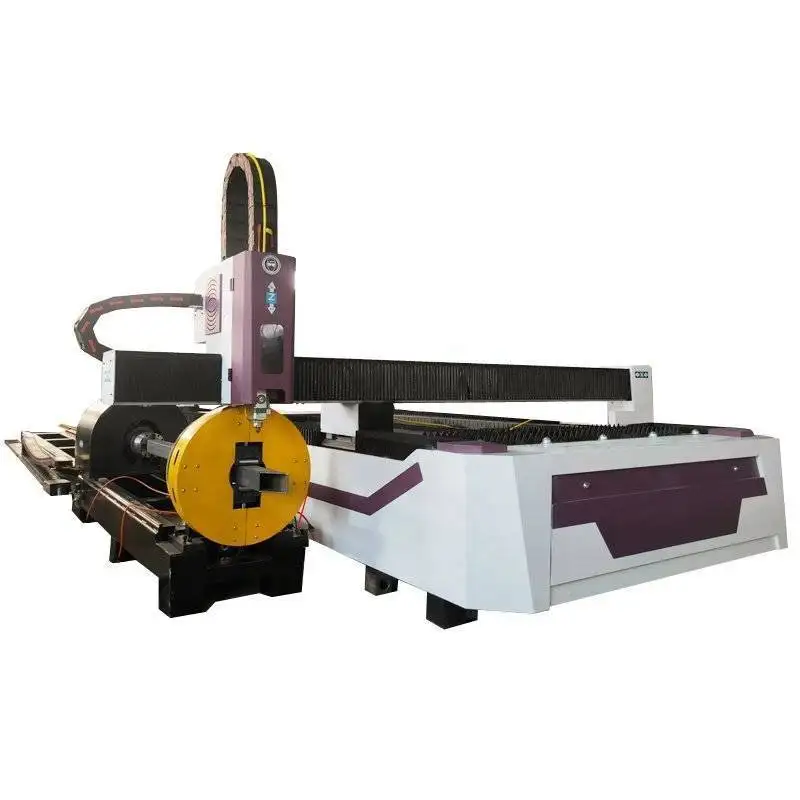
A 30kW Universal Profile Steel Laser System integrates these disparate steps into a single workstation. The system utilizes a pass-through chuck mechanism that can rotate and stabilize massive profiles, some weighing several tons. When the 30kW laser is applied to these profiles, it can “punch” through the thickest webs and flanges of an H-beam in milliseconds. This capability is essential for the gusset plates and connection nodes used in rail bridges and overhead catenary supports, where precision alignment is required to ensure long-term structural integrity under the constant vibration of passing trains.
The Infinite Rotation 3D Head: Engineering Freedom
The most significant mechanical breakthrough in these systems is the 3D cutting head with infinite rotation. Standard 5-axis heads often suffer from “cable wrap,” requiring the head to “unwind” after a certain degree of rotation, which breaks the continuous cut and introduces potential weak points in the material.
The infinite rotation head utilizes slip-ring technology or advanced fiber-coupling geometries to allow the cutting head to rotate indefinitely around the C-axis. In railway applications, this is a game-changer for weld preparation. Most rail structural components require complex V, Y, or K-shaped bevels to ensure full-penetration welds. With infinite 3D rotation, the 30kW laser can follow the complex geometry of a profile’s flange-to-web transition while maintaining a consistent bevel angle. This produces a weld-ready edge that requires zero grinding, saving hundreds of man-hours on large-scale infrastructure projects.
Charlotte, NC: A Strategic Epicenter for Rail Innovation
Charlotte is uniquely positioned as the ideal theater for this technology. As a major junction for Norfolk Southern and CSX, and the home of the Charlotte Area Transit System (CATS) LYNX blue and gold lines, the city is a living laboratory for rail infrastructure. The region’s manufacturing corridor is increasingly tasked with producing components for the “Southeast Rail Corridor,” a multi-state initiative to enhance high-speed passenger and heavy freight throughput.
By deploying a 30kW system with 3D capabilities in Charlotte, fabricators can serve the entire Eastern Seaboard. The proximity to high-quality steel suppliers and a workforce trained in advanced mechatronics creates a “Silicon Valley of Steel.” Local engineering firms can now design more daring rail architectures—such as curved aesthetic bridges or more efficient railcar chassis—knowing that the local manufacturing base can execute those designs with sub-millimeter precision.
Impact on Railway Bridge Construction and Retrofitting
Railway bridges are subject to some of the harshest mechanical stresses in the world. The shift from traditional fabrication to 30kW laser processing impacts both new builds and retrofitting. For new bridge trusses, the laser’s ability to cut “rat holes” (stress-relief notches) with perfect radii eliminates the micro-cracks often left by plasma cutters, which are often the genesis of structural failure.
In retrofitting scenarios, where old bridge sections must be replaced with modern steel components that match 100-year-old dimensions, the 3D laser system’s ability to ingest CAD data and produce a perfectly mirrored part is invaluable. The speed of the 30kW source allows for “just-in-time” infrastructure; if a section of rail or a bridge girder is damaged, a replacement can be programmed, cut, and shipped from a Charlotte facility within hours rather than weeks.
Rolling Stock and Freight Car Evolution
Beyond the tracks and bridges, the 30kW fiber laser is transforming the production of rolling stock. Modern freight cars are being designed with lighter, high-strength steels to increase payload capacity. These steels are notoriously difficult to process with traditional mechanical means because they work-harden or become brittle when exposed to excessive heat.
The precision of the 30kW laser, coupled with the infinite rotation head, allows for the creation of intricate weight-reduction cutouts in the car frames without sacrificing structural rigidity. The 3D head can easily navigate the contours of a railcar’s bolster or side sill, performing complex miters and joints that allow for “tab-and-slot” assembly. This self-fixturing design philosophy reduces the need for expensive jigs and fixtures during the welding process, further lowering the cost of infrastructure expansion.
The Environmental and Economic Bottom Line
The transition to 30kW fiber lasers in Charlotte also aligns with global sustainability goals. Fiber lasers are significantly more energy-efficient than the CO2 lasers of the past or the massive plasma tables they replace. The “single-process” nature of the universal profile system means less material handling, which reduces the carbon footprint of the factory floor.
Economically, the 30kW system offers a massive Return on Investment (ROI) despite its high initial capital expenditure. By replacing a saw, a drill, and a manual beveling station, the laser system reduces the footprint of the fabrication shop and cuts labor costs by up to 70% for complex profile processing. In the competitive landscape of government infrastructure contracts, the ability to bid with lower costs and faster delivery times—while providing superior quality—makes this technology a mandatory investment for the modern fabricator.
Future Horizons: AI Integration and Autonomous Cutting
Looking forward, the 30kW systems being installed in Charlotte are “Industry 4.0” ready. These machines are equipped with sensors that monitor the cutting process in real-time. If the laser detects a change in the steel’s composition or a potential “lost cut” due to surface contaminants, the system can automatically adjust the gas pressure, focal position, or power output.
When paired with the infinite rotation 3D head, we are nearing a future where the system can autonomously identify the profile type placed on the loading bed, pull the correct 3D model from the cloud, and execute a complex series of cuts and bevels with zero human intervention. This level of automation is what will allow the American rail infrastructure to modernize at the pace required by the 21st-century economy.
In conclusion, the 30kW Fiber Laser Universal Profile System represents the pinnacle of thermal cutting technology. Its arrival in Charlotte signifies a new era for railway infrastructure—one defined by unprecedented speed, surgical precision, and the mechanical freedom to build the next generation of transportation networks. As an expert in the field, I view this not just as a machine purchase, but as a fundamental upgrade to the way we build the veins and arteries of our nation.