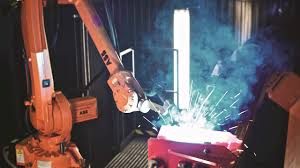
The Dawn of Ultra-High Power: Why 30kW Matters for Riyadh’s Industry
In the rapidly evolving industrial landscape of Riyadh, the leap to 30kW fiber laser technology is not merely an incremental upgrade; it is a paradigm shift. For decades, the Saudi mining machinery sector relied on plasma cutting or lower-power lasers that struggled with the sheer thickness of structural steel. A 30kW fiber laser source provides a power density that redefines what is possible. It allows for the high-speed cutting of carbon steel up to 80mm or even 100mm in thickness, which is the standard for the heavy-duty chassis and structural frames used in mining operations.
The efficiency of a 30kW system in Riyadh’s climate is also a testament to modern engineering. High-power fiber lasers are significantly more energy-efficient than their CO2 predecessors. In a region where energy optimization and industrial scaling are priorities, the ability to cut through 30mm plates at speeds five times faster than a 6kW system translates to a massive increase in throughput. This power allows the laser to vaporize metal almost instantly, resulting in a cleaner edge and a significantly narrower kerf, which is essential for the tight tolerances required in mining equipment assembly.
Mastering the Universal Profile: Flexibility in Structural Steel
Mining machinery is rarely built from flat sheets alone. It relies on universal profiles—I-beams, H-beams, C-channels, and large-diameter square tubing. Historically, processing these required a sequence of sawing, drilling, and manual oxy-fuel cutting. The 30kW Universal Profile Steel Laser System integrates all these functions into a single workstation.
In Riyadh’s burgeoning manufacturing hubs, this versatility is a competitive advantage. The system uses a specialized chuck and roller mechanism to rotate and stabilize heavy profiles as the laser travels along the length of the beam. Whether it is cutting a bolt hole in a 400mm H-beam or creating a complex interlocking joint for a modular conveyor system, the laser handles it with sub-millimeter accuracy. This “all-in-one” approach eliminates the logistical nightmare of moving massive steel sections between different machines, thereby reducing the risk of material damage and workplace accidents.
The Infinite Rotation 3D Head: A Masterpiece of Kinematics
The true “brain” of this system is the infinite rotation 3D head. Traditional 3D heads are often limited by “cable wind-up,” requiring the head to unwind after a certain degree of rotation. An infinite rotation head utilizes advanced slip-ring technology or specialized fiber optic routing to allow the cutting head to spin indefinitely around the Z-axis.
For the production of mining machinery in Saudi Arabia, this is crucial. Mining components often require V, X, or K-shaped bevels to prepare the steel for high-strength welding. Because mining equipment is subjected to extreme vibrational stress and heavy loads, the integrity of the weld is paramount. The 3D head can tilt up to ±45 degrees (or more) while simultaneously rotating, allowing it to follow the contours of a profile beam and create a perfect bevel in a single pass. This removes the need for manual grinding, which is labor-intensive and often inconsistent. In Riyadh’s high-temperature environment, reducing manual labor not only saves costs but also improves the quality of life for the workforce by automating the most arduous tasks.
Precision in the Face of Adversity: Mining Machinery Applications
The mining sector in the Arabian Shield requires equipment that can withstand some of the harshest conditions on Earth. From gold mines to phosphate extraction sites, the machinery must be robust. The 30kW laser system is specifically geared toward the fabrication of:
1. **Drill Rig Frames:** These require high-tensile steel profiles that must be perfectly aligned to ensure the stability of the drilling mast.
2. **Crusher Chassis:** The thick plates used in crushers are often made of wear-resistant alloys (like Hardox). The 30kW laser cuts through these hardened materials with ease, whereas traditional mechanical cutting tools would suffer extreme wear.
3. **Vibrating Screens and Feeders:** These components require intricate hole patterns and cutouts to facilitate ore sorting. The speed of the fiber laser ensures these can be produced in bulk without sacrificing precision.
4. **Underground Support Structures:** Custom-cut arches and beams for tunnel reinforcement can be produced on-demand, allowing mining companies to adapt to geological changes in real-time.
Technological Integration: Software and Riyadh’s Smart Factories
Operating a 30kW laser with a 5-axis head requires more than just raw power; it requires sophisticated software integration. The systems being deployed in Riyadh are equipped with advanced nesting software that optimizes material usage, a critical factor given the high cost of imported structural steel.
The software creates a “digital twin” of the profile, allowing engineers to simulate the cut before the laser even touches the metal. This is particularly important for the infinite rotation head, as it must calculate the complex kinematics of the beam to avoid collisions while maintaining the focal point at a consistent distance from the material surface. Furthermore, these systems are increasingly integrated into Riyadh’s move toward “Industry 4.0,” featuring remote monitoring, predictive maintenance, and real-time data analytics that ensure the laser operates at peak efficiency during the intense Saudi summers.
Environmental Considerations: Cooling and Dust Mitigation
One of the expert challenges of operating a 30kW system in Riyadh is the environment. High ambient temperatures and airborne dust can be detrimental to high-power optics. To combat this, the universal profile systems are equipped with high-capacity industrial chillers and pressurized, climate-controlled enclosures for the laser source and the cutting head.
The 30kW laser generates significant heat within the resonator and the delivery fiber. A dual-circuit cooling system ensures that the optical components remain at a stable temperature, preventing “thermal lensing”—a phenomenon where the lens deforms slightly, shifting the focus and ruining the cut quality. Additionally, advanced dust extraction systems are integrated into the cutting bed to capture the fine metallic vapors generated during 30kW processing, maintaining a clean environment and protecting the sensitive 3D head mechanisms.
Economic Impact: Localizing the Supply Chain for Vision 2030
The deployment of these systems in Riyadh is a strategic move aligned with the Saudi Vision 2030. By localizing the capability to produce complex, heavy-duty mining machinery, the Kingdom reduces its reliance on imports from Europe or East Asia. This shortens lead times for mining projects and fosters a local ecosystem of skilled engineers and technicians.
The 30kW fiber laser is a force multiplier for “Made in Saudi” initiatives. It allows local fabricators to bid on international-scale projects, knowing they have the technological capacity to meet global standards for structural integrity and precision. The infinite rotation 3D head, specifically, allows for a level of architectural and mechanical complexity that was previously unattainable in the region, paving the way for Riyadh to become a technical hub for heavy machinery manufacturing in the Middle East.
Conclusion: The Future of Fiber Lasers in the Kingdom
As a fiber laser expert, it is clear that the 30kW Universal Profile Steel Laser System with Infinite Rotation 3D Head is the ultimate tool for the next generation of Saudi industrialization. It solves the three primary challenges of mining machinery fabrication: thickness, geometric complexity, and production speed. By bringing this technology to Riyadh, manufacturers are not just buying a machine; they are investing in a future where the Kingdom’s mineral wealth is extracted using machinery designed and built on its own soil. The precision of the 3D head, combined with the raw power of the 30kW source, ensures that Riyadh will remain at the cutting edge of the global heavy industry for decades to come.