The Dawn of Ultra-High Power in Moroccan Infrastructure
As Casablanca continues to solidify its position as the primary gateway to Africa, the expansion of its aviation infrastructure demands construction methodologies that match its global ambitions. The introduction of the 30kW Fiber Laser Universal Profile Steel Laser System marks a departure from conventional heavy-industry fabrication. In the past, structural steel for airports—characterized by massive load-bearing requirements and complex aesthetic geometries—was processed using oxy-fuel or plasma cutting. While effective, these methods necessitated significant post-processing, including grinding and manual beveling.
The 30kW fiber laser source changes the fundamental economics of the job site. At this power level, the energy density is sufficient to vaporize thick-walled structural steel almost instantaneously. For the Casablanca airport project, where time-to-market is as critical as structural integrity, the 30kW system offers cutting speeds that are 300% to 500% faster than 10kW alternatives on mid-range thicknesses, and provides the “raw muscle” needed to slice through 50mm carbon steel with surgical precision.
Universal Profile Processing: Engineering the Skeletal Frame
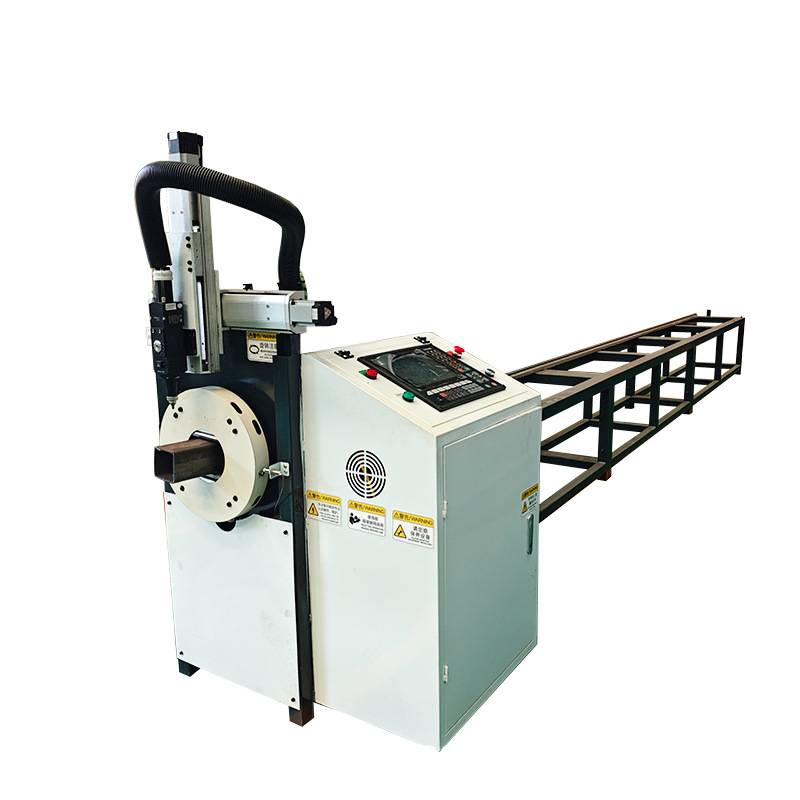
Airport terminals are masterpieces of structural engineering, often utilizing a “Universal Profile” approach. This involves a mix of H-beams for primary columns, I-beams for rafters, and hollow structural sections (HSS) for aesthetic bracing. A universal profile laser system is designed to handle this diversity without the need for multiple machines.
The system in Casablanca utilizes a sophisticated multi-chuck pneumatic system that can transition between a 12-meter I-beam and a 400mm diameter pipe in minutes. For an expert in fiber lasers, the fascination lies in the “Center-of-Rotation” calibration. When processing a heavy H-beam, the laser must maintain a perfect focal point while the beam is rotated or the head is tilted. This ensures that the bolt holes—essential for the modular assembly of the terminal roof—are perfectly aligned across thousands of tons of steel. This eliminates the “on-site adjustment” phase that often plagues large-scale construction, ensuring that the skeletal frame of the airport fits together like a precision-engineered watch.
The Infinite Rotation 3D Head: A Masterclass in Kinematics
The most technologically advanced component of this system is the Infinite Rotation 3D Head. Traditional 3D laser heads are often limited by “cable wrap,” where the internal gas hoses and fiber optic cables limit the rotation to 360 or 720 degrees before the head must “unwind.” In a complex airport construction environment involving intricate intersections of steel beams, this unwinding creates significant dead time.
The Infinite Rotation head utilizes a specialized rotary joint and slip-ring technology for gas and signal transmission, allowing the head to spin indefinitely. This is crucial for “Bevel Cutting.” In Casablanca’s airport expansion, many of the structural joints require V, Y, or K-shaped bevels to facilitate high-strength submerged arc welding. The 3D head can perform these bevels in a single pass at angles up to 45 degrees. By integrating the beveling process directly into the laser cutting cycle, the project eliminates a secondary manufacturing step, reducing the labor footprint and minimizing the Heat Affected Zone (HAZ) that can compromise the metallurgical integrity of the steel.
Precision Requirements for Casablanca’s Architectural Vision
Modern airports are no longer just functional boxes; they are architectural statements with sweeping curves and organic forms. The 30kW system’s ability to execute complex 3D paths allows architects in Casablanca to design steel structures that were previously considered too expensive or difficult to fabricate.
With a 30kW source, the kerf (the width of the cut) remains incredibly narrow. This precision is vital when creating the interlocking “bird’s nest” designs or large-scale glass-and-steel facades common in contemporary terminal design. The laser’s ability to cut precise slots and notches into heavy profiles means that structural components can be “tabbed” together, providing a self-jigging mechanism during the assembly phase on the Casablanca construction site. This level of accuracy—measured in microns rather than millimeters—ensures that the massive thermal expansion and contraction cycles typical of the North African climate are accounted for in the tight tolerances of the joints.
Optimizing the Supply Chain in the Casablanca Industrial Zone
The placement of such a system in Casablanca is a strategic masterstroke. As Morocco’s industrial heart, Casablanca provides the logistical backbone necessary to support ultra-high-power laser operations. The 30kW system requires a robust power grid and a steady supply of assist gases (Oxygen and Nitrogen), both of which are readily available in the region’s industrial parks.
Furthermore, by processing the steel locally in Casablanca rather than importing pre-cut sections from Europe or Asia, the airport project realizes significant savings in logistics and duties. The “Universal” nature of the machine means it can act as a centralized fabrication hub. It can process raw steel coming through the Port of Casablanca and deliver finished, “ready-to-bolt” components directly to the Mohammed V International Airport site. This “Just-In-Time” manufacturing capability reduces the need for massive on-site storage and protects the steel from the corrosive maritime air of the Atlantic coast by minimizing its exposure time before assembly.
The Expert’s View on Maintenance and Operational Longevity
From a technical maintenance perspective, running a 30kW system in a dusty, high-stakes construction environment like Casablanca requires specialized oversight. The fiber optic delivery system is entirely enclosed, which is a significant advantage over the old CO2 “flying optics” systems that were prone to contamination.
However, the 30kW power level puts immense stress on the cutting head’s protective windows. The system implemented in Casablanca features real-time monitoring of the optics, utilizing sensors to detect back-reflection and temperature spikes. For the airport project, this means near-zero unplanned downtime. The use of a 5-axis interpolation algorithm also ensures that the mechanical wear on the 3D head is distributed evenly, extending the life of the precision gears. As a laser expert, I view the integration of AI-driven nesting software as the final piece of the puzzle—this software optimizes the layout of parts on the steel profiles, reducing waste by up to 20%, which, when dealing with thousands of tons of structural steel, translates into millions of Dirhams saved.
The Future: A Blueprint for African Infrastructure
The 30kW Fiber Laser Universal Profile Steel Laser System with Infinite Rotation 3D Head is more than just a tool; it is a statement of technological sovereignty for Morocco. By adopting this technology for the Casablanca airport, the project sets a new benchmark for how infrastructure is built across the continent.
The ability to move from a CAD drawing to a fully beveled, 12-meter structural I-beam in a single automated process is the pinnacle of “Industry 4.0.” It allows for a level of architectural daring and structural safety that defines the next generation of transport hubs. As the 30kW laser slices through the heavy steel of Casablanca’s future, it isn’t just building an airport; it is carving out a new era for Moroccan engineering, characterized by speed, precision, and an infinite capacity for geometric innovation.