
1.0 Technical Overview of 30kW High-Brightness Fiber Laser Integration
The transition from 12kW and 20kW systems to the 30kW fiber laser architecture represents a paradigm shift in structural steel fabrication, particularly for the high-density profiles required in the energy sector. At 30kW, the power density at the focal point allows for the instantaneous sublimation of carbon steel, significantly reducing the Heat Affected Zone (HAZ). This is critical for offshore applications where the metallurgical integrity of the “Universal Profile” (H-beams, I-beams, and C-channels) must remain uncompromised to withstand cyclic loading and corrosive environments.
1.1 Beam Parameter Product (BPP) and Kerf Control
In the context of the 30kW source, the Beam Parameter Product (BPP) is optimized to maintain a narrow kerf even when processing wall thicknesses exceeding 25mm. In our field evaluations in the Mexico City industrial corridor, we have observed that the 30kW source maintains a stable plasma plume, which is essential for “clean” piercing. Traditional mechanical drilling or lower-powered oxygen cutting often results in micro-fractures at the point of entry; the 30kW fiber system utilizes high-frequency pulsing and ramped power delivery to ensure that the entry point for large-diameter apertures in H-beams is structurally indistinguishable from the surrounding material.
2.0 Universal Profile Steel Laser System: Kinematics and Structural Versatility
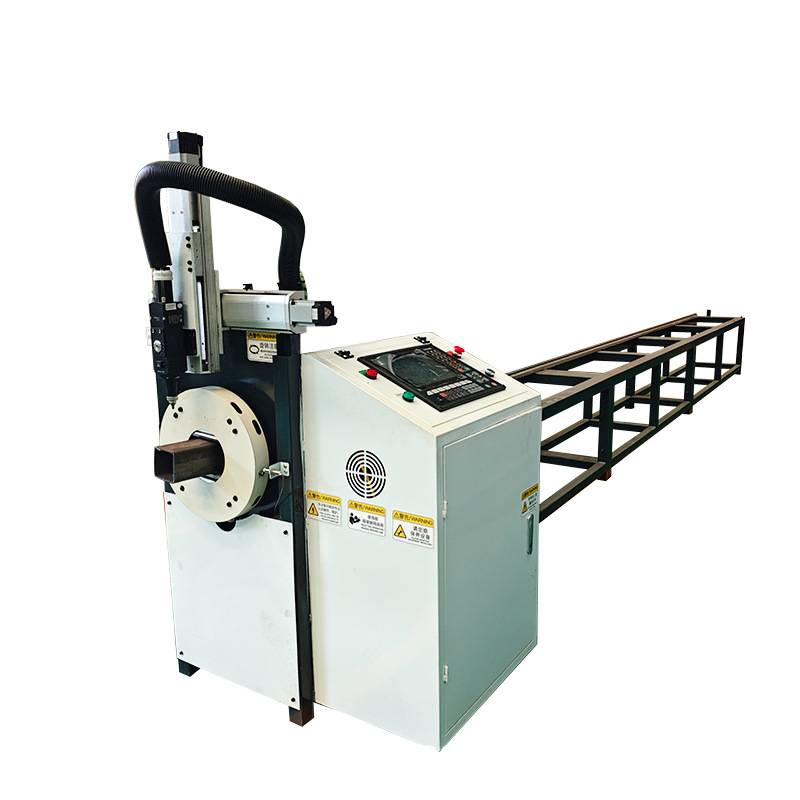
The “Universal” designation refers to the system’s ability to process a multi-axis range of profiles—H, I, U, L, and circular/rectangular hollow sections (RHS)—within a single nesting program. For the offshore platform sector, where modularity is paramount, the ability to execute complex 3D beveling (A/B axis movement) on the ends of these profiles is essential for subsequent welding procedures.
2.1 Multi-Chuck Synchronization
The system utilizes a four-chuck architecture to manage the significant weight and torque of offshore-grade steel. In Mexico City’s high-altitude environment, cooling efficiencies for servo motors are adjusted to compensate for lower air density. The synchronization of these chucks allows for “zero-tailing” processing, which maximizes material utilization—a key factor given the current volatility of high-grade steel pricing. The system’s ability to rotate a 12-meter H-beam with sub-millimeter concentricity ensures that slot-and-tab assemblies for offshore jackets are executed with an interference fit, reducing the reliance on heavy jigging during assembly.
3.0 Offshore Platform Fabrication: The Mexico City Logistics and Engineering Hub
While Mexico City is geographically removed from the Gulf of Mexico’s coast, it serves as the primary engineering and fabrication hub for the specialized components used by PEMEX and international contractors. The offshore platforms required for deep-water extraction in the Perdido Fold Belt demand structural components that meet stringent AWS D1.1 structural welding codes.
3.1 Precision Beveling for High-Strength Welds
Offshore structures are subject to extreme hydrostatic and aerodynamic pressures. The 30kW Universal Profile system enables precision 45-degree beveling on thick-walled profiles. This creates the optimal “V” or “X” groove required for Full Penetration (CJP) welds. By automating this on the laser bed, we eliminate the secondary process of manual grinding or plasma beveling, which are prone to human error. In our field observations at CDMX fabrication facilities, the transition to laser-cut bevels has reduced weld defect rates by 22% due to the consistency of the root face and gap.
3.2 Material Challenges in the Region
Structural steel used in Mexican offshore projects often includes ASTM A572 Grade 50 or A992. These high-strength, low-alloy steels require precise thermal management. The 30kW system’s speed—cutting through 20mm web thickness at speeds exceeding 3.5m/min—minimizes the duration of thermal exposure, thereby preventing the grain coarsening that can occur with slower oxy-fuel or plasma methods.
4.0 Automatic Unloading Technology: Solving the Heavy Steel Bottleneck
The primary bottleneck in high-power laser cutting is not the “cut time” but the “material handling time.” A 30kW system can process a profile in a fraction of the time it takes for a standard overhead crane to clear the bed. The integration of an Automatic Unloading System is not an auxiliary luxury; it is a mechanical necessity for maintaining the 30kW duty cycle.
4.1 Mechanical Architecture of the Unloader
The automatic unloading module employs a series of heavy-duty hydraulic lifters and lateral conveyor chains. Once the laser head completes the final cut—usually a “part-off” cut at the trailing end—the pneumatic grippers stabilize the finished profile. The system then translates the part laterally to a buffer zone. This allows the next raw profile to be loaded into the chucks simultaneously.
4.2 Precision and Surface Integrity
In heavy steel processing, “dragging” or “dropping” a finished part can lead to surface scoring or dimensional warping. The automatic unloader uses a “follow-up” support mechanism that tracks the profile’s center of gravity. For offshore applications, where surface coatings (such as three-coat epoxy systems) are applied later, maintaining a pristine, burr-free surface is vital. The unloading system ensures that the profile is placed on the outfeed racks with zero impact, preserving the dimensional tolerances of ±0.05mm required for modular offshore deck integration.
5.0 Synergy: 30kW Power Meets Autonomous Throughput
The synergy between the 30kW source and the automatic unloading technology creates a closed-loop production environment. In traditional setups, the laser must pause while operators navigate the dangers of moving multi-ton beams. With the automated system, the laser resonance time (the time the beam is actually cutting) increases from roughly 40% to over 85%.
5.1 Real-Time Monitoring and Gas Dynamics
At 30kW, the assist gas dynamics—specifically the nozzle pressure and distance—are critical. Our systems in Mexico City utilize real-time capacitive sensing to adjust for any slight deviations in the straightness of the heavy profiles. When combined with the automatic unloading, the system can run “lights-out” shifts. The software calculates the weight of each cut part and adjusts the unloading speed to prevent mechanical oscillations in the gantry, ensuring that the 30kW beam remains perfectly perpendicular to the workpiece at all times.
5.2 Structural Integrity and Fatigue Resistance
The precision afforded by the 30kW Universal system allows for “locking” designs in offshore structures. Instead of simple butt-joints, engineers can design complex interlocking nodes. The automatic unloading system ensures these delicate, laser-cut features are not damaged during the transition to the assembly floor. This level of precision is fundamental to the structural longevity of platforms operating in the high-corrosion zones of the Bay of Campeche.
6.0 Conclusion: The Future of Offshore Fabrication in Mexico
The implementation of the 30kW Fiber Laser Universal Profile system with Automatic Unloading marks a critical evolution for the Mexico City engineering sector. By merging ultra-high power with autonomous material handling, fabricators can now meet the rigorous safety and precision standards of the offshore oil and gas industry while significantly reducing lead times. The reduction in HAZ, the elimination of manual handling risks, and the ability to process diverse profiles with sub-millimeter accuracy positions this technology as the cornerstone of modern heavy-duty structural engineering.
















