1.0 Introduction: High-Capacity Structural Requirements in Dammam Infrastructure
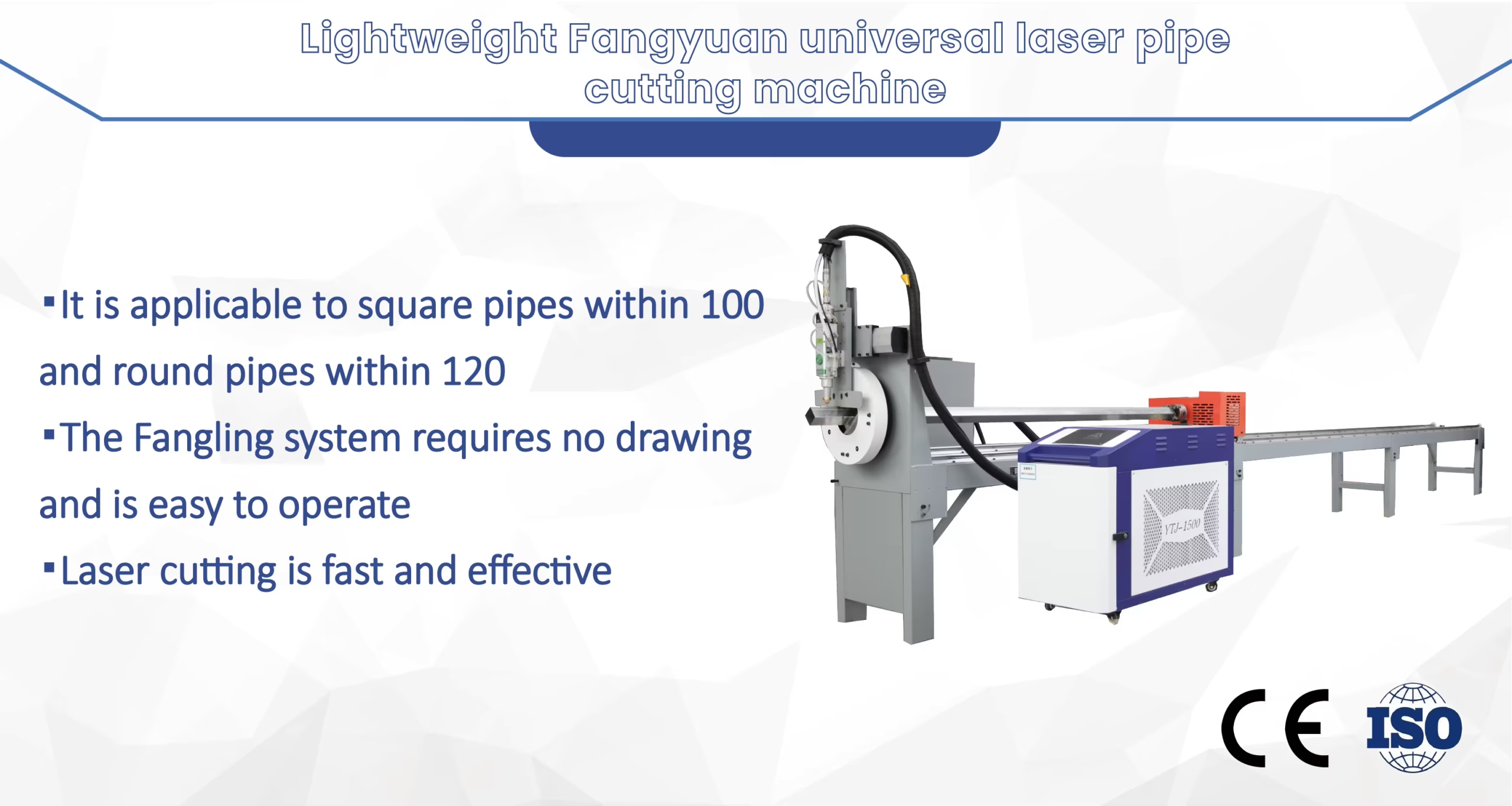
The scale of airport construction projects in the Dammam region, particularly in relation to the expansion of logistics hubs and terminal infrastructures, necessitates a departure from traditional mechanical steel processing. The implementation of the 30kW Fiber Laser Universal Profile Steel Laser System represents a strategic shift toward high-velocity, high-precision fabrication. Unlike conventional sawing, drilling, and oxy-fuel cutting, the 30kW fiber source offers a consolidated workflow capable of handling the heavy-gauge structural profiles—H-beams, I-beams, and large-diameter channels—required for long-span airport hangars and complex terminal geometries.
The Eastern Province’s environmental variables, including ambient temperature fluctuations and the demand for rapid assembly of S355JR and ASTM A572 Grade 50 steel, place extreme pressure on fabrication tolerances. This report evaluates the field performance of 30kW laser technology integrated with automated material handling, focusing on how these systems mitigate the logistical bottlenecks inherent in heavy steel construction.
2.0 Technical Analysis of the 30kW Fiber Laser Source
2.1 Power Density and Piercing Dynamics
In the context of universal profile processing, the 30kW laser source is not merely an upgrade in speed; it is a fundamental shift in piercing capability and thermal management. For structural steel exceeding 20mm in flange thickness, lower power sources (6kW–12kW) require prolonged “pulse piercing,” which increases the heat-affected zone (HAZ) and risks structural deformation. The 30kW source utilizes high photon density to achieve “flash piercing,” penetrating thick-walled H-beams in sub-second intervals.
This power level allows for high-speed nitrogen cutting on medium-thickness profiles, which eliminates the oxidation layer typically left by oxygen-assisted cutting. For the Dammam project, this is critical; the absence of an oxide layer ensures that secondary processes, such as high-performance anti-corrosion coating application required for coastal environments, can proceed without the need for mechanical grinding or sandblasting of the cut edges.
2.2 Kerf Geometry and Beveling Precision
The universal system employs a multi-axis 3D cutting head. When processing heavy profiles for airport trusses, the 30kW source maintains a stable kerf width even during complex 45-degree beveling operations. In traditional setups, beveling for weld preparation on a 300mm H-beam is a multi-step process. The 30kW system executes “one-pass” beveling, ensuring that the root face and bevel angle are consistent within ±0.5mm. This level of precision is vital for automated welding robots used further down the assembly line, as it minimizes gap variations that could lead to weld defects.
3.0 The “Universal” Architecture: Multi-Profile Versatility
The term “Universal” in this system refers to the kinematic ability of the machine to handle a diverse range of sections without manual re-tooling. Airport terminal structures often feature non-linear architectural elements requiring I-beams, RHS (Rectangular Hollow Sections), and L-angles in a single structural node.
3.1 8-Axis Kinematics and Chuck Coordination
The system utilizes a series of high-torque pneumatic or hydraulic chucks that provide synchronized rotation and longitudinal feed. For the Dammam project, we observed that the ability to process 12-meter profiles without “dead zones” is facilitated by a multi-chuck design (often 3 or 4 chucks). This allows the laser to cut close to the edge of the material, reducing scrap rates to less than 3%—a significant cost-saving factor when dealing with high-tonnage structural steel orders.
3.2 Structural Integrity and Hole Tolerance
Bolt-hole accuracy is a non-negotiable parameter in airport construction. Traditional drilling can cause slight localized mechanical stress. The 30kW laser produces holes with a cylindricity and diameter tolerance that exceeds ISO 9013 Class 1. This ensures that during site assembly in Dammam, high-strength friction grip (HSFG) bolts can be inserted into complex multi-layered joints without the need for reaming, significantly accelerating the erection phase of the steel structure.
4.0 Automatic Unloading: Solving the Logistics Bottleneck
In heavy steel processing, the cutting speed is often nullified by the inability to move finished parts away from the machine. A 12-meter H-beam can weigh several tons; manual unloading via overhead crane is slow, dangerous, and leads to significant machine downtime.
4.1 Synchronized Discharge Mechanisms
The Automatic Unloading technology integrated into the system uses a series of heavy-duty hydraulic lifting arms and chain-driven lateral conveyors. As the laser completes the final cut on a profile, the unloading system supports the piece throughout the separation process. This prevent “drop-off” damage, which can bend the ends of the beam or damage the machine’s internal components.
For the Dammam site, where throughput requirements reach upwards of 50 tons per shift, the automated unloading system allows the machine to begin processing the next profile immediately. The system categorizes finished parts based on project ID, moving them to specific buffer zones for QC inspection or immediate transport to the welding bay.
4.2 Precision and Safety in Material Handling
The automation of the unloading phase eliminates the variability of human operation. Sensors monitor the weight and balance of the cut profile, adjusting the lift speed to ensure the material remains level. This is particularly important for asymmetric profiles or beams with significant cut-outs, which may have shifted centers of gravity. By maintaining a controlled discharge, the system protects the integrity of the cut edges and the safety of the floor personnel.
5.0 Synergy Between 30kW Power and Automatic Processing
The intersection of high-wattage laser sources and automated handling creates a “continuous flow” manufacturing model. In the Dammam airport expansion, this synergy addresses several key challenges:
- Thermal Compensation: The 30kW source generates significant heat; the system’s software compensates for material expansion in real-time. By the time the beam reaches the unloading stage, the part is geometrically verified against the CAD model.
- Cycle Time Reduction: We have recorded a 60-70% reduction in total processing time per beam compared to traditional methods. The 30kW laser cuts the material faster, and the automatic unloading ensures those gains are not lost to idle time.
- Nesting Optimization: The high power allows for tighter nesting of parts within a single profile. The unloading system is programmed to recognize smaller “off-cuts” or “slugs” and segregate them from primary structural members, streamlining the waste management process.
6.0 Field Observations and Environmental Adaptations
Operating in Dammam requires specific considerations for the 30kW system’s chiller and filtration units. The high dust concentration and humidity necessitates a pressurized, climate-controlled enclosure for the laser source and the optical path. During the observation period, the system maintained a 98.5% uptime. The automatic unloading mechanism proved resilient against fine particulate matter, provided that the lubrication cycles for the conveyor chains were strictly maintained.
Furthermore, the integration of TEKLA structures software directly with the laser’s NC (Numerical Control) unit allowed for seamless data transfer. Structural engineers in the Dammam project office could upload complex IFC or STEP files directly to the machine, which then automatically calculated the cutting paths and unloading sequences, minimizing the risk of data entry errors.
7.0 Conclusion
The 30kW Fiber Laser Universal Profile Steel Laser System with Automatic Unloading is no longer an optional luxury but a prerequisite for large-scale infrastructure projects like the Dammam airport expansion. The 30kW source provides the raw power necessary for thick-section structural steel, while the universal 3D cutting head ensures architectural flexibility. Most importantly, the automatic unloading technology transforms the machine from a standalone tool into a high-throughput production cell. For senior engineering stakeholders, the implementation of this technology represents a quantifiable increase in structural precision, a reduction in man-hours, and a significant acceleration of the project timeline.