The Dawn of High-Power Fiber Lasers in Structural Steel
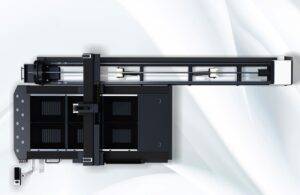
For decades, the structural steel industry relied on plasma cutting, waterjets, or traditional mechanical machining to process large-scale profiles. However, the advent of the 30kW fiber laser has fundamentally altered the ROI calculations for steel fabricators. At 30,000 watts, the energy density of the laser beam is sufficient to vaporize thick-walled structural steel almost instantly, providing cutting speeds that are three to five times faster than 10kW or 12kW systems.
In Istanbul’s fast-paced construction market, where time-to-delivery is as critical as material costs, the 30kW source allows for the clean cutting of carbon steel up to 50mm and beyond. The “universal profile” aspect refers to the machine’s ability to handle not just flat plates, but complex geometries including H-beams, I-beams, angles, and square or rectangular hollow sections (RHS). This versatility is essential for modular construction, where a single pod or unit may require a variety of different structural shapes to ensure stability and load distribution.
Precision Engineering: The ±45° Bevel Cutting Advantage
Perhaps the most transformative feature of this system is the 5-axis 3D cutting head, capable of achieving ±45° bevels. In modular construction, steel components are rarely joined at simple 90-degree butt joints. To ensure structural soundness, especially in high-rise or seismic-sensitive designs, full-penetration welds are required.
Traditional methods required a two-step process: first, cutting the beam to length, and second, using a handheld plasma torch or a milling machine to create the weld prep (V, X, K, or Y-shaped bevels). The 30kW universal profile laser performs these tasks in a single pass. The precision of the ±45° bevel ensures that when two beams meet, the “fit-up” is perfect. This reduces the volume of weld filler metal required and significantly lowers the risk of weld defects, which is paramount when the modular units are being transported across Istanbul’s complex terrain and stacked at the job site.
Istanbul: A Strategic Hub for Modular Innovation
Istanbul sits at the crossroads of Europe and Asia, serving as a primary manufacturing base for the Middle East and the EU. The city is currently undergoing a massive urban transformation, fueled by the need for modern, earthquake-resistant housing. Modular construction—where buildings are manufactured in sections in a controlled factory environment and then assembled on-site—is the solution to Istanbul’s density and safety requirements.
The implementation of a 30kW universal profile laser system in Istanbul allows local manufacturers to export high-quality, “ready-to-assemble” steel kits. Because the laser offers tolerances within fractions of a millimeter, the modular frames can be bolted together with absolute confidence. This precision is vital for the “Plug-and-Play” nature of modern modular builds, where MEP (Mechanical, Electrical, and Plumbing) systems are pre-installed in the factory. If the steel frame is even slightly out of alignment, the pre-aligned pipes and conduits will fail to connect on-site. The fiber laser ensures this never happens.
Optimizing the Workflow for Modular Steel Profiles
The “Universal” nature of these systems often includes automated loading and unloading zones capable of handling profiles up to 12 meters in length. In a modular construction workflow, the laser system acts as the “heart” of the factory.
1. **Nesting and Software Integration:** Advanced CAD/CAM software takes the architectural model of a modular unit and “nests” the various beams and columns to minimize material waste.
2. **Single-Pass Processing:** The 30kW laser cuts the length, the bolt holes, the various cut-outs for utilities, and the bevels for the end-connections in one continuous motion.
3. **Heat-Affected Zone (HAZ) Management:** High-power fiber lasers cut so quickly that the heat-affected zone is incredibly narrow. This preserves the metallurgical properties of the high-tensile steel often used in modular frames, ensuring the steel doesn’t become brittle at the edges.
Seismic Resilience and Safety Standards
Istanbul is located near the North Anatolian Fault, making seismic resilience a non-negotiable aspect of construction. Steel is the preferred material for earthquake-prone areas due to its ductility. However, the quality of the connections between steel members is what ultimately determines a building’s performance during a seismic event.
By using a 30kW laser with ±45° beveling, fabricators can produce complex “dog-bone” connections and other seismic-dissipative geometries that are difficult to achieve with traditional tooling. The consistency of the laser ensures that every single beam in a 500-unit modular housing project meets the exact same engineering specifications. Human error, common in manual beveling and drilling, is virtually eliminated from the primary structural fabrication stage.
Economic Impact: Reducing Labor and Material Waste
The transition to a 30kW universal profile system represents a significant capital investment, but the operational savings in the Istanbul context are profound.
* **Labor Efficiency:** A single laser operator can replace a team of five or six workers who would otherwise be tasked with sawing, drilling, and grinding.
* **Energy Consumption:** While 30kW sounds high, the “wall-plug efficiency” of modern fiber lasers is significantly higher than older CO2 lasers or plasma systems. The speed of the cut means the laser is “on” for a shorter duration per part.
* **Secondary Operations:** The “burr-free” finish provided by high-power fiber lasers means that components can move straight from the laser bed to the welding station or the painting line without the need for manual deburring or cleaning.
Technical Challenges and Expert Solutions
Operating a 30kW system requires specialized knowledge. At these power levels, beam delivery optics must be pristine. The Istanbul environment, while industrial, requires robust dust extraction and climate-controlled enclosures for the power source to maintain longevity.
Furthermore, the “Universal” aspect requires sophisticated chucking systems—typically three or four pneumatic chucks—that can rotate heavy profiles with zero slippage. As a fiber laser expert, I emphasize the importance of using high-purity assist gases (Oxygen for thick carbon steel or Nitrogen/Air for cleaner finishes) to fully utilize the 30kW potential. In Istanbul’s supply chain, the availability of liquid nitrogen and high-pressure air compressors is a key infrastructure component that supports these high-power installations.
Conclusion: The Future of the Istanbul Skyline
The 30kW Fiber Laser Universal Profile Steel Laser System with ±45° Bevel Cutting is more than just a tool; it is an industrial catalyst. For Istanbul’s modular construction companies, it facilitates a shift from “building” to “manufacturing.”
By digitizing the steel fabrication process and applying the raw power of 30kW fiber optics, the industry can deliver safer, more affordable, and more complex structures in a fraction of the time. As Istanbul continues to grow and reinforce itself against the elements, the precision of the fiber laser will be etched into the very skeleton of the city’s future skyline. The ability to cut, bevel, and prep structural steel in a single, automated, high-speed process is the definitive answer to the challenges of 21st-century urban development.