Field Evaluation: Integration of 30kW Fiber Laser Technology in Riyadh Structural Steel Fabrication
1. Introduction and Site Context
In the current industrial landscape of Riyadh, particularly with the acceleration of Vision 2030 projects such as the King Salman Park and various high-rise commercial developments, the demand for high-precision structural steel has reached an inflection point. Traditional methods of H-beam processing—primarily mechanical sawing and manual plasma gouging—are no longer sufficient to meet the required tolerances or the throughput volumes. This report details the field implementation and performance analysis of a 30kW H-Beam Laser Cutting Machine commissioned at our Riyadh industrial zone facility.
The move to 30kW Laser Technology represents a significant capital investment, but the technical justification lies in the reduction of secondary processes. In a region where ambient temperatures can reach 45°C, managing thermal expansion and labor efficiency is critical. The integration of high-power fiber lasers into the structural workflow allows us to bypass traditional bottleneck stages, moving from raw H-beams to weld-ready components in a single automated cycle.
2. Synergizing the H-Beam Laser Cutting Machine with 30kW Laser Technology
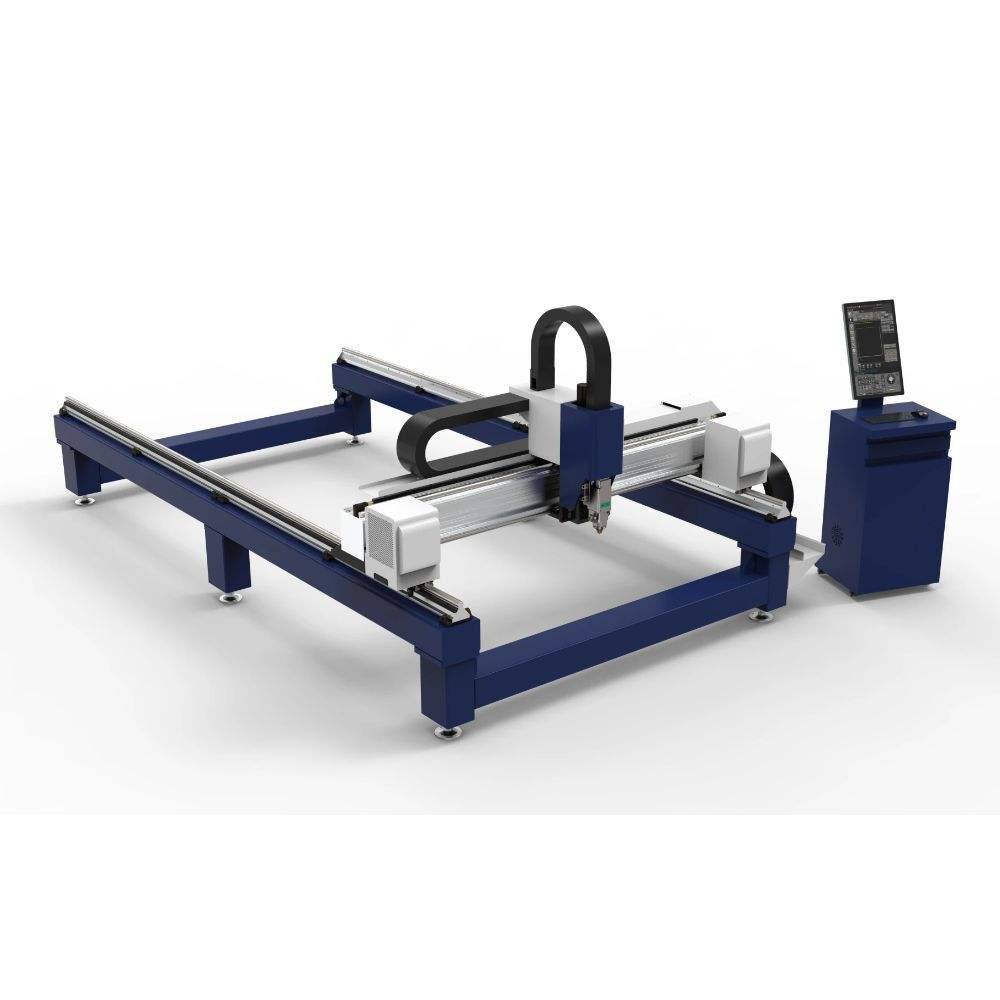
The core of this system is the synergy between high-wattage Laser Technology and the multi-axis mechanical handling required for heavy H-sections. A 30kW source is not merely about speed; it is about the “power density” required to achieve clean, perpendicular cuts on thick-walled flanges (up to 40mm or more) without the excessive dross associated with lower-power units.
Volumetric Precision and 3D Processing
The H-Beam Laser Cutting Machine utilizes a 5-axis or 6-axis robotic head that rotates around the workpiece. Unlike traditional flatbed lasers, the 3D nature of H-beam processing requires the laser head to maintain a constant focal distance while navigating the transition from the web to the flange. At 30kW, the Laser Technology allows for a much faster feed rate at these transition points, which prevents “over-burning” at the radius of the H-beam—a common failure point in plasma-based systems.
Heat Management in the Riyadh Environment
One of the primary engineering challenges in Riyadh is the ambient heat affecting the chiller’s efficiency. The 30kW fiber source generates significant heat, necessitating a robust, oversized cooling system. We observed that during peak afternoon hours, the Laser Technology maintained stability only when the chiller was sheltered from direct sunlight and the cabinet was pressurized to keep out the fine Riyadh dust. The synergy here is mechanical: the machine’s enclosure must act as a clean room to protect the sensitive optics that focus the 30kW beam.
3. Downstream Impact on Steel Welding Protocols
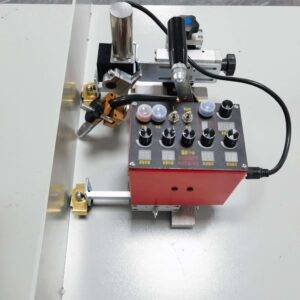
The most substantial “lesson learned” from this installation is that the H-Beam Laser Cutting Machine is not just a cutting tool; it is a welding preparation tool. In structural Steel welding, the quality of the joint is dictated by the fit-up. Traditional plasma cutting leaves a serrated edge and a thick oxide layer that must be ground off manually before any certified welding can take place.
Root Gap Optimization and Consumable Reduction
With the 30kW Laser Technology, the kerf width is exceptionally narrow (often less than 0.5mm). When cutting complex copes or “dog-bone” connections for seismic-resistant frames, the precision of the H-Beam Laser Cutting Machine ensures that the root gap is consistent across the entire length of the joint. This consistency is a paradigm shift for Steel welding. In our field tests, we observed a 30% reduction in welding consumable usage (wire and gas) because the welders were no longer “filling the gaps” created by inaccurate plasma cuts.
Elimination of the Heat-Affected Zone (HAZ) Issues
A critical technical concern in Steel welding is the Heat-Affected Zone. While a laser is a thermal process, the 30kW power allows for such high travel speeds that the total heat input into the base material is actually lower than that of a 10kW laser or a plasma torch. This results in a narrower HAZ, reducing the risk of hydrogen-induced cracking in the subsequent Steel welding phase. For the Grade S355JR steel commonly used in Riyadh’s projects, this maintains the metallurgical integrity of the flange-to-web junctions.
4. Technical Performance Data: 30kW vs. Traditional Methods
To quantify the impact, we tracked the processing of a standard HEB 400 beam with a 12-meter length requiring six bolt-hole patterns and a double-sided bevel cut for a moment connection.
- Mechanical Saws & Drills: Total time 45 minutes (including handling and tool changes). High potential for hole misalignment.
- Plasma (Manual Prep): Total time 25 minutes. Requires 15 minutes of secondary grinding to remove dross before Steel welding.
- 30kW H-Beam Laser Cutting Machine: Total time 4.5 minutes. The finish is “weld-ready” with no secondary grinding required.
The Laser Technology handles the beveling (up to 45 degrees) in the same pass as the cut-off. This ensures that the bevel geometry is mathematically perfect, which is vital for Submerged Arc Welding (SAW) or Flux-Cored Arc Welding (FCAW) used in our Riyadh shop.
5. Lessons Learned and Engineering Optimization
Over the first six months of operation in Riyadh, several critical engineering adjustments were made to the H-Beam Laser Cutting Machine workflow:
Software Integration and the “Digital Twin”
We learned that the Laser Technology is only as good as the DSTV/STEP files provided by the design office. We had to retrain our Tekla draftsmen to include specific weld prep clearances in their models. The H-Beam Laser Cutting Machine reads these files directly, but if the model doesn’t account for the precision of the laser, the Steel welding team will find the fit-up too tight, leaving no room for weld shrinkage.
Gas Assist Selection
Initially, we used Oxygen for all cuts to maximize speed. However, we found that Oxygen creates a thin oxide layer on the cut surface that can interfere with high-quality Steel welding if not removed. We switched to High-Pressure Nitrogen for sections under 20mm. While more expensive, the “bright finish” provided by Nitrogen Laser Technology allows for immediate Steel welding without any surface treatment, further increasing throughput.
Material Quality Variance
Not all H-beams are created equal. We noticed that beams with high internal stresses (common in cheaper imports) tend to “spring” or bow once the laser cuts the flange. The H-Beam Laser Cutting Machine must have a high-end “touch-sensing” or “laser-scanning” system to re-map the beam’s actual position in real-time. Without this, the 30kW Laser Technology might be precise, but it will be cutting in the wrong place relative to a warped beam.
6. Safety and Maintenance Protocols
The intensity of a 30kW fiber laser is an extreme safety hazard. Unlike CO2 lasers, the 1um wavelength of fiber Laser Technology is easily absorbed by the human eye, even from reflections. The H-Beam Laser Cutting Machine in Riyadh is housed in a fully light-tight enclosure with OD6+ rated viewing windows. Maintenance schedules were increased from quarterly to monthly to account for the fine sand ingress, specifically focusing on the bellows and the rack-and-pinion drives.
7. Conclusion
The implementation of the 30kW H-Beam Laser Cutting Machine in Riyadh has proven that high-power Laser Technology is the catalyst for modernizing structural steel fabrication. By providing superior edge quality and dimensional accuracy, it directly enhances the efficiency and structural integrity of the Steel welding process. For senior engineers managing large-scale infrastructure, the reduction in labor hours and the elimination of fit-up errors offer a clear path to meeting the aggressive timelines of Saudi Arabia’s current construction boom. The future of the Riyadh workshop is not just about cutting faster; it is about cutting smarter to weld better.