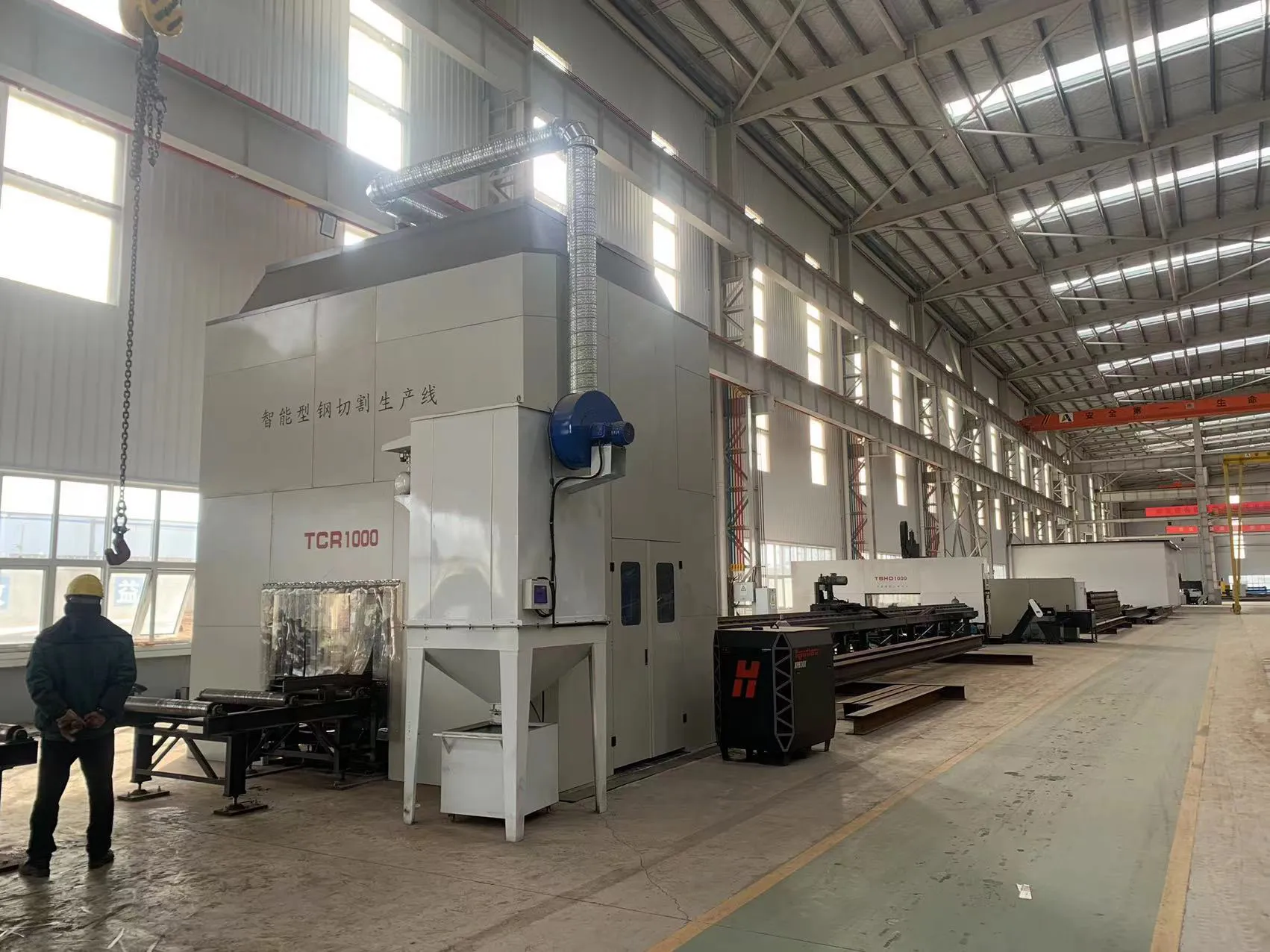
The Evolution of Structural Fabrication: The 30kW Power Threshold
In the realm of structural engineering, particularly for the massive infrastructure projects currently spanning Pune—from the Pune Metro extensions to the sprawling flyovers connecting Hinjewadi—the demand for heavy-duty steel processing has never been higher. Traditionally, bridge engineering relied on plasma cutting or mechanical sawing and drilling. However, the advent of the 30kW fiber laser has fundamentally altered the fabrication landscape.
As a fiber laser expert, I have observed that the leap from 12kW to 30kW is not merely incremental; it is transformative. At 30kW, the laser’s energy density allows it to pierce and cut structural carbon steel up to 50mm-80mm with extreme velocity. For bridge components like gusset plates and heavy-duty I-beams, this means the Heat Affected Zone (HAZ) is drastically reduced. A smaller HAZ ensures that the metallurgical integrity of the high-tensile steel remains intact, a critical factor for the structural safety of bridges subject to dynamic loads and environmental stresses.
Precision 3D Profiling for Heavy-Duty I-Beams
Bridge engineering utilizes complex geometries, where I-beams, H-beams, and channels must be notched, beveled, and perforated with absolute accuracy. A 30kW Heavy-Duty I-Beam Laser Profiler is specifically engineered to handle these multi-dimensional tasks. Unlike standard flatbed lasers, these machines utilize a 5-axis or robotic cutting head and a specialized chuck system that can rotate and stabilize massive beams weighing several tons.
The “profiling” aspect refers to the machine’s ability to perform “all-in-one” processing. In Pune’s fabrication shops, a single 30kW machine can take a raw 12-meter I-beam and perform bolt-hole cutting, web notching, and flange beveling in a single continuous cycle. The precision of +/- 0.05mm is something that manual plasma cutting can never replicate. This level of accuracy ensures that when the beams arrive at the bridge construction site—whether it’s over the Mula-Mutha River or a railway crossing—the fit-up is perfect, reducing onsite welding time and eliminating the need for costly “re-work.”
Zero-Waste Nesting: Maximizing Material Efficiency in Pune
One of the most significant costs in bridge engineering is the raw material. High-grade structural steel is expensive, and waste (scrap) can account for a significant percentage of the total project budget. This is where “Zero-Waste Nesting” technology becomes a game-changer for Pune-based contractors.
Zero-waste nesting utilizes advanced AI algorithms to arrange parts on a beam or plate so tightly that the “skeleton” of the leftover material is minimized to almost nothing. In the context of I-beam profiling, this involves “Common Line Cutting,” where two parts share a single cut line. For the massive volume of steel used in Pune’s infrastructure projects, moving from a 15% waste margin to a 2% waste margin translates into millions of rupees in savings. Furthermore, the 30kW laser’s narrow kerf (the width of the cut) facilitates this tight nesting, allowing for intricate geometries that were previously impossible to nest efficiently.
The Synergy of Power and Automation in Bridge Construction
The 30kW profiler is more than just a cutting tool; it is a fully automated production cell. In Pune’s competitive manufacturing ecosystem, speed is a critical differentiator. These machines are equipped with automated loading and unloading systems that handle the logistics of heavy steel beams.
For bridge engineers, the ability to automate the beveling process is particularly vital. Bridges require specific weld preparations—V-cuts, Y-cuts, and K-cuts—to ensure deep penetration welds. A 30kW laser can cut these bevels simultaneously during the profiling process. This eliminates a secondary stage of production where workers would typically use hand-grinders or oxy-fuel torches to prepare edges. By integrating this into the laser’s motion control system, the consistency of the bevel angle is guaranteed, leading to higher-quality welds and more robust bridge structures.
Addressing Pune’s Infrastructure Challenges
Pune is currently undergoing a massive transformation. The Smart City initiative and the expansion of the Ring Road demand rapid delivery of structural steel. The 30kW fiber laser profiler addresses three local challenges:
1. **Space Constraints:** Pune’s industrial plots are premium. A single I-beam laser profiler replaces multiple machines (drills, saws, plasma tables), freeing up significant floor space.
2. **Labor Shortage:** Skilled manual cutters and layout markers are increasingly difficult to find. The CNC-driven nature of the 30kW laser means that once the CAD/CAM file is loaded, the machine performs the complex work with minimal human intervention.
3. **Environmental Compliance:** Pune is becoming stricter regarding industrial emissions. Fiber lasers are more energy-efficient than CO2 lasers or plasma cutters, and they produce fewer fumes and secondary waste products, aligning with “green” construction initiatives.
The Technical Edge: Why 30kW for Bridge Steel?
From a technical standpoint, the 30kW source allows for the use of air or nitrogen as a shielding gas even on thicker sections, which is much faster than oxygen cutting. When cutting I-beams for bridge decks, oxygen cutting often leaves an oxide layer that must be removed before painting or galvanizing. Nitrogen cutting with a 30kW laser leaves a clean, bright edge that is immediately ready for the next stage of the coating process.
Additionally, the stability of the heavy-duty bed on these machines is designed to dampen the vibrations caused by moving a 30kW head at high speeds. In Pune’s fabrication facilities, where ambient temperatures can be high, these machines are equipped with advanced chilling systems to ensure that the laser source remains stable during 24/7 operation, which is often required to meet tight government deadlines for bridge completion.
ROI and Long-Term Impact on Bridge Engineering
The initial capital expenditure for a 30kW I-beam laser profiler is substantial, but the Return on Investment (ROI) for bridge engineering firms in Pune is rapid. By consolidating the workflow—cutting, drilling, marking, and beveling—into one station, the throughput can increase by 300% to 500% compared to traditional methods.
Furthermore, the “Zero-Waste” software provides detailed reporting on material usage, allowing project managers to provide more accurate bids for government tenders. In the long run, the bridges built using laser-cut components will have a longer service life. The precision of the bolt holes and the lack of micro-fractures in the cut edges (common with mechanical punching) mean that the structural fatigue points are significantly reduced.
Conclusion: The Future of Pune’s Skyline
As we look toward the future of Pune’s infrastructure, the 30kW Fiber Laser Heavy-Duty I-Beam Laser Profiler stands as the cornerstone of modern fabrication. It represents a marriage of raw power and digital intelligence. For bridge engineering, it means faster construction, lower costs, and safer structures.
For the fabricators of Maharashtra, adopting this technology is no longer an option but a necessity to remain competitive in a globalized market. The ability to take a complex bridge design and translate it into a perfectly cut, zero-waste set of steel components within hours is the new standard. As a laser expert, I see Pune not just as a consumer of this technology, but as a future hub for high-tech structural fabrication that will set the benchmark for the rest of India.