The Dawn of Ultra-High Power: Why 30kW Changes Everything
In the realm of fiber lasers, the leap from 12kW to 30kW is not merely an incremental upgrade; it is a transformative jump in processing capability. For years, heavy structural steel (I-beams, H-beams, and thick channels) was the domain of plasma cutting or mechanical saws. While effective, these methods lacked the finesse required for the burgeoning modular construction industry.
A 30kW fiber laser source provides an energy density that allows for “lightning-fast” piercing and cutting of carbon steel up to 80mm thick. In the context of Dubai’s modular skyscrapers and massive infrastructure projects, this means the primary load-bearing members can be processed with the same intricacy as thin sheet metal. The high wattage ensures that the Heat Affected Zone (HAZ) is minimized, preserving the structural integrity of the I-beam—a critical factor when the steel is intended for high-stress modular frames. Furthermore, the speed of 30kW cutting reduces the cost-per-part significantly, allowing UAE-based fabricators to remain competitive against international imports.
Engineering the Heavy-Duty I-Beam Profiler
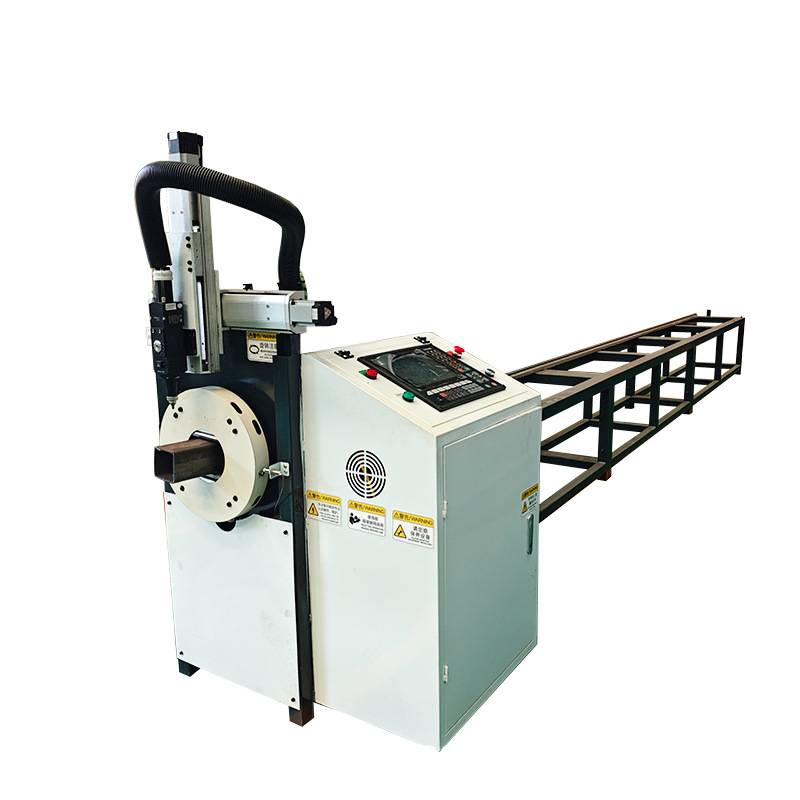
Processing an I-beam is vastly more complex than cutting flat plate. A 30kW Heavy-Duty Profiler utilizes a specialized multi-axis configuration, typically involving a large-scale gantry and a series of synchronized rotary chucks. These chucks can rotate beams weighing several tons with high angular precision.
The “Heavy-Duty” designation refers to the machine’s ability to handle standard lengths of 12 to 15 meters, common in Dubai’s industrial ports and warehouses. The profiler is equipped with a 3D cutting head capable of +/- 45-degree beveling. This allows for complex miter cuts, weld preparation (V-cuts, Y-cuts), and the “fish-mouth” geometries required for intersecting beams. For modular construction, where beams often serve as the skeleton for pre-fitted MEP (Mechanical, Electrical, and Plumbing) systems, the laser can precut holes for conduits and pipes with absolute digital fidelity, guided directly by BIM (Building Information Modeling) files.
Automatic Unloading: The Key to Continuous Production
In high-output environments like the industrial zones of Jebel Ali or Al Quoz, downtime is the enemy of ROI. A 30kW laser cuts so quickly that manual unloading of heavy beams becomes a dangerous and inefficient bottleneck. This is where the Automatic Unloading System becomes indispensable.
Once the laser completes the profiling of a 12-meter I-beam, a series of hydraulic lifters and motorized conveyor systems take over. These systems are designed to detect the weight and center of gravity of the processed beam, moving it safely from the cutting zone to a dedicated sorting area. This automation serves three purposes:
1. **Safety:** It removes human operators from the vicinity of heavy swinging loads and sharp, freshly cut edges.
2. **Consistency:** It ensures the cutting bed is cleared in a predictable timeframe, allowing the next raw beam to be loaded immediately.
3. **Data Integration:** Modern unloading systems often include inkjet marking or laser etching of QR codes, which are essential for the “tracking and tracing” required in modular assembly lines.
The Dubai Context: Solving Regional Challenges
Operating high-precision 30kW lasers in Dubai presents unique environmental challenges, primarily extreme ambient heat and airborne dust (silica). A fiber laser expert knows that thermal management is the heartbeat of the system.
The 30kW units deployed in the UAE are outfitted with specialized dual-circuit industrial chillers. One circuit cools the laser source, while the other maintains the temperature of the cutting head and optics. In a 50°C Dubai summer, these chillers must be over-specified to prevent thermal lensing—a phenomenon where heat deforms the optics, causing the laser beam to drift.
Furthermore, the “Heavy-Duty” nature of these machines includes pressurized, dust-proof cabinets for all electronic components. The integration of high-volume dust extraction systems is not just an environmental regulation compliance; it is a necessity to prevent metallic dust from interfering with the laser’s path or the sensitive linear motors that drive the gantry.
Modular Construction: A Perfect Synergy
Modular construction in the UAE is fueled by the need for speed and the desire to reduce on-site labor. In this model, 80% of a building is constructed in a factory and then transported to the site. The margin for error is virtually zero; if an I-beam in Module A is off by 5mm, it will not bolt to Module B.
The 30kW Laser Profiler acts as the “Master Carpenter” for steel. Because the machine reads directly from the architect’s 3D model, every bolt hole, notch, and bevel is perfectly placed. This eliminates the need for “on-site adjustments” (grinding and welding), which are costly and slow down Dubai’s aggressive construction timelines. When the modular frames are assembled in a controlled factory environment, the precision of the laser-cut beams ensures that the modules are perfectly square, which is vital for the structural stability of multi-story modular hotels and residential complexes.
Economic Impact and Sustainability
The investment in a 30kW fiber laser system is substantial, but the ROI in the Dubai market is driven by three factors: material utilization, labor reduction, and energy efficiency.
Fiber lasers are significantly more energy-efficient than older CO2 technology, consuming about 30% less power for the same output—a key consideration as the UAE pushes toward “Green Building” initiatives and Net Zero goals. Additionally, the precision of the laser allows for “nesting” of parts on a single beam, minimizing scrap steel. In an era of volatile raw material prices, saving 5-10% on steel waste can equate to hundreds of thousands of Dirhams in annual savings.
From a labor perspective, one 30kW laser profiler with automatic unloading can replace the output of five to eight workers using traditional manual methods. In the UAE, where managing large labor forces involves complex visa and housing logistics, transitioning to high-tech automated solutions allows firms to scale their production without proportionally increasing their headcount.
Future Outlook: The Intelligent Factory
The next step for Dubai’s modular construction leaders is the full integration of the 30kW profiler into the “Smart Factory” ecosystem. With 5G connectivity becoming standard in the UAE’s industrial zones, these machines can provide real-time telemetry to project managers. One can monitor the cutting progress, gas consumption, and machine health from a smartphone in an office in Downtown Dubai while the machine operates in the outskirts.
As modular construction moves toward more complex, “iconic” geometries—shifting away from simple boxes to the fluid shapes Dubai is known for—the 3D cutting capabilities of the 30kW laser will be the only way to realize these designs economically.
Conclusion
The 30kW Fiber Laser Heavy-Duty I-Beam Laser Profiler with Automatic Unloading is more than a piece of machinery; it is a strategic asset for the future of the UAE. By bridging the gap between heavy structural engineering and high-precision digital fabrication, it enables the modular construction industry to build faster, safer, and with an level of accuracy that was previously impossible. For the developers and contractors shaping the skyline of Dubai, this technology represents the pinnacle of industrial efficiency, ensuring that the city remains at the global forefront of architectural innovation.