The Dawn of Ultra-High Power: Why 30kW Matters for Heavy Infrastructure
In the world of heavy-duty fabrication, power is not merely a metric of speed; it is a metric of capability. For decades, the structural steel industry—particularly those serving the railway sector—relied on plasma cutting or oxy-fuel systems. While effective for thick materials, these methods suffered from wide heat-affected zones (HAZ), significant dross, and a lack of dimensional precision. The introduction of the 30kW fiber laser source changes this equation entirely.
At 30kW, the energy density at the focal point is immense. This power level allows for the high-speed “vaporization” cutting of thick-walled I-beams, H-beams, and U-channels that are the backbone of railway infrastructure. For Pune’s heavy engineering firms, this means the ability to cut through 30mm to 50mm carbon steel with a precision previously reserved for thin sheet metal. The increased power also facilitates the use of compressed air or nitrogen as cutting gases for thicker sections, which can significantly reduce the cost per part compared to traditional oxygen cutting, while providing a cleaner, weld-ready edge.
Precision Engineering: The ±45° Bevel Cutting Revolution
One of the most critical requirements in railway construction is structural integrity, which is heavily dependent on weld quality. Traditionally, I-beams had to be cut to length and then moved to a separate station where workers would manually grind or mill the edges to create a bevel for welding. This secondary process was time-consuming, prone to human error, and inconsistent.
The Heavy-Duty I-Beam Laser Profiler equipped with a 5-axis 3D cutting head solves this by introducing ±45° beveling directly into the cutting cycle. Whether it is a V, X, Y, or K-type bevel, the 30kW laser can profile the beam and prepare the weld geometry in a single pass. This “all-in-one” approach ensures that when two beams meet for assembly—whether in a railway bridge span or a locomotive chassis—the fit-up is perfect. For the Indian Railways, this translates to stronger welds, longer asset lifespans, and significantly reduced maintenance costs.
Pune: The Strategic Hub for Railway Fabrication
Pune has long been recognized as a powerhouse of Indian engineering. Its proximity to major railway zones and its established ecosystem of automotive and heavy machinery manufacturing make it the ideal location for the deployment of 30kW laser technology. The city’s industrial corridors, such as Chakan, Talegaon, and Pimpri-Chinchwad, host some of the most advanced fabrication facilities in the country.
By adopting the 30kW I-Beam Profiler, Pune-based fabricators can position themselves as Tier-1 suppliers for prestigious projects like the Diamond Quadrilateral high-speed rail and the extensive station redevelopment programs under the Amrit Bharat Station Scheme. The local availability of skilled engineers and technicians in Pune also ensures that the complex programming required for 3D bevel cutting—often utilizing advanced CAD/CAM software—is handled by experts, maximizing the machine’s ROI and operational efficiency.
Impact on Railway Bridge Construction and High-Speed Rail
Railway bridges are subject to extreme dynamic loads and environmental stresses. The structural steel used in these bridges must be cut with surgical precision to ensure that stress is distributed evenly across the assembly. The 30kW laser’s ability to cut thick sections with a minimal heat-affected zone is crucial here. Excessive heat from traditional cutting methods can alter the metallurgical properties of the steel, potentially leading to brittle fractures over time.
Furthermore, the ±45° beveling capability allows for deep-penetration welds that are essential for the heavy-load-bearing requirements of Indian Railways’ freight corridors. As the country moves toward higher speed limits for passenger trains, the tolerances for structural components become even tighter. A laser-cut I-beam, with its sub-millimeter accuracy and perfectly angled bevels, meets these stringent international standards, ensuring that Pune’s manufacturing output is globally competitive.
Technical Mastery: Handling Heavy-Duty I-Beams
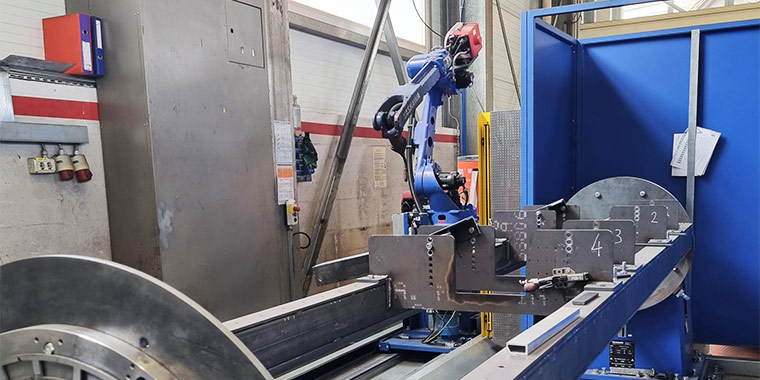
The 30kW Heavy-Duty I-Beam Laser Profiler is not just about the laser source; it is about the “Heavy-Duty” machine architecture. Handling structural steel beams that can reach lengths of 12 meters and weigh several tons requires a sophisticated material handling system. These profilers utilize heavy-duty chucks and synchronized rollers that can rotate and feed the beam through the cutting zone with high repeatability.
The 5-axis head must move with incredible agility around the fixed or rotating beam. The control software must account for the natural deviations in structural steel—beams are rarely perfectly straight. Advanced sensors and “search” functions allow the laser head to map the actual surface of the beam in real-time, adjusting the cutting path to ensure that the bevel remains consistent regardless of the beam’s minor twists or bows. This level of technical sophistication is what distinguishes a standard laser cutter from a dedicated 3D structural profiler.
Economic and Environmental Benefits
The shift to 30kW fiber laser technology also presents a compelling economic case. While the initial capital expenditure is higher than plasma or mechanical systems, the throughput is exponentially greater. A single 30kW laser can often replace three to four traditional cutting lines. This consolidation saves floor space—a premium in Pune’s industrial zones—and reduces the total energy consumption per ton of processed steel.
From an environmental standpoint, fiber lasers are significantly more efficient than CO2 lasers or plasma systems. They produce fewer fumes and eliminate the need for the chemical cleaning often required after oxy-fuel cutting. For companies looking to adhere to ESG (Environmental, Social, and Governance) goals while serving the government’s infrastructure tenders, the fiber laser is the “greenest” choice available for heavy metal fabrication.
The Future of Railway Infrastructure in India
As India continues its massive overhaul of its railway network, the demand for high-quality structural steel components will only accelerate. The transition from “traditional fabrication” to “smart fabrication” is no longer optional. The 30kW Fiber Laser Heavy-Duty I-Beam Laser Profiler represents the pinnacle of this evolution.
By integrating this technology in Pune, the heart of India’s engineering belt, the industry is not just buying a machine; it is investing in a capability. The ability to cut, bevel, and profile heavy beams with 45-degree accuracy at the touch of a button allows for the design of more complex, lighter, and stronger railway structures. It enables the rapid prototyping of new rolling stock designs and reduces the lead time for critical bridge repairs.
In conclusion, the marriage of 30kW ultra-high-power fiber lasers with 5-axis beveling technology is a transformative force for Pune’s railway infrastructure sector. It bridges the gap between raw structural steel and high-precision engineering, ensuring that the veins of the nation—the Indian Railways—are built on a foundation of unmatched quality, speed, and structural integrity. For the fiber laser expert, this is more than a technological advancement; it is the cornerstone of a new era in heavy-duty manufacturing.