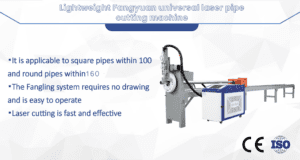
The Dawn of High-Power Laser Fabrication in Istanbul
Istanbul has long been a strategic nexus for trade and manufacturing. However, the recent surge in modular construction—driven by the need for sustainable, fast-tracked infrastructure—has necessitated a technological leap. The 30kW Fiber Laser H-Beam Cutting Machine represents the pinnacle of this evolution. Unlike the lower-wattage systems of the past decade, the 30kW threshold allows for the effortless slicing of thick-walled structural steel, which is the backbone of modular frames.
The choice of a 30kW power source is not merely about speed; it is about the quality of the finish and the ability to handle the massive cross-sections required for high-rise modular units. In Istanbul’s competitive industrial zones, where efficiency is the primary currency, these machines are replacing traditional plasma cutters and mechanical saws, offering a cleaner, faster, and more versatile alternative.
Precision Engineering for Modular Construction
Modular construction relies on the “Lego-block” principle: individual units are fabricated in a factory and assembled on-site. For this to work, tolerances must be microscopic. A discrepancy of even a few millimeters in an H-beam can lead to structural misalignment during the stacking of modules.
The 30kW Fiber Laser excels in this environment. Equipped with 3D cutting heads and sophisticated sensing technology, the machine can execute complex geometries—including miter cuts, notches, bolt holes, and weld preparations—with a precision of +/- 0.05mm. This level of accuracy ensures that every H-beam produced in an Istanbul facility fits perfectly into the modular matrix, drastically reducing the time spent on-site for adjustments and shimming.
The Game-Changer: Automatic Unloading Systems
One of the most significant bottlenecks in traditional beam processing is the material handling phase. Heavy structural steel requires cranes, forklifts, and manual labor to move from the cutting bed to the next stage of production. The integration of an Automatic Unloading system in the latest 30kW laser models changes the ROI (Return on Investment) equation entirely.
In these advanced systems, once the laser completes its intricate dance across the H-beam, a series of synchronized mechanical arms or conveyor rollers take over. The finished part is automatically moved to a designated sorting area, while the next raw beam is positioned for cutting. This “lights-out” capability means that Istanbul-based factories can operate 24/7 with minimal human intervention. It reduces the risk of workplace injuries associated with moving heavy steel and ensures that the 30kW laser—the most expensive asset in the shop—is never idling.
30kW Fiber Laser vs. Traditional Cutting Methods
To understand why Istanbul’s modular construction leaders are investing in 30kW fiber technology, one must compare it to legacy systems like plasma cutting and mechanical drilling.
1. **Edge Quality:** Plasma cutting often leaves a dross or a heat-affected zone (HAZ) that requires secondary grinding. The 30kW fiber laser produces a “ready-to-weld” edge, saving hours of post-processing.
2. **Speed:** At 30kW, the laser can cut through 20mm or 30mm steel plate (the flanges of an H-beam) at speeds that leave plasma in the dust.
3. **Versatility:** Traditional mechanical lines require different stations for sawing and drilling. The laser combines these into a single process. It can “drill” a hole and “saw” the beam in one continuous program.
4. **Energy Efficiency:** Modern fiber lasers have a high wall-plug efficiency. Despite the high wattage, the cost per part is lower than older CO2 lasers or high-definition plasma systems when factoring in gas consumption and maintenance.
Istanbul: A Hub for Modular Building Innovation
The geographical and economic landscape of Istanbul makes it an ideal proving ground for this technology. The city is currently experiencing an urban transformation, with a massive push toward earthquake-resistant, steel-frame modular housing. Furthermore, Istanbul serves as a manufacturing hub for exports to the Middle East, Africa, and Europe.
By adopting 30kW Fiber Laser H-Beam machines, Turkish fabricators are able to bid on international modular projects that demand the highest certifications. The ability to produce high volumes of structural steel with digital traceability (as every cut is logged by the machine’s CNC software) provides a level of quality assurance that international contractors demand. This technology isn’t just building structures; it’s building the reputation of Istanbul as a center for high-tech industrial excellence.
Sustainability and Material Optimization
In the modern era, construction must be “green.” Modular construction is inherently more sustainable than traditional building, as it reduces on-site waste. The 30kW laser takes this a step further through advanced nesting software.
The software calculates the most efficient way to cut various parts from a single length of H-beam, minimizing “drop” or scrap metal. In a city like Istanbul, where raw material costs are subject to global market fluctuations, the ability to squeeze every centimeter of value out of a steel beam is a significant competitive advantage. Additionally, the fiber laser process is far cleaner than plasma, producing fewer fumes and requiring less chemical cleaning of the steel.
The Future of Steel Fabrication in the Region
The integration of 30kW fiber lasers with automatic unloading is just the beginning. As we look toward the future, these machines are becoming increasingly connected via the Industrial Internet of Things (IIoT). Fabricators in Istanbul can now monitor their machine’s performance, gas levels, and cutting speeds from a smartphone, ensuring that the modular construction pipeline never stops.
For companies involved in modular schools, hospitals, and residential complexes, the 30kW H-beam laser is the heart of the factory. It provides the pulse of production, ensuring that the skeleton of the building—the H-beams—are delivered on time, every time, with a level of precision that was once thought impossible in heavy industry.
Conclusion
The marriage of 30kW fiber laser power, H-beam specialization, and automatic unloading technology is a transformative force for Istanbul’s construction sector. As modular construction continues to gain traction globally, the efficiency and precision provided by these machines will be the deciding factor between projects that succeed and those that fall behind. By investing in this high-end automation, Istanbul is not just keeping pace with global trends; it is defining the future of how our world is built, one perfectly cut beam at a time.