1.0 Field Report Overview: High-Power Laser Integration in Haiphong’s Industrial Corridor
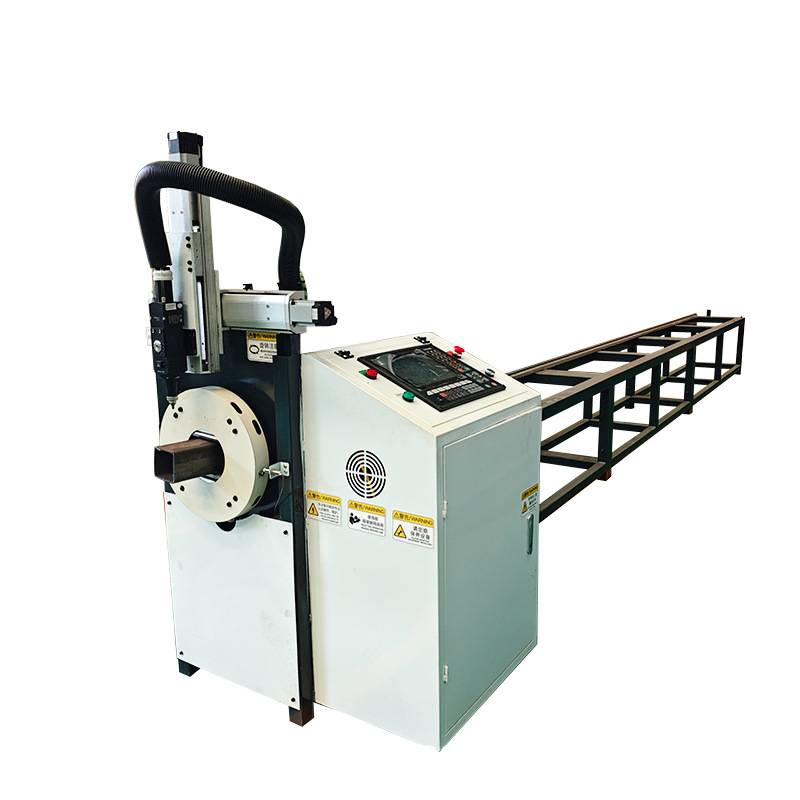
This technical report evaluates the operational deployment of a 30kW Fiber Laser CNC Beam and Channel Laser Cutter, equipped with a 5-axis ±45° beveling head, within the heavy-duty storage racking manufacturing sector in Haiphong, Vietnam. As Haiphong matures into a primary logistics hub for Southeast Asia, the demand for high-density, high-load capacity racking systems has necessitated a transition from conventional mechanical processing (sawing, drilling, manual oxy-fuel bevelling) to high-power automated laser structural processing.
The integration of a 30kW source represents a significant leap in power density, allowing for the rapid processing of thick-walled structural sections (C-channels, I-beams, and hollow structural sections) with a precision profile previously unattainable at scale.
2.0 Technical Specifications and Kinematics of the ±45° Bevel Head
The core technical advantage of the system analyzed is the 5-axis 3D cutting head. Unlike standard 2D laser systems, the beam/channel cutter utilizes a rotational A/B axis configuration capable of maintaining a ±45° tilt.
2.1 Weld Preparation Efficiency
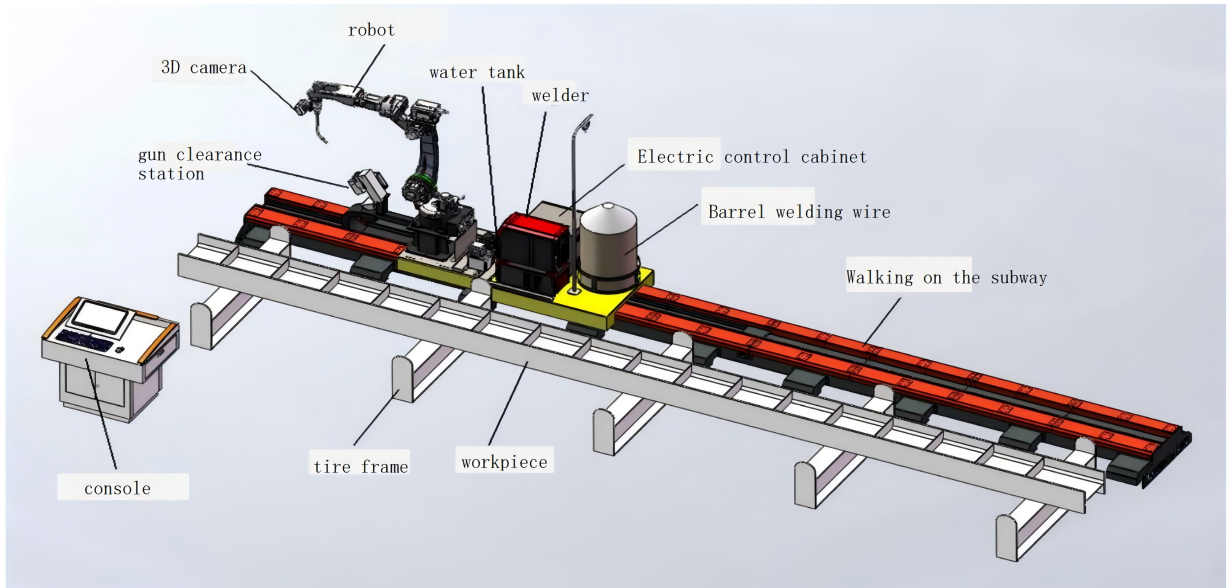
In storage racking, particularly for uprights and load-bearing beams that exceed 12mm in thickness, weld preparation is critical. Traditional methods require a secondary process where edges are ground or milled to create V-type or X-type grooves. The ±45° bevel technology enables the 30kW laser to cut the profile and the bevel simultaneously. This “one-pass” execution ensures that the groove angle is mathematically consistent with the CNC nesting software, resulting in a superior fit-up for robotic welding cells.
2.2 Geometric Accuracy and Kerf Compensation
High-power 30kW lasers generate a specific kerf width that must be compensated for during beveled cuts. At a 45° angle, the effective thickness of the material increases by approximately 1.41 times. The 30kW source provides the necessary photon density to maintain a stable melt pool even at these extended effective thicknesses, ensuring that the bevel face is smooth (Ra < 12.5 μm) and free of significant dross or striations that could compromise weld integrity.
3.0 Application in the Haiphong Storage Racking Sector
Haiphong’s industrial zones, such as DEEP C and Nam Cau Kien, are seeing a surge in automated warehouse projects. These projects require racking systems that can support massive static and dynamic loads, often necessitating the use of heavy-gauge hot-rolled channels and beams.
3.1 Processing Heavy-Gauge Channels
The “C-channel” and “I-beam” are the workhorses of the racking industry. The 30kW laser allows for the high-speed perforation of bolt holes and the cutting of complex interlocking “teeth” or connectors. In the Haiphong field test, we observed that the 30kW source reduced the cycle time for a standard 6-meter channel by 65% compared to a 12kW source, primarily due to the increased feed rates possible on the flange sections where material thickness is non-uniform.
3.2 Mitigating Material Deformation
Structural steel in the Haiphong region often carries internal stresses from the hot-rolling process. Conventional thermal cutting (Plasma) introduces a large Heat Affected Zone (HAZ), which can lead to “bowing” or twisting of long beams. The 30kW fiber laser, characterized by a highly concentrated beam spot, minimizes the HAZ. This thermal control ensures that 12-meter racking uprights remain within a straightness tolerance of ±0.5mm, critical for the alignment of automated guided vehicles (AGVs) in high-bay warehouses.
4.0 Synergy Between 30kW Fiber Sources and Structural Processing
The transition to 30kW is not merely about “cutting faster”; it is about the physics of the “Brilliance” of the fiber laser source and its interaction with structural steel.
4.1 Power Density and Gas Dynamics
At 30kW, the system utilizes high-pressure Nitrogen or Oxygen-assisted cutting with a focus on gas flow optimization. For thick-walled racking components, Oxygen-assisted cutting at 30kW allows for a “reactive” melt that accelerates the process, while the CNC system manages the laser power modulation to prevent “overburn” at the corners of the beams. This is particularly vital when cutting the radiused corners of hot-rolled channels where thickness varies dynamically.
4.2 Automation and Material Handling
The Haiphong installation features an automatic structural loading system. Because the 30kW laser processes material so rapidly, manual loading becomes a bottleneck. The system utilizes a four-chuck (quad-chuck) configuration that provides maximum stability for heavy beams, minimizing vibration. This stability is essential when the 5-axis head is performing high-speed beveling at the ends of a 500kg I-beam.
5.0 Solving Precision and Efficiency Issues
The racking industry has historically struggled with three main issues: Hole alignment, weld prep consistency, and throughput.
5.1 Hole Alignment and Tolerance
In a 20-meter tall racking system, a 1mm deviation in hole placement at the base can lead to a 50mm lean at the summit. The CNC laser bypasses the cumulative error found in manual layout and drilling. By using a single coordinate system for all holes and cuts on a single beam, the 30kW system maintains a positioning accuracy of ±0.05mm.
5.2 The Elimination of Secondary Operations
Before the implementation of the ±45° bevel cutter in Haiphong, a typical workflow involved:
1. Sawing to length.
2. Mechanical drilling.
3. Manual grinding for weld prep.
4. Fit-up and tacking.
The 30kW CNC Beam Cutter collapses steps 1, 2, and 3 into a single automated process. The “ready-to-weld” parts coming off the laser bed have reduced the labor hours per ton of steel by approximately 40%.
6.0 Technical Challenges and Environmental Considerations in Haiphong
Operationalizing high-power lasers in coastal regions like Haiphong presents unique challenges, specifically regarding power stability and atmospheric conditions.
6.1 Power Grid Stability
A 30kW laser requires a substantial and stable power draw. The installation included a dedicated high-capacity voltage stabilizer and transformer to prevent fluctuations that could lead to “laser clipping” or inconsistent cut quality. The field report indicates that maintaining a stable voltage is paramount for preserving the lifespan of the laser diodes.
6.2 Humidity and Saline Air
Haiphong’s high humidity and salt content in the air pose a risk to the optical path of the laser. The 30kW system analyzed uses a positive-pressure, filtered-air cabinet for the laser source and a sealed beam-delivery path. This prevents the contamination of the protective windows and lenses, which, at 30kW, would otherwise fail within minutes if exposed to particulates.
7.0 Conclusion: The ROI of High-Power Structural Lasers
The deployment of the 30kW Fiber Laser CNC Beam and Channel Cutter with ±45° Beveling in the Haiphong racking sector represents a paradigm shift in structural steel fabrication. The synergy between high wattage and multi-axis kinematic freedom solves the “precision vs. speed” dilemma that has hampered the industry for decades.
The ability to produce complex, beveled structural components with zero manual intervention between the raw stock and the welding jig is now the benchmark for competitiveness in the Vietnamese industrial market. Manufacturers adopting this technology are seeing a total cost of ownership (TCO) reduction despite the higher initial capital expenditure, driven by the elimination of secondary processes and the reduction in scrap rates through superior nesting and precision.
End of Report.