The Dawn of 30kW Power in Brazilian Heavy Industry
For decades, the mining machinery sector in Brazil, particularly those centered around the industrial corridors of São Paulo, relied on plasma cutting or traditional mechanical sawing and drilling for structural steel. However, the arrival of the 30kW fiber laser has rewritten the rules of engagement. As a fiber laser expert, I have observed that the jump from 12kW or 15kW to 30kW is not merely an incremental improvement; it is a fundamental shift in the physics of material interaction.
At 30kW, the energy density at the focal point is so intense that it transitions from a “melting and blowing” process to a high-speed vaporizing process, even in thick-walled structural sections. For mining machinery—which requires robust frames, massive vibratory screens, and reinforced crusher housings—the ability to slice through 20mm to 50mm steel with minimal Heat Affected Zones (HAZ) is critical. This power ensures that the structural integrity of the steel is maintained, a non-negotiable requirement for equipment operating in the harsh environments of the Amazonian or Minas Gerais mines.
Precision Engineering for Beams and Channels
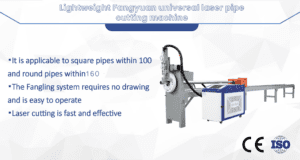
Unlike flat-sheet lasers, a Beam and Channel Laser Cutter must operate in a multi-axis environment. The 30kW systems deployed in São Paulo typically feature a large-scale rotary chuck system or a 5-axis fiber head capable of maneuvering around the complex geometries of structural profiles.
When processing an I-beam or a U-channel, the laser must maintain a constant standoff distance while transitioning from the flange to the web. The 30kW source provides the “overpower” necessary to maintain speed during these transitions, preventing dross buildup at the corners. For mining applications, where beams often serve as the primary chassis for heavy haulers or conveyor systems, the precision of bolt holes and interlocking tabs cut by a CNC laser eliminates the need for secondary machining. This “one-pass” philosophy—where a raw beam enters the machine and a finished, ready-to-assemble component exits—is the cornerstone of modern São Paulo manufacturing.
The “Zero-Waste” Nesting Revolution
Material costs represent the highest overhead in mining machinery fabrication. High-tensile steels and specialized alloys are expensive. The “Zero-Waste Nesting” technology integrated into these 30kW systems is a masterclass in computational geometry.
Standard nesting software often leaves significant “remnants” at the ends of beams or between parts. Zero-waste algorithms, however, utilize “Common Line Cutting” and “Micro-Jointing” techniques specifically adapted for 3D profiles. The software calculates the optimal rotation and sequence to allow parts to share a single cut line. Furthermore, advanced 4-chuck systems can move the beam through the cutting zone with such precision that the “dead zone” (the material held by the chuck that usually cannot be cut) is reduced to near zero.
In the context of São Paulo’s competitive market, a 10% to 15% saving in raw material through smarter nesting can be the difference between winning and losing a major mining contract. This efficiency also aligns with the growing “Green Mining” initiatives in Brazil, reducing the carbon footprint associated with steel waste and recycling.
Mining Machinery: Demanding Thickness and Durability
Mining equipment is subjected to extreme fatigue, abrasion, and impact. Components such as excavator buckets, sizers, and heavy-duty feeders require thick-plate structural reinforcements. The 30kW fiber laser excels here because it can process high-strength materials like Hardox or AR500 without the edge hardening typically seen with plasma or oxy-fuel cutting.
Because the 30kW laser cuts so rapidly, the total heat input into the part is actually lower than that of lower-powered lasers. This prevents the warping of long channels and beams, ensuring that when a 12-meter beam is cut, it remains perfectly straight. For the engineers in São Paulo designing the next generation of autonomous mining trucks or massive ore sorters, this level of dimensional stability is vital for the integration of sensors and automated mechanical systems.
The Strategic Importance of São Paulo
São Paulo serves as the perfect crucible for this technology. As the financial and industrial heart of South America, the city provides the necessary infrastructure for these high-consumption machines. A 30kW laser requires a robust power grid and a sophisticated supply chain for industrial gases (Nitrogen and Oxygen) and chilled water systems.
Moreover, the concentration of technical talent in São Paulo—from the University of São Paulo (USP) to the various SENAI technical centers—ensures that there is a workforce capable of operating and maintaining these complex CNC systems. The proximity to major ports like Santos also facilitates the export of the finished mining machinery to global markets, from Australia to Africa, branded with the precision that only 30kW fiber technology can provide.
Integration with Industry 4.0
The 30kW Beam and Channel cutters in São Paulo are not standalone islands of automation; they are integrated into the broader Industry 4.0 ecosystem. These machines are equipped with sensors that monitor lens temperature, beam quality, and gas pressure in real-time.
For a mining machinery OEM, this means full traceability. Every cut on every channel can be logged, ensuring that the structural components of a deep-pit mine elevator, for example, meet stringent safety certifications. The software also links directly to ERP systems, so as soon as a beam is cut using the zero-waste nesting protocol, the inventory is updated, and the cost-savings are quantified.
Overcoming Challenges: The Expert’s Perspective
Operating a 30kW laser is not without its challenges. At this power level, optics management is paramount. Even a microscopic speck of dust on the protective window can lead to a catastrophic failure due to the sheer energy density.
In the humid and sometimes dusty industrial environments of Greater São Paulo, we implement pressurized “clean room” enclosures for the cutting heads. We also utilize advanced “Active Back-Reflection Protection.” This is crucial when cutting highly reflective materials or when the beam is cutting through the thick webs of a channel where reflections can bounce back into the fiber. The 30kW systems we deploy are specifically hardened against these issues, ensuring 24/7 uptime in the rigorous production schedules of the mining sector.
The Economic Impact on the Brazilian Mining Sector
The ripple effect of adopting 30kW fiber lasers with zero-waste nesting is felt throughout the Brazilian economy. By lowering the cost of production for mining machinery, local manufacturers can compete more effectively with Chinese and European imports.
The speed of the 30kW laser—often 3 to 5 times faster than a 6kW unit on medium-to-thick materials—allows for “Just-In-Time” manufacturing. In the mining world, where “downtime” is measured in hundreds of thousands of dollars per hour, the ability to rapidly produce replacement beams or structural repair kits in São Paulo and ship them to the interior is a massive strategic advantage.
Conclusion: The Future of Fabrication
The 30kW Fiber Laser CNC Beam and Channel Cutter represents the pinnacle of current fabrication technology. For the mining machinery industry in São Paulo, it is the key to unlocking new levels of productivity, precision, and sustainability. Through the marriage of raw power and intelligent software—specifically zero-waste nesting—manufacturers are no longer forced to choose between speed and economy.
As we look toward the future, the integration of even higher power levels and further AI-driven optimization will continue to evolve. However, for today’s market, the 30kW system remains the “gold standard” for heavy structural steel, ensuring that the machines that move the earth are built with the most advanced light-based technology available on the planet. São Paulo has firmly established itself as a leader in this domain, proving that when world-class tech meets industrial grit, the results are nothing short of transformative.