The Dawn of Ultra-High Power: The 30kW Advantage
In the realm of fiber lasers, the jump to 30kW is not merely an incremental upgrade; it is a fundamental transformation of what is possible in heavy industrial fabrication. For the construction of wind turbine towers, which require the processing of thick-walled carbon steel (often ranging from 20mm to 80mm), the 30kW fiber laser offers a level of power density that traditional methods cannot match.
At 30kW, the laser achieves a “keyhole” welding and cutting state that allows for incredibly high feed rates even on heavy plates. Where a 12kW laser might struggle with 30mm steel, requiring multiple passes or resulting in a wide kerf, the 30kW system slices through it with a narrow heat-affected zone (HAZ). This is critical for wind towers, where the structural integrity of the steel must be maintained to withstand decades of cyclic loading and offshore salt-spray corrosion. The reduced heat input ensures that the metallurgical properties of the S355 or S420 structural steel remain intact, minimizing the risk of hydrogen embrittlement or stress fractures.
3D Structural Steel Processing: Beyond the Flat Plate
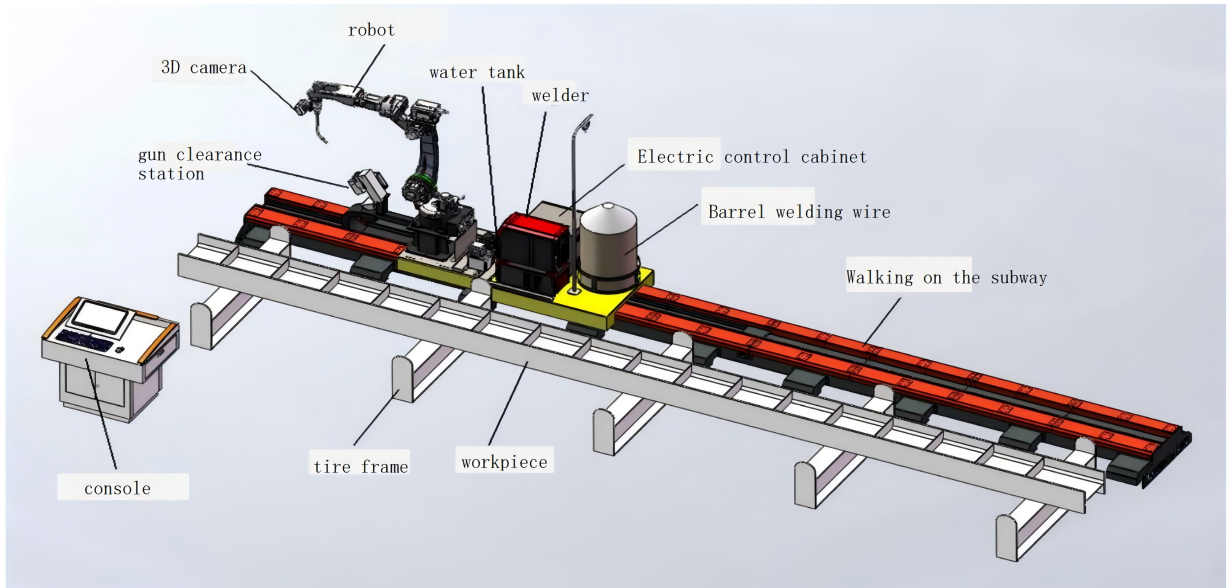
Wind turbine towers are complex geometries, not just simple cylinders. They require intricate door frames, internal platforms, cable management brackets, and precise bevels for longitudinal and circumferential welding. A 3D Structural Steel Processing Center utilizes a five-axis robotic or gantry-mounted head that can tilt and rotate during the cutting process.
This 3D capability allows for the creation of complex bevels (V, X, Y, and K joints) directly on the laser machine. In traditional fabrication, a plate would be cut flat and then moved to a secondary station for mechanical beveling. By integrating 3D laser processing, we eliminate this secondary step. The 30kW laser can create a perfect 45-degree bevel on a 40mm plate in a single pass. This “weld-ready” edge quality is essential for the automated submerged arc welding (SAW) processes used in tower assembly, ensuring 100% penetration and passing ultrasonic testing (UT) with zero rework.
The Science of Zero-Waste Nesting
In the large-scale fabrication of wind towers, material costs account for nearly 60-70% of the total production cost. Standard nesting software often leaves significant “skeletons” or scrap fragments when cutting circular tower sections or irregular door apertures. The “Zero-Waste Nesting” philosophy implemented in Ho Chi Minh City’s new processing centers utilizes advanced AI algorithms to solve the “knapsack problem” of geometry.
Zero-waste nesting goes beyond simple shape fitting. It employs “common line cutting,” where two parts share a single cut path, effectively reducing the cutting time and gas consumption by 50% for those shared edges. Furthermore, the software identifies internal cut-outs—such as the massive holes for tower doors—and automatically re-nests smaller internal components (brackets, flanges, or washers) within that “waste” area. By treating every square millimeter of high-grade structural steel as a premium resource, these centers are achieving material utilization rates of over 95%, a staggering improvement over the 75-80% industry average.
Optimizing Wind Turbine Tower Fabrication
A wind turbine tower is a marvel of engineering, standing over 100 meters tall and supporting nacelles that weigh hundreds of tons. The precision required is absolute. The 30kW fiber laser center in HCMC specializes in the most demanding components of these structures:
1. **Shell Plates:** Large format plates (up to 12 meters in length) are cut with extreme dimensional accuracy. The high speed of the 30kW laser prevents the long-range thermal expansion that often plagues plasma cutting, ensuring that when the plate is rolled, the ends meet perfectly for the longitudinal weld.
2. **Door Frames and Reinforcements:** These are high-stress areas. The 3D laser allows for the thick reinforcement rings to be cut with precise inner and outer diameters and complex bolt-hole patterns in a single setup.
3. **Internal Internals:** Platforms, ladders, and cable trays are nested into the scrap areas of the larger shells, ensuring that the internal infrastructure of the tower is produced almost “for free” in terms of material cost.
Why Ho Chi Minh City? The Strategic Manufacturing Hub
Ho Chi Minh City has emerged as the ideal location for this high-tech hub for several reasons. First is its proximity to the major offshore wind concessions in provinces like Ninh Thuan, Binh Thuan, and Tra Vinh. Transporting massive tower sections is a logistical nightmare; by having a high-capacity processing center near the deep-water ports of Cat Lai and Cai Mep, manufacturers can cut, weld, and ship components directly to the offshore sites.
Second, HCMC boasts an increasingly sophisticated technical workforce. Operating a 30kW 3D laser system requires engineers who understand CAD/CAM integration, laser optics, and robotic programming. The city’s investment in “High-Tech Parks” has fostered an ecosystem where these skills are readily available.
Third, the local government’s commitment to “Green Manufacturing” aligns with the zero-waste capabilities of the fiber laser. Unlike plasma or oxy-fuel cutting, fiber lasers do not require secondary grinding (which produces hazardous dust) and use significantly less electricity per meter of cut, fitting perfectly into Vietnam’s ESG (Environmental, Social, and Governance) goals.
Economic and Environmental Impact
The economic ripple effects of a 30kW Zero-Waste center are profound. By reducing the “Cost Per Part” through speed and material savings, Vietnamese fabricators can compete with global giants in China and Europe. This localized supply chain reduces the carbon footprint associated with importing heavy steel components, making the “green” energy produced by the wind turbines even greener.
From a technical perspective, the longevity of a fiber laser source—often exceeding 100,000 hours—means that these HCMC centers are long-term assets. The stability of the 30kW beam ensures consistent quality over years of operation, which is a requirement for the stringent certification processes (such as ISO and ASME) mandated by international wind energy developers like Orsted or Vestas.
The Future of Heavy Fabrication in Vietnam
As we look toward the future, the 30kW Fiber Laser 3D Structural Steel Processing Center in Ho Chi Minh City is just the beginning. We are already seeing the integration of “Digital Twins,” where the laser cutting data is fed back into a cloud system to optimize future designs.
The move toward 40kW and 60kW lasers is on the horizon, but for the current generation of wind towers (8MW to 15MW turbines), the 30kW system remains the “sweet spot” of efficiency and capital investment. By mastering zero-waste nesting and 3D processing today, HCMC is positioning itself as the premier heavy-fabrication workshop for the global renewable energy transition. The precision of the laser, the intelligence of the software, and the strategic location of the city combine to create a powerhouse of sustainable industrial output that will define the region’s energy landscape for decades to come.