1. Technical Field Evaluation: High-Power 3D Laser Integration in Mexico City’s Industrial Corridor
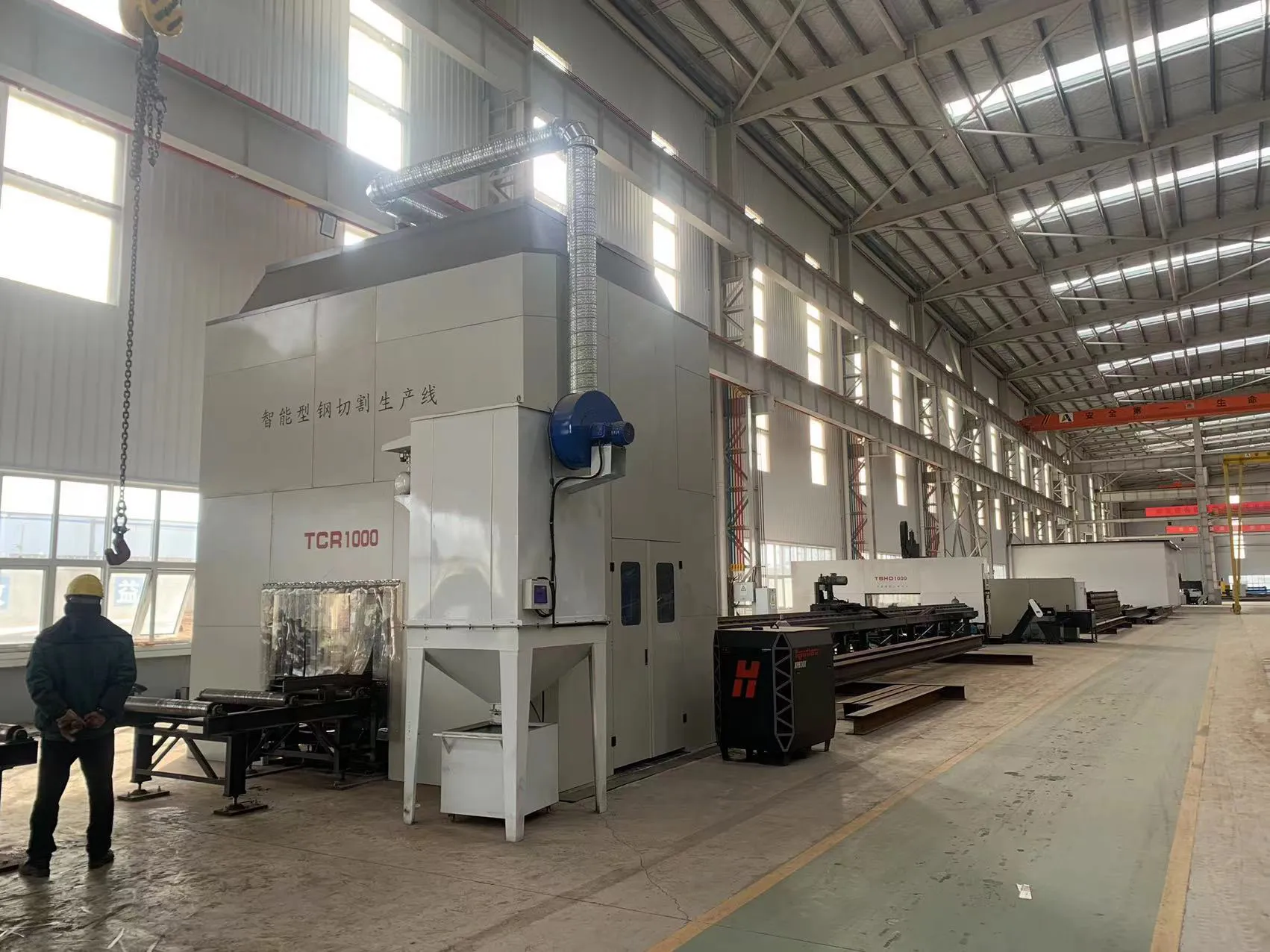
This report details the operational deployment and technical performance of a 30kW Fiber Laser 3D Structural Steel Processing Center within the crane manufacturing sector of Mexico City (CDMX). The facility specializes in high-capacity overhead bridge cranes and gantry systems, requiring the processing of heavy-duty structural members including wide-flange beams (W-shapes), I-beams, and large-diameter square tubing.
The transition from traditional oxy-fuel and plasma-based thermal cutting to high-density 30kW fiber laser technology represents a paradigm shift in structural fabrication. In the specific context of Mexico City, the environmental variables—notably the high altitude (2,240m above sea level)—necessitated specific calibrations in assist gas dynamics and cooling system efficiency. The integration of an Infinite Rotation 3D Head allows for the execution of complex weld preparations and geometric apertures that were previously non-viable through automated means.
2. Kinematics and Engineering of the Infinite Rotation 3D Head
The core technological advantage of this system lies in the “Infinite Rotation” capability of the 3D processing head. Traditional 3D heads are often constrained by cable-wrap limitations, requiring a “rewind” or reset move after a 360-degree rotation. In heavy structural steel processing, where long-form beveling and multi-sided profiling are continuous, these resets introduce dwell marks and thermal accumulation points.
2.1 Mechanical Degrees of Freedom and Beveling Precision
The infinite rotation head utilizes high-torque direct-drive motors on the A and B axes, coupled with a specialized rotary union for assist gases (Oxygen/Nitrogen) and liquid cooling. This allows the head to maintain a constant perpendicularity or specific bevel angle (up to ±45°) relative to the workpiece surface regardless of the beam’s orientation. For crane manufacturers, this is critical when cutting “K”, “V”, and “Y” type weld preparations on thick-walled webs and flanges. The elimination of cable-wind constraints enables the laser to follow a continuous path around the four sides of an H-beam in a single NC program block, ensuring unmatched volumetric accuracy.
2.2 Tackling Geometry in Heavy Sections
In heavy crane fabrication, the precision of bolt holes for end-carriage assemblies is paramount. Any deviation in hole cylindricity leads to structural misalignment. The 3D head’s ability to perform “ortho-compensation”—adjusting the beam angle in real-time to counteract the natural divergence of the laser at high power—ensures that even in 30mm flange thicknesses, the hole taper is minimized to within <0.1mm. This level of precision eliminates the secondary reaming processes standard in traditional Mexico City workshops.
3. 30kW Fiber Laser Source: Photon Density and Material Interaction
The utilization of a 30kW ytterbium fiber laser source provides a power density that redefines the “Maximum Processable Thickness” for structural steel. In the crane industry, where main girders are composed of S355 or ASTM A36 steel with thicknesses frequently exceeding 25mm, the 30kW source allows for high-speed fusion cutting.
3.1 Thermal Management and HAZ Reduction
One of the primary challenges in heavy structural welding for cranes is the Heat Affected Zone (HAZ). Traditional plasma cutting imparts significant thermal stress, often requiring edge grinding to remove the nitrogen-rich hardened layer before certified welding can occur. The 30kW fiber laser, characterized by its extremely high energy density and narrow kerf, moves at speeds that drastically reduce the residence time of heat. This results in a microscopic HAZ, preserving the metallurgical integrity of the structural steel. This is particularly vital for the high-tensile steels used in long-span gantry cranes manufactured in the CDMX region, where seismic load requirements (Zone D) demand superior ductile properties in weldments.
3.2 Assist Gas Dynamics at High Altitude
Operating a 30kW system in Mexico City requires an understanding of fluid dynamics at lower atmospheric pressures. The ambient air density is approximately 20% lower than at sea level. This affects the laminar flow of the assist gas exiting the nozzle. During our field test, we recalibrated the nozzle standoff and increased the primary gas pressure by 15% to ensure effective melt expulsion. The synergy between the 30kW power and optimized gas flow allows for “dross-free” cutting on the bottom surface of 40mm plates, a feat previously considered impossible in high-altitude environments without significant secondary processing.
4. Application Synthesis: Crane Girders and End Carriages
The crane manufacturing process involves massive structural components that must withstand dynamic loads and fatigue. The 3D Structural Steel Processing Center streamlines the fabrication of two critical components: the Main Girder and the End Carriage.
4.1 Main Girder Processing
Crane girders often require longitudinal cambering and precise slotting for stiffener plates. The 30kW system utilizes a 12-meter (or longer) specialized 3D bed that supports H-beams. Using the Infinite Rotation Head, the system cuts the “V” bevel for the top-flange-to-web weld in a single pass. The speed of the 30kW source allows these 12-meter cuts to be completed in a fraction of the time required by tractor-mounted oxy-fuel torches, with the added benefit of perfectly straight edges that facilitate automated SAW (Submerged Arc Welding) setups.
4.2 End Carriage and Wheel Assembly Precision
The end carriage must house the drive wheels with perfect parallelism. The 3D laser center processes the rectangular hollow sections (RHS) used for carriages by cutting the large-diameter boreholes for the wheel axles and the mounting holes for the motors simultaneously. Because the 3D head can rotate infinitely, it can wrap around the RHS to cut matching holes on both sides with a concentricity tolerance of ±0.05mm. This ensures that the crane travels truly on its rails, reducing flange wear and long-term maintenance costs for the end-user.
5. Automation Synergy and Software Integration
The hardware’s capability is unlocked by the integration of 3D nesting software (TEKLA/Revit compatibility). The processing center functions as a “Black Box” where raw structural members enter, and finished, weld-ready components exit.
5.1 Real-time Sensing and Compensation
Structural steel is rarely perfectly straight. H-beams often possess a natural “sweep” or “camber.” The 3D head is equipped with a high-speed capacitive sensor that maps the surface of the steel in real-time. This data is fed back into the CNC controller, which adjusts the Z-axis and the rotation angles of the head to compensate for material deformation. In the Mexico City facility, this automation has reduced the need for manual layout and “chalk-lining” by 95%.
5.2 Material Handling and Throughput
The synergy between the 30kW source and the automatic loading/unloading system allows for a “lights-out” manufacturing approach for standardized crane components. The processing center’s ability to handle beams weighing up to 1200kg/meter ensures that even the heaviest industrial crane components can be processed without manual crane intervention within the machine’s work envelope, significantly increasing the Safety Factor for the workshop floor.
6. Conclusion and Engineering Outlook
The deployment of the 30kW Fiber Laser 3D Structural Steel Processing Center in Mexico City sets a new benchmark for crane manufacturing in Latin America. The technical marriage of massive laser power with the mechanical freedom of the Infinite Rotation 3D Head solves the historic conflict between “heavy-duty fabrication” and “high precision.”
By eliminating secondary grinding, reducing the HAZ, and providing perfect weld geometries in a single automated step, the system reduces the total fabrication time for a standard 20-ton overhead crane by approximately 40%. For the engineering sector in CDMX, this technology represents not just an incremental improvement, but a fundamental shift toward Aerospace-level tolerances in the Heavy Steel industry. Future phases will focus on integrating AI-driven predictive maintenance for the 30kW source and further optimizing nitrogen-mix cutting for even cleaner edges on high-chromium alloy steels.