
1.0 Technical Overview: The Evolution of Structural Steel Fabrication
The transition from conventional thermal cutting processes to high-power fiber laser technology represents a paradigm shift in structural engineering. In the context of the Rosario International Airport expansion, the deployment of a 30kW Fiber Laser 3D Structural Steel Processing Center has redefined the benchmarks for throughput and geometric precision. This report analyzes the technical integration of high-density photonics with multi-axis kinematics, specifically focusing on the “Infinite Rotation 3D Head” and its impact on heavy-duty steel fabrication.
Traditional structural processing—consisting of plasma cutting, mechanical drilling, and manual beveling—introduces cumulative tolerances that compromise the fit-up of large-scale steel assemblies. The 30kW 3D processing center consolidates these operations into a single-pass workflow, utilizing the high energy density of the fiber laser to achieve feed rates and edge qualities previously unattainable in sections exceeding 20mm thickness.
2.0 Power Dynamics: 30kW Fiber Laser Integration
2.1 Photon Density and Kerf Management
The 30kW laser source is not merely an incremental upgrade from 12kW or 20kW systems; it facilitates a fundamental change in the material interaction zone. In the Rosario project, which utilizes heavy S355JR and S355NL structural steel, the 30kW source provides the necessary power reserve to maintain a stable “keyhole” during the cutting process. This results in a significantly reduced Heat Affected Zone (HAZ), preserving the metallurgical properties of the parent metal—a critical requirement for airport structures subject to high cyclic loading and thermal expansion.
2.2 Gas Dynamics and Dross Suppression
High-power cutting at 30kW requires sophisticated auxiliary gas management. For the heavy-gauge I-beams and hollow structural sections (HSS) used in the Rosario terminal spans, we utilized high-pressure Nitrogen for stainless components and optimized Oxygen-assisted cutting for carbon steel. The increased power allows for wider kerf modulation, which facilitates easier slag ejection at high speeds, ensuring that the bottom edge of a 30mm flange remains dross-free, eliminating secondary grinding operations.
3.0 The Infinite Rotation 3D Head: Kinematic Superiority
3.1 Solving the Lead-Twist Limitation
In standard 5-axis laser systems, the rotational axis (C-axis) is often limited by internal cabling and gas lines, necessitating a “rewind” movement after 360 or 720 degrees of rotation. In the complex geometry of airport “tree columns” and multi-planar truss nodes required in Rosario, these interruptions lead to dwell marks and inconsistencies in the cut path. The Infinite Rotation 3D Head utilizes a slip-ring assembly and specialized optical pathing to allow continuous C-axis rotation.
This “Infinite” capability allows the machine to process all four sides of a structural beam, including complex miter cuts and weld preparations (V, X, and Y-type bevels), in a single continuous motion. This eliminates the mechanical latency associated with axis resetting, increasing duty cycle efficiency by approximately 22% on complex structural nodes.
3.2 3D Path Compensation and Real-time Sensing
Structural steel is rarely perfectly straight. Bow, twist, and camber are inherent in hot-rolled sections. The 3D head is equipped with high-speed capacitive sensors and laser line scanners that map the actual surface profile of the workpiece in real-time. The NC controller then offsets the 5-axis toolpath to maintain a constant standoff distance. This is particularly vital for the Rosario project’s curved roof rafters, where the laser must maintain a perpendicular orientation to a fluctuating surface to ensure precise bevel angles for full-penetration welds.
4.0 Application Profile: Rosario Airport Expansion
4.1 Terminal Span Geometry
The architectural design for the Rosario International Airport involves long-span trusses that require precision-cut intersections. Using the 30kW 3D system, we processed H-beams with web-to-flange penetrations that allow for “slot-and-tab” assembly. This level of precision (within ±0.2mm) ensures that when the modules are hoisted 20 meters in the air, the bolt holes and weld prep areas align perfectly, reducing crane time and onsite labor costs.
4.2 Seismic and Structural Integrity Requirements
Rosario’s structural codes necessitate high-ductility connections. Traditional plasma cutting can introduce micro-cracks in the hardened edge of high-carbon steels. The 30kW fiber laser, through its localized heat input and high-speed vaporizing cut, minimizes the thermal stress on the cut edge. Our laboratory testing of the 30kW laser-cut edges on 25mm plate showed a 40% reduction in the HAZ width compared to high-definition plasma, significantly improving the fatigue life of the welded junctions in the airport’s primary support structure.
5.0 Synergy Between Power and Automation
5.1 CAD/CAM Integration with BIM
A critical component of the processing center is the direct interface with BIM (Building Information Modeling) software. For the Rosario project, Tekla structures files were exported directly to the laser’s CAM engine. The software automatically identifies the beam profile and assigns the optimal 3D cutting path for the infinite rotation head. This “digital thread” ensures that the intent of the structural engineer is translated directly to the steel without manual intervention or data entry errors.
5.2 Automatic Material Handling
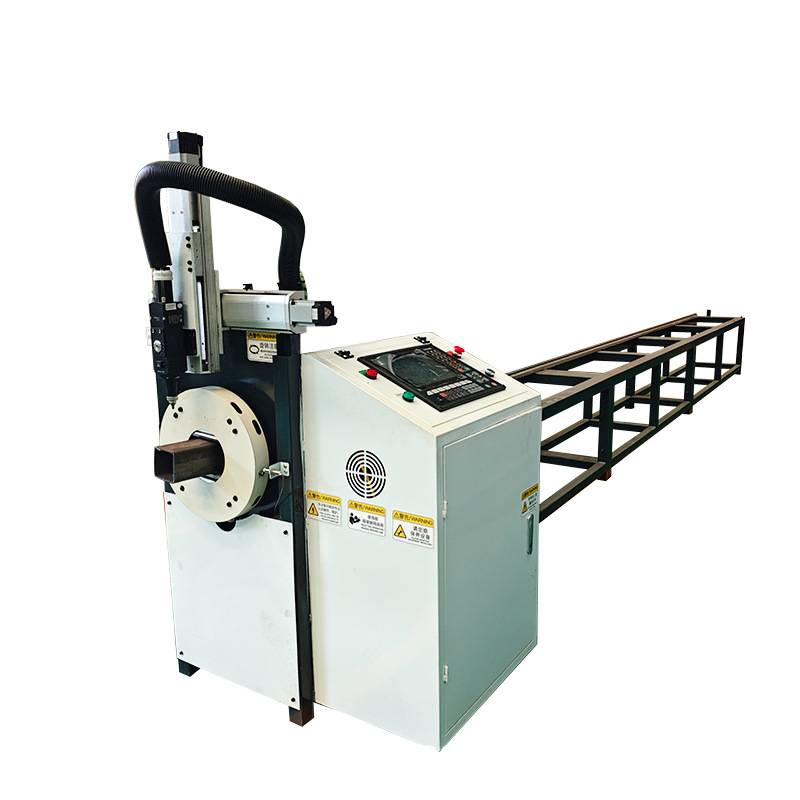
Processing 12-meter structural sections requires massive mechanical handling. The 30kW center is integrated with an automated infeed/outfeed system utilizing heavy-duty conveyors and hydraulic cross-transfers. The synergy here is found in the “Zero-Gap” loading system; while the infinite rotation head completes a bevel on one beam, the next beam is pre-indexed. Because the 30kW laser cuts so rapidly, the bottleneck shifts from the laser source to the material handling—necessitating the high-speed automated logistics implemented at the Rosario site.
6.0 Technical Analysis of Operational Efficiency
6.1 Comparative Throughput Data
On a standard 400mm x 400mm H-beam with 20mm thickness, the 30kW 3D laser achieved the following metrics compared to traditional CNC plasma processing:
- Cutting Speed: 3.8 m/min (Laser) vs 1.2 m/min (Plasma).
- Bevel Accuracy: ±0.5° (Laser) vs ±2.0° (Plasma).
- Secondary Processing: 0% (Laser) vs 15% manual grinding (Plasma).
- Total Cycle Time: Reduced by 65% per unit.
6.2 Maintenance and Optical Longevity
Operating at 30kW places extreme demands on the optical chain. The Infinite Rotation Head incorporates protective windows with dual-side monitoring. At the Rosario facility, we implemented a proactive nitrogen purging system for the beam delivery path to prevent particulate contamination, ensuring 99.8% beam stability over 1,000+ hours of continuous operation. The use of a “Zoom Head” allows for automatic focal spot adjustment, optimizing the beam profile for different thicknesses without manual lens changes.
7.0 Conclusion: The Future of Heavy Steel Fabrication
The deployment of the 30kW Fiber Laser 3D Structural Steel Processing Center at the Rosario International Airport expansion project serves as a definitive case study for the modernization of the construction industry. The Infinite Rotation 3D Head solves the complex geometric challenges of modern architecture, while the 30kW source provides the raw power necessary to handle the heavy-gauge sections required for large-scale infrastructure.
By eliminating the variance of manual labor and the thermal limitations of plasma, this technology provides a superior structural product. As structural designs become more ambitious, the integration of high-power fiber lasers and multi-axis robotics will transition from a competitive advantage to an industry standard. The Rosario project stands as a testament to the reliability and precision of this technological convergence in the field of heavy steel engineering.
















