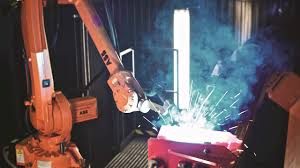
The Evolution of Structural Steel Fabrication in the Mexican Energy Sector
The offshore oil and gas industry in the Gulf of Mexico demands infrastructure that can withstand some of the harshest environments on Earth. From deep-sea drilling rigs to massive production platforms, the structural steel used must meet exacting standards for strength, weldability, and corrosion resistance. Historically, the fabrication of large-scale I-beams, H-beams, and heavy-walled piping relied on mechanical sawing or plasma cutting—processes that, while functional, often required extensive secondary finishing and manual labor.
The arrival of the 30kW Fiber Laser 3D Structural Steel Processing Center in Mexico City marks a turning point. As a central industrial hub, Mexico City is strategically positioned to supply the coastal regions with pre-fabricated structural modules. The 30kW power threshold is not merely a marginal improvement; it represents a quantum leap in the ability to process thick-gauge carbon and stainless steel with the precision of a surgeon and the speed of an industrial powerhouse.
The Power of 30kW: Redefining Throughput and Precision
In the realm of fiber lasers, wattage equates to more than just “heat.” A 30kW source provides the energy density required to achieve “vaporization cutting” on thicker materials, which significantly reduces the Heat Affected Zone (HAZ). For offshore platforms, where the crystalline structure of the steel must remain intact to prevent fatigue failure under oceanic pressures, a minimal HAZ is critical.
This system can effortlessly slice through structural steel thicknesses that were previously the sole domain of plasma or waterjet cutting. However, unlike plasma, the 30kW laser produces a finish so clean that it often eliminates the need for de-burring or grinding. In a high-volume facility in Mexico City, this translates to a 40% to 60% increase in total throughput. The laser’s ability to maintain high speeds even on 25mm to 50mm plate steel ensures that projects which previously took months can now be completed in weeks.
3D Cutting Capability: The Key to Complex Offshore Geometries
Offshore platforms are not merely boxes of steel; they are complex geometries of interlocking pipes, beams, and braces. Traditional 2D cutting is insufficient for the sophisticated bevels and saddle cuts required for high-strength welding joints. The 3D processing head of this center features a 5-axis motion system, allowing it to tilt and rotate around the workpiece.
This 3D capability is essential for creating:
– **Welding Prep Bevels:** The laser can cut V, X, and Y-type bevels directly into the steel in a single pass, preparing the edge for immediate robotic or manual welding.
– **Saddle and Intersection Cuts:** For tubular structures used in platform jackets, the 3D head ensures a perfect fit-up between intersecting pipes, reducing the amount of filler metal required during welding.
– **Bolt Hole Precision:** The high-power laser maintains perfect circularity in bolt holes, even in thick-webbed H-beams, ensuring that modular components bolt together perfectly on-site at the offshore location.
Automatic Unloading: The Silent Driver of Efficiency
One of the most significant challenges in structural steel processing is the sheer weight and awkwardness of the material. A single 12-meter I-beam can weigh several tons. In traditional setups, the cutting process must stop frequently to allow overhead cranes or forklifts to clear the finished parts—a process that is both slow and hazardous.
The 30kW Processing Center in Mexico City is equipped with a fully integrated Automatic Unloading System. As the laser completes a part, a series of synchronized heavy-duty conveyors and hydraulic lifts transition the finished steel to a sorting area without human intervention. This “non-stop” workflow allows the laser to begin the next program immediately.
Furthermore, the automatic unloading system is designed with safety in mind. By reducing the need for personnel to operate near high-tonnage moving parts and the high-power laser beam, the facility significantly lowers the risk of workplace accidents. In the competitive Mexican manufacturing sector, this automation also offsets rising labor costs while ensuring consistent quality that is not subject to human fatigue.
Strategic Advantages for Mexico City’s Industrial Hub
Choosing Mexico City as the site for such advanced technology is a strategic masterstroke. The city’s robust infrastructure, access to skilled engineering talent, and proximity to major steel suppliers like AHMSA and Ternium create a localized ecosystem of efficiency. By processing the steel in the capital and transporting finished, “ready-to-weld” components to the ports of Veracruz or Ciudad del Carmen, companies can drastically reduce the logistical footprint of offshore projects.
The 30kW laser also supports Mexico’s commitment to more sustainable industrial practices. Compared to plasma cutting, the fiber laser is more energy-efficient per inch of cut and produces significantly less waste and hazardous fumes. The precision of the nesting software used in these centers ensures maximum material utilization, saving tons of steel over the course of a major platform build.
Meeting International Standards: AWS and API Compliance
For offshore platforms, compliance with American Welding Society (AWS) and American Petroleum Institute (API) standards is non-negotiable. The 30kW Fiber Laser Processing Center is designed to meet these rigorous demands. The digital nature of the laser system allows for “digital twinning”—where every cut is tracked and verified against the original CAD model.
The consistency provided by the 30kW laser ensures that every beam and joint meets the specified tolerances. This level of repeatability is vital for offshore platforms, where a single structural flaw can lead to catastrophic environmental and financial consequences. The automated nature of the system provides a digital trail of production, offering peace of mind to stakeholders and regulatory bodies involved in the Mexican energy sector.
Conclusion: The Future of Mexican Offshore Fabrication
The integration of 30kW fiber laser technology with 3D structural processing and automatic unloading represents the pinnacle of modern manufacturing. For the offshore industry in Mexico City, it is a catalyst for growth, allowing local firms to compete on a global scale. By combining raw power with surgical precision and automated logistics, this processing center is not just cutting steel—it is forging the future of energy infrastructure. As the Gulf of Mexico continues to be a focal point for global energy, the ability to produce high-quality structural steel components rapidly and safely will be the defining characteristic of the industry leaders in the region.