The Technological Paradigm Shift in Mexican Structural Steel
The industrial corridors surrounding Mexico City (CDMX), extending toward the State of Mexico and the Bajío region, are currently undergoing a massive transformation. Driven by the “nearshoring” phenomenon and the explosive growth of e-commerce, the demand for sophisticated storage infrastructure has reached an all-time high. In this context, the introduction of the 30kW Fiber Laser 3D Structural Steel Processing Center is not merely an incremental upgrade; it is a fundamental reimagining of how steel is fabricated.
For decades, structural steel for racking was processed using a combination of band saws, drills, and plasma cutters. These methods, while functional, introduced significant bottlenecks: the need for multiple setups, manual material handling, and the inevitable requirement for secondary grinding to prepare edges for welding. The 30kW fiber laser eliminates these redundancies. By concentrating 30,000 watts of coherent light into a microscopic focal point, the machine vaporizes heavy-gauge steel almost instantaneously, allowing for high-speed cutting of profiles that were previously considered “too thick” for efficient laser processing.
Why 30kW? The Mechanics of Ultra-High Power
As a laser expert, I often encounter the question: “Is 30kW overkill for racking?” The answer lies in the physics of the cut and the economics of the shop floor. While a 12kW or 15kW laser can certainly cut structural steel, a 30kW source provides a “power reserve” that translates into two critical advantages: speed and quality.
At 30kW, the laser maintains a much higher cutting speed on 16mm to 25mm plate and structural walls. This speed minimizes the Heat Affected Zone (HAZ), ensuring that the metallurgical properties of the high-tensile steel used in storage racks remain uncompromised. Furthermore, 30kW allows for the use of compressed air or nitrogen as a cutting gas on thicknesses where lower-power lasers would require oxygen. This results in a bright, oxide-free finish, which is essential for the powder coating processes typically used in the racking industry to prevent corrosion.
Mastering the Third Dimension: 3D Processing Capabilities
Traditional 2D lasers are limited to flat sheets. However, storage racking relies on 3D members: C-channels, square hollow sections (SHS), and complex I-beams. The 3D Structural Steel Processing Center utilizes a sophisticated multi-axis head and a rotating chuck system to manipulate these heavy profiles.
In Mexico City’s high-output facilities, this means a 12-meter I-beam can be loaded, and the laser can cut bolt holes, “teardrop” patterns for adjustable shelving, and complex end-notches in a single continuous process. The 3D capability ensures that the laser head remains perpendicular (or at the desired bevel angle) to the surface of the material at all times, regardless of the profile’s geometry. This level of synchronization between the CNC rotators and the laser head motion is what defines the modern 3D processing center.
The Art of the Bevel: ±45° Precision for Weld Integrity
One of the most significant advancements in this 30kW system is the ±45° bevel cutting head. In the world of structural racking, the strength of the weld is the strength of the structure. High-bay racking systems—often exceeding 30 meters in height—must withstand immense static loads and, crucially in Mexico City, seismic forces.
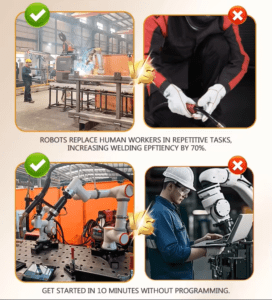
Traditional straight cuts require welders to manually grind “V” or “Y” grooves into the steel to allow for full-penetration welds. This is labor-intensive and prone to human error. The 30kW 3D laser solves this by performing the beveling during the primary cutting phase. By tilting the laser head up to 45 degrees, the machine creates perfect weld preparations on the fly. Whether it is a miter joint for a rack frame or a complex intersection for a diagonal brace, the parts come off the machine ready for the robotic welding cell. This integration reduces the total fabrication time of a racking upright by as much as 70%.
Engineering High-Density Storage Racking in a Seismic Zone
Mexico City is built on a former lakebed and is situated in a highly active seismic zone. This environmental reality dictates that storage racking cannot be “off-the-shelf.” It must be engineered for ductility and resilience. The 30kW fiber laser contributes to this safety requirement through extreme precision.
In seismic-resistant design, the tolerances of bolt holes and the fit-up of structural members are critical. Slop in a connection can lead to catastrophic failure during a tremor. The fiber laser holds tolerances within ±0.1mm, ensuring that every bolt shares the load equally and every joint fits tightly. Furthermore, the ability to cut complex geometries allows engineers to design “dog-bone” connections or specific perforation patterns that act as fuses, absorbing energy during an earthquake. This level of geometric freedom was previously cost-prohibitive with mechanical punching or drilling.
Operational Impact in Mexico City’s Industrial Corridors
The logistics of operating such a machine in Mexico City also present unique advantages. The CDMX metropolitan area is the heart of Mexico’s consumer market. By locating 30kW processing centers in industrial zones like Tlalnepantla, Vallejo, or nearby Tepotzotlán, manufacturers reduce the “logistical footprint” of their projects.
The efficiency of 30kW technology also addresses the rising costs of industrial electricity in Mexico. While 30kW sounds like a high consumption rate, the “cost per meter” of cutting is significantly lower than that of a 6kW machine because the 30kW unit finishes the job four to five times faster. This high wall-plug efficiency, combined with the reduction in secondary processing (grinding, drilling, deburring), makes the 30kW 3D laser the most sustainable choice for large-scale infrastructure projects.
Software Integration: From CAD to Finished Rack
A 30kW laser is only as smart as the software driving it. Modern 3D processing centers utilize advanced CAD/CAM suites that integrate directly with Tekla or SolidWorks. For a racking project in Mexico City, an engineer can upload a 3D model of an entire warehouse mezzanine, and the software will automatically “nest” the components across hundreds of steel beams.
The software accounts for the ±45° bevels, calculates the optimal path to avoid collisions with the chucks, and manages the “micro-joints” that keep parts stable during cutting. This end-to-end digital workflow is essential for managing the sheer volume of parts required for modern logistics centers, where a single warehouse may require tens of thousands of unique structural components.
Conclusion: Future-Proofing the Supply Chain
The 30kW Fiber Laser 3D Structural Steel Processing Center represents the pinnacle of current fabrication technology. In a city as dynamic and demanding as Mexico City, the ability to produce high-strength, seismic-rated storage racking with such speed and precision is a competitive necessity.
As we look toward the future, the transition to ultra-high-power 3D laser cutting will continue to displace legacy technologies. For the Mexican steel industry, this investment signifies more than just faster cutting—it represents the capacity to build the backbone of the region’s modern economy. By mastering the 3D processing of structural steel and the intricacies of ±45° beveling, Mexico City’s fabricators are not just keeping pace with global standards; they are setting them. The 30kW fiber laser is no longer a luxury; it is the fundamental tool for the next generation of industrial infrastructure.