
Introduction to 2kW Tube laser cutting in Toluca’s Industrial Sector
The industrial landscape of Toluca, State of Mexico, stands as one of the most significant manufacturing hubs in North America. With a dense concentration of automotive, aerospace, and food processing facilities, the demand for precision metal fabrication is at an all-time high. Among the various technologies driving this industrial evolution, the 2kW tube laser cutting system has emerged as a cornerstone for high-efficiency production, particularly when working with stainless steel. This guide explores the technical nuances, operational advantages, and strategic implementation of 2kW fiber laser technology within the Toluca industrial corridor.
A 2kW fiber laser represents a “sweet spot” in terms of power-to-cost ratio. It provides sufficient energy to penetrate medium-gauge stainless steel tubes with extreme velocity while maintaining a narrow kerf and minimal heat-affected zone (HAZ). For engineers in Toluca looking to optimize their supply chains, transitioning from mechanical sawing or plasma cutting to CNC laser cutting offers a transformative leap in both quality and throughput.
Technical Specifications of the 2kW Fiber Laser Source
The heart of the tube laser cutting system is the fiber laser resonator. Unlike CO2 lasers, fiber lasers utilize an optical fiber doped with rare-earth elements as the gain medium. At a 2kW power level, the beam quality (M2 factor) is exceptionally high, allowing the light to be focused into a microscopic spot size. This high energy density is what enables the rapid melting and vaporization of stainless steel.
Wavelength and Absorption
Fiber lasers operate at a wavelength of approximately 1.06 microns. This wavelength is highly absorbed by metallic surfaces, especially stainless steel, compared to the 10.6 microns of CO2 lasers. This increased absorption rate translates directly into higher cutting speeds and the ability to process reflective materials that would otherwise damage older laser systems. In the context of Toluca’s heavy manufacturing, this means faster cycle times for complex components like exhaust manifolds, structural frames, and food-grade piping.
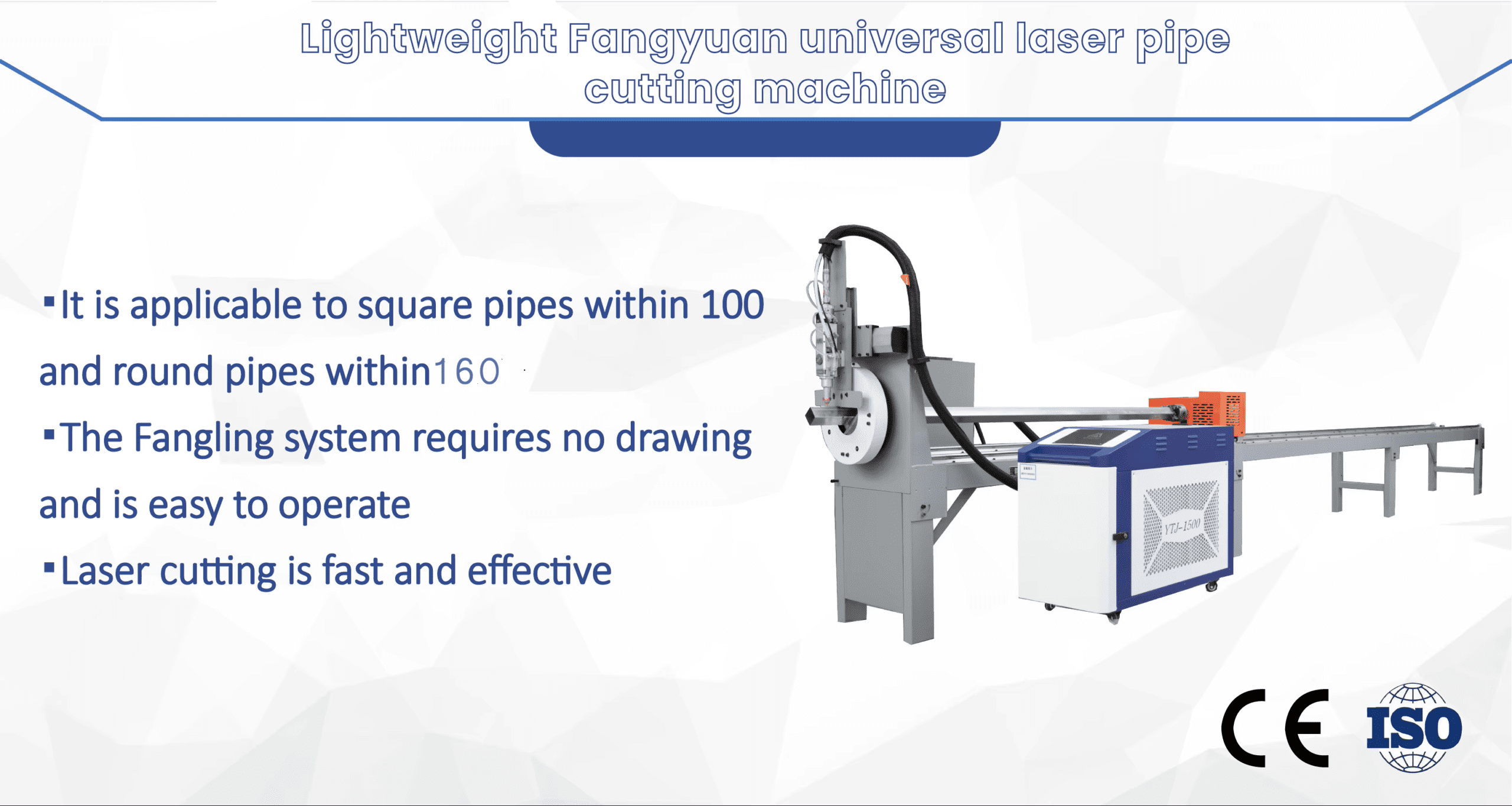 laser cutting machine” style=”width: 100%; max-width: 800px; height: auto; margin: 20px 0;”>
Power Modulation and Pulse Control
Modern 2kW systems allow for sophisticated pulse-width modulation (PWM). This allows the operator to control the heat input precisely during the laser cutting process. When navigating tight corners or intricate geometries in small-diameter stainless tubes, the laser can “ramp down” its power to prevent over-burning, ensuring that the structural integrity and aesthetic finish of the part remain uncompromised.
Processing Stainless Steel: Material Considerations
Stainless steel is prized in Toluca’s industries for its corrosion resistance and mechanical strength. However, from a laser cutting perspective, it presents unique challenges. The material’s thermal conductivity and high melting point require a stable and powerful energy source to achieve a clean “burr-free” finish.
Alloy Grades: 304 vs. 316
The most common grades processed in the region are Grade 304 and Grade 316. Grade 304 is the standard for automotive trim and general structural use, while 316 is preferred for the pharmaceutical and food sectors prevalent in Toluca due to its superior molybdenum content. A 2kW system can comfortably handle these alloys in thicknesses ranging from 0.5mm up to 6mm or 8mm, depending on the required edge quality and the assist gas used.
The Role of Assist Gases
In stainless steel laser cutting, the choice of assist gas is critical. Nitrogen is the industry standard for stainless steel. By using high-pressure nitrogen, the molten material is mechanically blown out of the kerf before it can react with atmospheric oxygen. This results in a bright, oxide-free edge that requires no secondary finishing before welding. In Toluca’s competitive market, eliminating the need for post-process grinding or pickling provides a significant cost advantage.
Mechanical Capabilities of Tube Laser Systems
Beyond the laser source itself, the mechanical architecture of the machine dictates the complexity of the parts that can be produced. Tube laser cutting machines are designed to handle various profiles, including round, square, rectangular, and even open profiles like C-channels or L-angles.
Automatic Chucking and Centering
Precision in tube cutting is heavily dependent on how the material is held. Advanced 2kW systems feature pneumatic or hydraulic self-centering chucks. These components ensure that the tube remains perfectly aligned with the rotational axis, even if the raw material has slight deviations or “bowing.” For Toluca-based manufacturers working with long 6-meter stock, this level of mechanical precision is vital for maintaining tolerances across the entire length of the workpiece.

3D Cutting Heads and Beveling
While standard 2D heads are sufficient for perpendicular cuts, many 2kW machines can be equipped with 2.5D or 3D tilting heads. This allows for bevel cutting, which is essential for creating “saddle cuts” or complex intersections where two tubes meet at an angle. This capability is particularly useful for the construction of specialized vehicle chassis and industrial scaffolding in the Estado de México region.
Optimizing Production in the Toluca Environment
Operating high-tech machinery in Toluca requires consideration of local environmental factors. At an altitude of approximately 2,660 meters, the air density is lower than at sea level, which can affect the cooling efficiency of the laser’s chiller units and the flow dynamics of the assist gases.
Cooling and Climate Control
A 2kW laser generates significant heat. The chiller system must be robust enough to handle the temperature fluctuations common in the Toluca valley. Ensuring that the deionized water or coolant remains at a constant temperature is vital for the stability of the fiber laser’s diodes. Manufacturers should invest in high-efficiency, dual-circuit chillers that cool both the laser source and the cutting head optics independently.
Software Integration: CAD/CAM for Tubes
The efficiency of laser cutting is only as good as the software driving it. Modern tube cutting software allows for “nesting,” which organizes parts on a single tube to minimize scrap. For complex stainless steel assemblies, the software can automatically generate “tab and slot” designs. This allows parts to snap together like a puzzle before welding, significantly reducing the need for expensive jigs and fixtures on the assembly line.
Economic Impact and ROI for Mexican Fabricators
For a fabrication shop in Toluca, the investment in a 2kW tube laser cutter is a strategic move toward Industry 4.0. The return on investment (ROI) is realized through several channels:
- Labor Reduction: One laser cutting machine can often replace three to four manual saws and drill presses, allowing skilled labor to be redirected to higher-value tasks.
- Material Savings: Advanced nesting algorithms reduce stainless steel waste by up to 15%, a significant saving given the high cost of nickel-based alloys.
- Market Expansion: The ability to offer high-precision laser cutting allows local shops to bid on international contracts, particularly from US-based automotive OEMs looking for “near-shoring” partners in Mexico.
Maintenance and Longevity
To ensure the longevity of a 2kW system, a rigorous maintenance schedule is mandatory. In the dusty industrial environments of Toluca, the integrity of the optical path is paramount. Protective windows must be inspected daily for “spatter” or dust, as any contamination can cause the laser energy to be absorbed by the lens, leading to catastrophic failure of the cutting head.
Preventative Measures
Regularly checking the alignment of the slats, the lubrication of the linear guides, and the purity of the assist gas supply will prevent unplanned downtime. Most modern fiber lasers are rated for 100,000 hours of operation, but this lifespan is only achievable through disciplined maintenance and the use of high-quality consumables.
The Future of Laser Cutting in Toluca
As the “Bajío” and Central Mexico regions continue to grow as global manufacturing hubs, the technology behind laser cutting will continue to evolve. We are already seeing the integration of Artificial Intelligence (AI) in the cutting process, where sensors monitor the spark pattern in real-time to adjust cutting parameters automatically if a “loss of cut” is detected. For Toluca’s stainless steel specialists, staying at the forefront of these technological advancements is not just an advantage—it is a necessity for survival in a globalized market.
Conclusion
The 2kW tube laser cutter is a formidable tool in the hands of Toluca’s engineering community. By understanding the interaction between the 1.06-micron wavelength and stainless steel, optimizing the use of nitrogen assist gas, and leveraging the mechanical precision of CNC tube rotation, manufacturers can achieve unprecedented levels of productivity. Whether it is for the automotive, medical, or food industry, laser cutting technology remains the gold standard for precision metal fabrication in the 21st century.
















