
Introduction to 2kW Tube laser cutting in Leon’s Industrial Sector
The industrial landscape of Leon, Guanajuato, has undergone a massive transformation over the last decade. Traditionally known for its leather and footwear industries, the region has pivoted toward high-tech manufacturing, automotive assembly, and aerospace components. At the heart of this shift is the adoption of advanced fabrication technologies, most notably the 2kW tube laser cutter. This specific power rating—2,000 watts—represents a critical “sweet spot” for regional manufacturers who require a balance between high-speed production and precision when working with stainless steel.
Laser cutting technology has redefined how tubular structures are designed and assembled. Unlike traditional sawing, drilling, or milling, a fiber laser system allows for complex geometries, interlocking tabs, and high-precision holes to be cut in a single pass. For the engineering firms in Leon, this means a significant reduction in lead times and a drastic improvement in the structural integrity of the finished product. When dealing with stainless steel, a material prized for its corrosion resistance and aesthetic appeal, the precision of a 2kW fiber source ensures that the material’s properties are preserved while achieving a mirror-like edge quality.
The Mechanics of 2kW Fiber Laser Technology
To understand why a 2kW system is ideal for stainless steel tube fabrication, one must look at the physics of the fiber laser. A fiber laser uses a solid-state gain medium, as opposed to the gas mixtures used in older CO2 lasers. The 1.06-micron wavelength of a fiber laser is absorbed much more efficiently by metallic surfaces, particularly reflective materials like stainless steel. This high absorption rate allows a 2kW source to cut through material with the same speed and efficiency that would require a much higher-powered CO2 system.
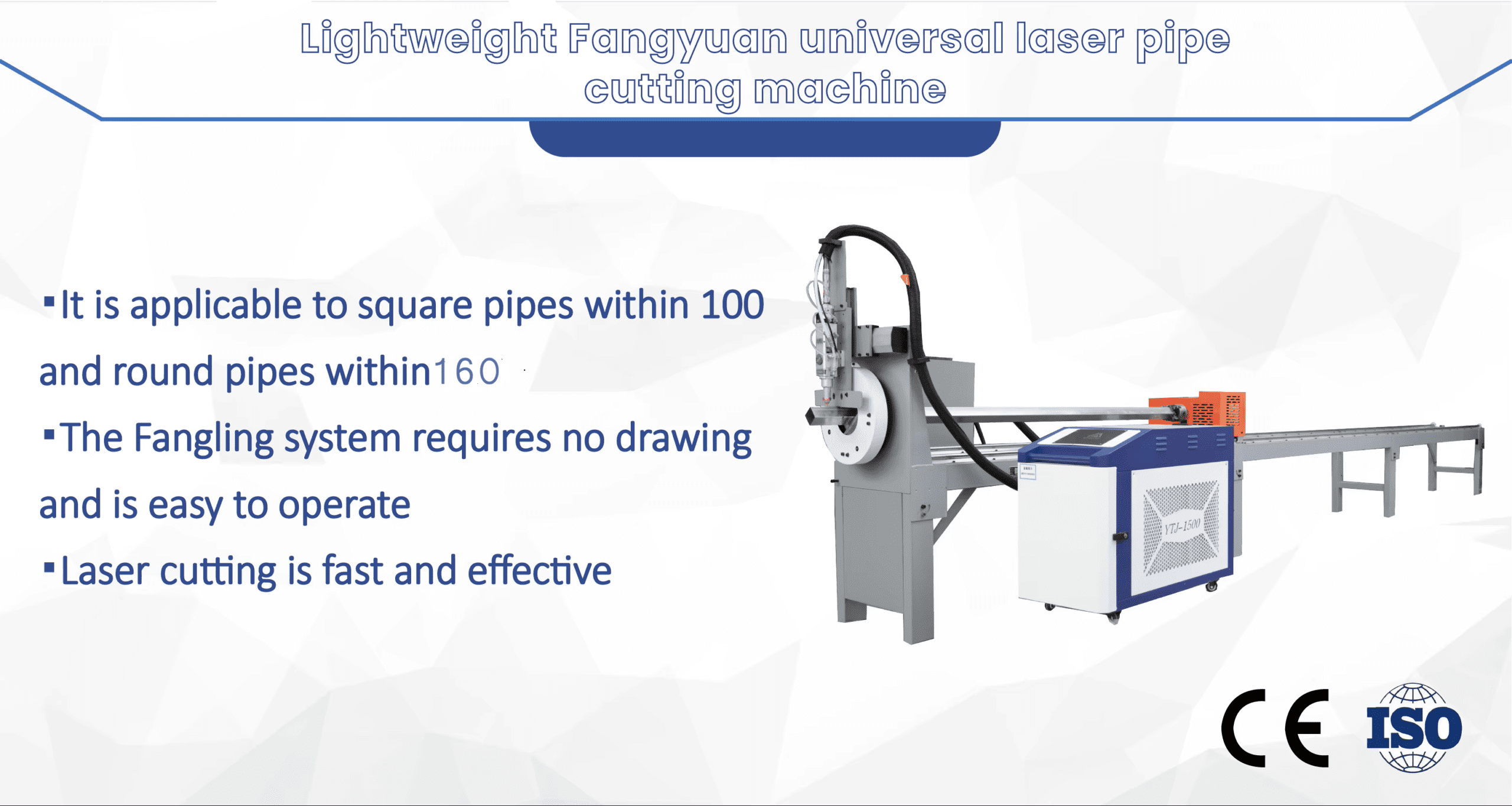
The “2kW” designation refers to the continuous wave power output of the laser source. In the context of tube laser cutting, this power level is capable of processing stainless steel wall thicknesses ranging from 0.5mm up to 8mm, depending on the auxiliary gas used. The beam is delivered through a flexible fiber optic cable to a cutting head, where a series of lenses focus the energy into a microscopic point. This concentrated energy vaporizes the metal instantly, while a high-pressure stream of gas clears the molten material from the kerf.
Optimizing Stainless Steel Fabrication in the Bajío Region
Stainless steel is a staple in Leon’s diverse industrial economy. From the production of industrial kitchen equipment and medical devices to automotive exhaust systems and structural architectural elements, the demand for high-quality stainless steel components is constant. However, stainless steel presents unique challenges during the laser cutting process, primarily due to its thermal conductivity and the need to maintain its anti-corrosive properties.
The Role of Assist Gases: Nitrogen vs. Oxygen
In 2kW laser cutting, the choice of assist gas is the most significant factor affecting the quality of the cut on stainless steel tubes. For most applications in Leon’s high-end manufacturing sectors, Nitrogen is the preferred choice. Nitrogen acts as an inert shielding gas; it physically blows the molten stainless steel out of the cut zone without allowing it to react with oxygen in the air. This results in a “bright” or “clean” cut edge that is free of oxidation. This is critical for parts that require subsequent welding or for those that will remain visible in the final product, as it eliminates the need for secondary cleaning or pickling.
Oxygen, on the other hand, can be used to increase cutting speeds on thicker sections of stainless steel by creating an exothermic reaction. However, this leaves a black oxide layer on the edge. In Leon’s competitive market, where aesthetic finish and weldability are paramount, the 2kW system’s ability to efficiently utilize high-pressure Nitrogen is a major competitive advantage. The 2kW power level provides enough energy to maintain high feed rates even when using Nitrogen, ensuring that production quotas are met without sacrificing edge quality.
Precision Handling of Tubular Geometries
Unlike flat sheet cutting, tube laser cutting involves managing the rotation and longitudinal movement of the workpiece simultaneously. Modern 2kW machines used in Leon feature advanced chuck systems—often pneumatic or hydraulic—that can grip round, square, rectangular, and even oval profiles with high precision. The synchronization between the laser head’s movement and the tube’s rotation is managed by sophisticated CNC controllers. This allows for the “nesting” of parts, where multiple components are cut from a single long tube with minimal waste, optimizing the high cost of stainless steel raw materials.

Economic Impact for Leon’s Manufacturing Hub
The investment in a 2kW tube laser cutter offers a rapid Return on Investment (ROI) for shops in Leon. The primary driver of this ROI is the elimination of secondary processes. In traditional manufacturing, a stainless steel tube might be cut to length on a cold saw, moved to a drill press for holes, and then sent to a milling machine for slotting. Each of these steps introduces potential for error and adds labor costs.
Reducing Labor and Lead Times
A 2kW laser cutting system consolidates these operations into a single workstation. A complex part that might have taken 30 minutes to fabricate through traditional methods can be completed in under two minutes on a laser. Furthermore, the precision of the laser (often within +/- 0.1mm) ensures that parts fit together perfectly during assembly. This “tab-and-slot” design capability allows for self-fixturing assemblies, which reduces the need for expensive welding jigs and lowers the skill level required for final assembly.
Energy Efficiency and Maintenance
From an operational standpoint, 2kW fiber lasers are significantly more energy-efficient than their CO2 predecessors. They consume about 70% less electricity, which is a vital consideration given the rising energy costs in Mexico’s industrial zones. Additionally, the lack of moving parts within the laser source and the absence of mirrors that require alignment mean that maintenance intervals are much longer. For a business in Leon, this translates to higher machine uptime and lower total cost of ownership over the life of the equipment.
Technical Specifications and Best Practices
To maximize the potential of a 2kW tube laser cutter when processing stainless steel, operators must adhere to specific technical protocols. The focus position of the laser beam is perhaps the most critical variable. When cutting stainless steel with Nitrogen, the focus is typically set “negative” or “sub-surface.” This creates a wider kerf at the bottom of the cut, allowing the high-pressure gas to eject the melt more effectively, preventing the formation of “dross” or burrs on the inside of the tube.
Software Integration and Nesting
The hardware is only as capable as the software driving it. Professional fabrication shops in Leon utilize specialized CAD/CAM software designed for tube processing. These programs allow engineers to import 3D models and automatically calculate the unfolding of the tube. Advanced nesting algorithms ensure that the maximum number of parts is extracted from each 6-meter or 12-meter tube, accounting for the “dead zone” where the chuck grips the material. By minimizing scrap, companies can better manage the fluctuating prices of stainless steel alloys like Grade 304 and 316.
Safety and Environmental Considerations
Operating a 2kW laser requires a strictly controlled environment. Fiber lasers operate at a wavelength that is extremely hazardous to the human eye; therefore, the cutting area must be fully enclosed in a Class 1 laser-safe housing. In the industrial parks of Leon, environmental regulations also necessitate the use of high-efficiency dust collectors. Cutting stainless steel produces fine metallic dust and fumes that must be filtered to maintain air quality within the facility and to comply with local health and safety standards.
The Future of Laser Cutting in Guanajuato
As Leon continues to solidify its position as a leader in the Mexican “Bajío” industrial corridor, the reliance on 2kW tube laser cutting technology will only grow. The trend toward “Industry 4.0” means these machines are increasingly being integrated into automated production lines, featuring automatic loading and unloading systems that allow for “lights-out” manufacturing.
For small to medium-sized enterprises (SMEs) in Leon, adopting 2kW laser technology is no longer a luxury but a necessity to remain competitive. The ability to offer high-precision, rapid-turnaround stainless steel components allows local shops to compete not just on a regional level, but on a global stage, supplying parts to international automotive and aerospace OEMs. The 2kW tube laser cutter stands as a symbol of the region’s technical maturity, bridging the gap between traditional craftsmanship and the future of automated manufacturing.
Conclusion
Mastering the use of a 2kW tube laser cutter for stainless steel requires a deep understanding of both the machine’s capabilities and the material’s properties. For the engineers and business owners in Leon, this technology represents the pinnacle of efficiency. By focusing on precision, optimizing gas usage, and leveraging advanced software, the local industry can continue to produce world-class components that drive the economy of Guanajuato forward. Whether it is for a custom architectural project or a high-volume automotive run, the 2kW fiber laser remains the tool of choice for modern stainless steel tube fabrication.
















