
Engineering Guide: 2kW Tube Fiber Laser Technology for Agricultural Manufacturing in Puebla
1. Introduction to the Industrial Evolution in Puebla
The manufacturing landscape in Puebla, Mexico, is undergoing a significant transformation. Traditionally known for its automotive prowess, the region is now seeing a surge in sophisticated agricultural engineering. For factory owners and engineers in the agricultural sector, the transition from manual fabrication to automated CNC systems is no longer optional—it is a requirement for maintaining regional competitiveness. The 2kW Tube Fiber Laser Cutter represents the pinnacle of this transition, offering a specialized solution for the high-precision processing of stainless steel components essential for modern farming equipment.
Agricultural machinery, ranging from irrigation systems and grain silos to specialized harvesting components, demands materials that can withstand harsh environments. Stainless steel is the material of choice due to its corrosion resistance and structural integrity. However, processing stainless steel tubes with traditional methods often leads to material deformation and excessive labor costs. The 2kW fiber laser system, integrated with a tube-welded standard bed, addresses these challenges by providing a stable, high-speed, and high-precision cutting platform tailored for the specific demands of the Puebla industrial corridor.
2. Structural Engineering: The Tube-Welded Standard Bed
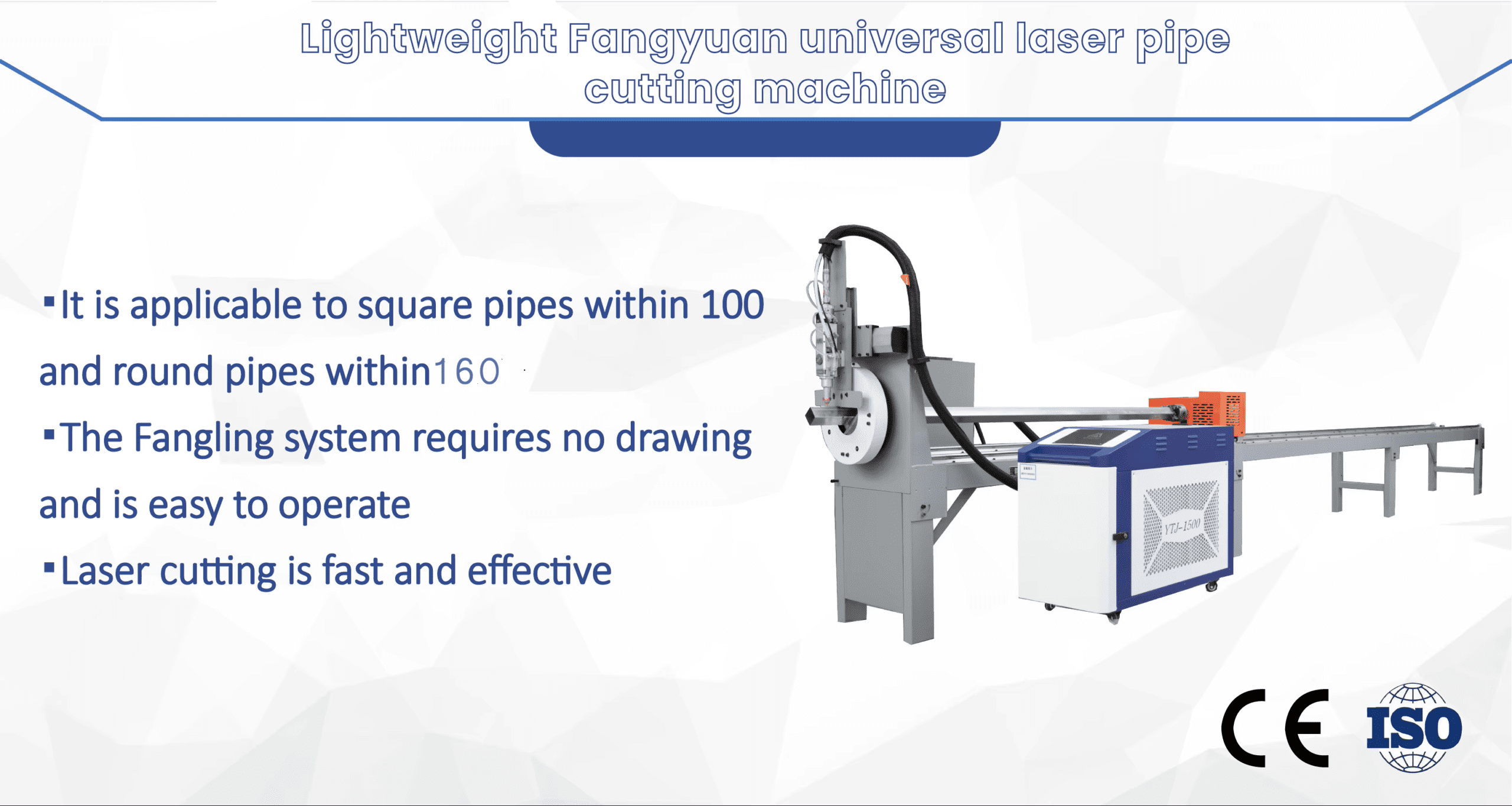
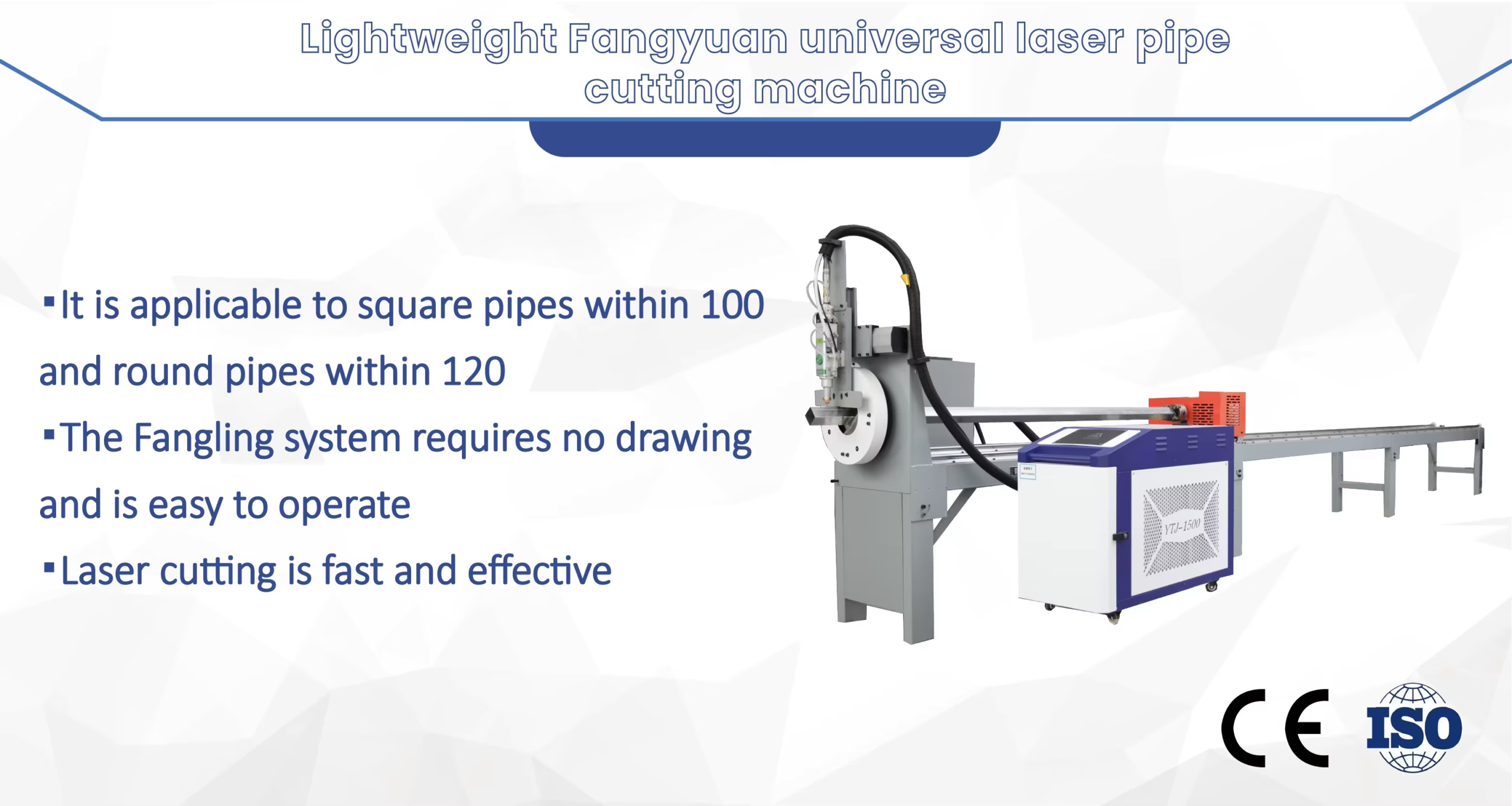
The foundation of any high-precision laser system is its bed. In the 2kW class, the tube-welded standard bed has emerged as the engineered choice for balancing rigidity, vibration damping, and cost-effectiveness. Unlike lighter aluminum frames or excessively heavy cast-iron beds that may be overkill for a 2kW source, the tube-welded structure is specifically designed to handle the dynamic loads of high-speed tube processing.
This bed is constructed using high-quality industrial carbon steel tubes. The engineering process involves precision welding followed by a rigorous stress-relief annealing process. This heat treatment is critical for agricultural manufacturers in Puebla, as the local climate and humidity can affect metal stability over time. By removing internal stresses, the bed ensures that the machine maintains its geometric accuracy (within ±0.03mm) over years of continuous operation. The hollow-tube design provides a high strength-to-weight ratio, allowing for rapid acceleration of the laser head without inducing harmonic vibrations that could compromise the edge quality of the stainless steel.
3. 2kW Fiber Laser Optimization for Stainless Steel
For agricultural applications, 2kW of fiber laser power is considered the “sweet spot.” It provides sufficient energy density to process stainless steel tubes with wall thicknesses typically found in irrigation pipes and structural frames (ranging from 1mm to 8mm) at optimal speeds. The 1.06μm wavelength of the fiber laser is highly absorbed by stainless steel, ensuring a narrow heat-affected zone (HAZ).
When cutting stainless steel, the use of high-pressure nitrogen as an assist gas is standard practice. The 2kW source provides the necessary thermal energy to melt the metal, while the nitrogen expels the molten material, preventing oxidation. This results in a “bright” cut edge that requires no secondary finishing. For Puebla-based factories producing food-grade agricultural processing equipment, this silver-bright finish is essential for meeting hygiene standards and preventing bacterial growth in crevices that would be present with rougher cutting methods.
4. Precision Engineering and Motion Control
Precision in tube cutting is more complex than flat-sheet cutting due to the rotational axis. The 2kW systems utilized in professional environments employ a dual-chuck system—typically a pneumatic or electric front and rear chuck. These chucks must synchronize perfectly with the laser head’s movement along the X and Y axes.
The motion system typically utilizes high-precision rack and pinion sets combined with planetary reducers and Japanese or European servo motors. For an engineer, the data that matters is the positioning accuracy and repeatability. A high-tier 2kW tube laser offers a positioning accuracy of ±0.03mm and a re-positioning accuracy of ±0.02mm. In the context of agricultural assembly, this means that interlocking tubes for a harvester frame will fit together perfectly without the need for manual grinding or “forcing” parts during the welding phase. This precision directly translates to reduced labor hours and stronger structural welds.
5. Agricultural Applications in the Puebla Market
Puebla’s agricultural sector is diverse, covering everything from coffee processing in the highlands to large-scale grain production in the valleys. The 2kW tube laser caters to these varied needs through its ability to process various profiles: round, square, rectangular, and even D-shaped or elliptical tubes.
Specific applications include:
– Irrigation Systems: Precision cutting of stainless steel pipes for drip irrigation manifolds, ensuring leak-proof fittings.
– Grain Storage: Fabrication of internal support structures and ladders for silos where corrosion resistance is paramount.
– Sorting Machinery: High-speed production of perforated tubes used in fruit and vegetable sorting lines.
– Greenhouse Frames: Lightweight yet incredibly strong stainless steel tube structures that can withstand high winds and heavy plastic loads.
The ability to perform “nesting” on tubes—optimizing the layout of parts on a single 6-meter length of pipe—allows Puebla factory owners to reduce material waste by up to 20%. Given the fluctuating price of stainless steel, these material savings can often pay for the machine’s financing costs.
6. Data-Driven Performance Metrics
When evaluating a 2kW tube laser for a Puebla-based facility, engineers must look at the duty cycle and throughput. A standard 2kW fiber source can cut 2mm thick 304 stainless steel at speeds exceeding 15 meters per minute. When compared to traditional band saws or plasma cutters, the throughput increase is often measured at 400% to 600%.
Furthermore, the electrical efficiency of fiber laser technology is significantly higher than older CO2 lasers. A 2kW fiber laser has a wall-plug efficiency of approximately 30-35%, whereas CO2 lasers hover around 8-10%. For a factory in an industrial park in Puebla, this results in lower monthly utility bills and a smaller carbon footprint, which is increasingly important for companies looking to export products to international markets with “green” supply chain requirements.
7. Maintenance and Operational Longevity
The 2kW tube laser is designed for industrial longevity. The fiber laser source itself has a rated lifespan of approximately 100,000 hours. Because the beam is delivered via a flexible fiber optic cable rather than a series of mirrors, there is no need for complex beam alignment, which is a common failure point in older laser systems.
For the tube-welded standard bed, maintenance involves regular lubrication of the guide rails and cleaning of the rack and pinion system. In the dusty environments often found near agricultural sites in Puebla, the inclusion of high-quality dust extraction systems and bellows covers for the rails is a critical engineering specification. Protecting the motion components from abrasive particulates ensures that the machine maintains its high-precision tolerances over a 10-year operational life.
8. Integration with Industry 4.0
Modern 2kW tube lasers are equipped with sophisticated CNC controllers that support Industry 4.0 integration. For a factory owner in Puebla, this means the ability to monitor production metrics in real-time. The software can track how many tubes have been processed, the gas consumption per part, and the total “on-time” of the laser source.
Engineers can import CAD files (STEP or IGES formats) directly into the nesting software, which automatically calculates the most efficient cutting path. This digital workflow eliminates the “human error” factor associated with manual measurements and marking. In a region like Puebla, where skilled labor can be highly competitive, reducing the reliance on manual layout specialists allows the workforce to focus on higher-value tasks like assembly and quality control.
9. Economic Impact and ROI for Puebla Manufacturers
The return on investment (ROI) for a 2kW tube laser in the agricultural sector is typically realized within 18 to 24 months. This calculation is based on three primary factors:
1. Labor Reduction: One laser operator can replace the output of four to five manual saw and drill operators.
2. Material Efficiency: Advanced nesting algorithms minimize the “remnant” or scrap piece at the end of each tube.
3. Quality Premium: Components produced via laser cutting have a higher market value due to their precision and finish, allowing Puebla manufacturers to bid on higher-tier contracts, including export-grade equipment.
Moreover, the versatility of the 2kW source allows a shop to pivot quickly. If agricultural demand is seasonal, the machine can easily be used to cut stainless steel components for the local construction or food processing industries, ensuring the machine remains a profit center year-round.
10. Conclusion
The 2kW Tube Fiber Laser Cutter with a tube-welded standard bed is a transformative technology for the agricultural manufacturing sector in Puebla. By combining the structural stability of a stress-relieved bed with the high-energy efficiency of a 2kW fiber source, engineers and factory owners can achieve unprecedented levels of precision in stainless steel fabrication. As the agricultural industry continues to demand more durable and complex machinery, the adoption of fiber laser technology is the definitive path toward operational excellence and long-term profitability in the Mexican industrial landscape.
















