The Evolution of Metal Fabrication: The 2kW Tube laser cutter
In the rapidly expanding industrial landscape of Guadalajara, Jalisco, the demand for precision metal components has reached an all-time high. As the “Silicon Valley of Mexico,” the region is not only a hub for electronics but also a powerhouse for automotive, aerospace, and structural engineering. At the heart of this manufacturing revolution is the 2kW tube laser cutter, a machine that has redefined the parameters of efficiency and accuracy for carbon steel fabrication. This guide explores the technical intricacies, operational strategies, and regional advantages of deploying 2kW fiber laser technology in the Mexican market.
The transition from traditional mechanical sawing and plasma cutting to fiber laser technology represents a generational leap in manufacturing capability. A 2kW system provides a specific “sweet spot” for many medium-scale enterprises, offering enough power to handle significant wall thicknesses in carbon steel while maintaining the agility required for intricate geometries and high-speed production cycles.
Technical Specifications and Power Dynamics
A 2kW fiber laser source is engineered to deliver a highly concentrated beam of light with a wavelength of approximately 1.06 microns. This wavelength is particularly well-absorbed by carbon steel, allowing for efficient energy transfer and rapid melting of the material. In the context of laser cutting, the “2kW” rating refers to the continuous wave power output of the resonator, which determines the maximum thickness the machine can pierce and the speed at which it can traverse a specific gauge.
For carbon steel, a 2kW system typically excels in the following ranges:
- Optimal Cutting Range: 1mm to 6mm for high-speed production.
- Maximum Capacity: Up to 12mm or 14mm for slower, high-quality decorative or structural cuts.
- Beam Quality (M²): Usually less than 1.1, ensuring a tight focal spot for minimal kerf width.
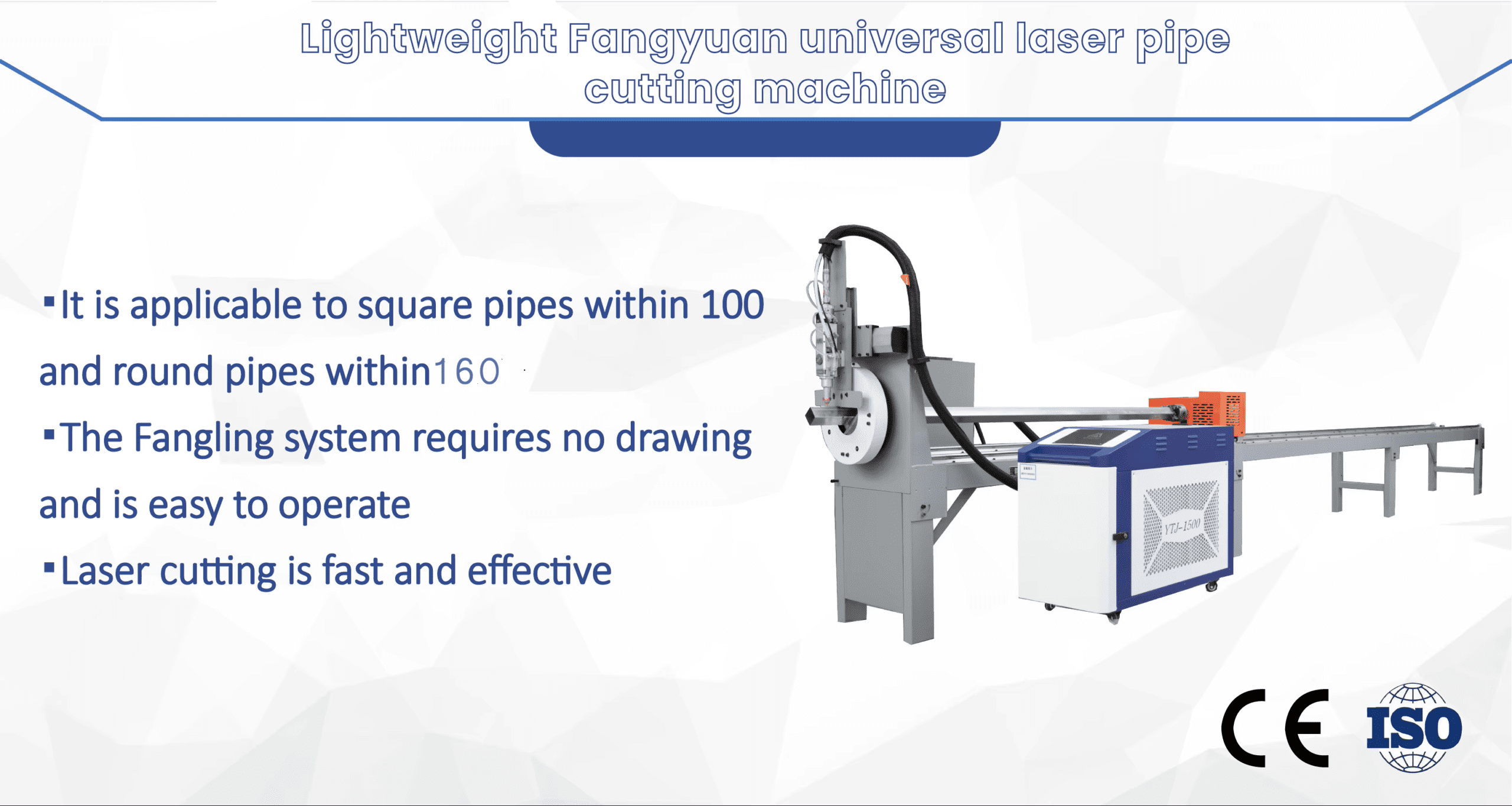
The integration of a CNC-controlled rotary axis allows the machine to process round, square, rectangular, and even specialized profiles like D-channels or C-channels. This versatility is critical for Guadalajara’s diverse industrial base, where a single workshop might produce automotive exhaust components in the morning and structural racking systems in the afternoon.
Optimizing Carbon Steel Processing
Carbon steel is the backbone of global infrastructure, and its reaction to laser cutting is highly predictable, provided the parameters are correctly set. When processing carbon steel with a 2kW fiber laser, the choice of assist gas is the most significant variable. Oxygen (O2) is the standard choice for thicker sections, as it initiates an exothermic reaction that adds thermal energy to the cut, allowing for deeper penetration. However, this results in a thin oxide layer on the cut edge, which may require removal before painting or powder coating.
Conversely, using High-Pressure Nitrogen (N2) or compressed air for thinner gauges (under 3mm) can produce a “clean cut” or “bright cut.” While this requires more laser power to overcome the lack of an exothermic reaction, it eliminates the oxide layer, streamlining the post-processing workflow. In the competitive manufacturing environment of Jalisco, reducing secondary operations like grinding or chemical de-scaling is a primary driver of profitability.
The Guadalajara Industrial Landscape
Guadalajara’s strategic location makes it a logistical nexus for North America. The city’s industrial parks, such as those in El Salto and Zapopan, host a variety of Tier 1 and Tier 2 suppliers for the automotive industry. For these players, a 2kW tube laser cutter is not just a tool but a competitive necessity. The ability to produce lightweight, high-strength carbon steel tubular frames with tolerances of ±0.1mm allows local shops to meet the stringent standards of international OEMs.
Furthermore, the local climate in Guadalajara—characterized by moderate temperatures but high dust levels during the dry season—necessitates specific environmental considerations for laser cutting equipment. High-quality chillers and dust extraction systems are mandatory to protect the sensitive optical components of the fiber laser. Local operators must ensure that the humidity-controlled cabinets for the laser source are maintained to prevent condensation on the fiber delivery cable.
 laser cutting machine” style=”width: 100%; max-width: 800px; height: auto; margin: 20px 0;”>
Operational Excellence and Maintenance
To maximize the ROI of a 2kW tube laser in a Mexican workshop, a rigorous maintenance schedule is essential. The fiber laser itself is solid-state, meaning it has no moving parts and requires significantly less maintenance than older CO2 technology. However, the “business end” of the machine—the cutting head—demands daily attention.
Key maintenance areas include:
- Cover Glass Inspection: The protective window must be checked for “spatter” or dust every shift. A dirty cover glass will absorb laser energy, heat up, and eventually crack or cause beam divergence.
- Nozzle Centering: Ensuring the laser beam passes perfectly through the center of the nozzle is vital for maintaining cut symmetry and preventing dross buildup on one side of the tube.
- Lubrication of Linear Guides: Given the high speeds of 2kW machines, the rack-and-pinion systems and linear guides must be automatically or manually lubricated to prevent mechanical wear and maintain positioning accuracy.
Software also plays a pivotal role. Modern nesting software for tube laser cutting allows for “common line cutting,” where two parts share a single cut path. This not only saves material—a critical factor given the fluctuating prices of carbon steel in the Mexican market—but also reduces the total “head-down” time, increasing the number of parts produced per hour.
Economic Advantages for Jalisco-Based Manufacturers
The economic argument for a 2kW tube laser in Guadalajara is compelling. When compared to outsourcing laser cutting services to the United States or even larger firms in Monterrey, localizing production reduces lead times from weeks to days. For a furniture manufacturer in Tonalá or an agricultural equipment builder in the Jalisco highlands, this agility allows for “Just-In-Time” (JIT) manufacturing and reduced inventory costs.
Moreover, the energy efficiency of a 2kW fiber laser is approximately 30-40% higher than that of a CO2 laser of equivalent power. In a region where industrial electricity rates are a significant overhead cost, the lower power consumption and lack of expensive resonator gases (like Helium) contribute directly to a lower cost-per-part. Many Guadalajara-based shops report a full return on investment (ROI) within 18 to 24 months, depending on shift patterns and material throughput.
Safety and Workforce Development
Implementing a 2kW laser system requires a shift in safety culture. Fiber lasers are Class 4 laser products; the beam is invisible and can cause permanent eye damage even from a reflection. It is imperative that Guadalajara workshops invest in fully enclosed machines (Class 1 enclosures) and provide specialized training for operators. Fortunately, the presence of institutions like the Universidad de Guadalajara and various technical colleges in the region ensures a steady supply of engineering talent capable of mastering CNC programming and laser physics.
Workforce development should focus on “Parameter Optimization.” An expert operator knows how to adjust the frequency, duty cycle, and gas pressure on the fly to account for variations in the carbon steel’s carbon content or surface rust. This level of expertise ensures that the 2kW laser cutting process remains stable even when material quality is inconsistent.
Conclusion: The Future of Laser Cutting in Western Mexico
The 2kW tube laser cutter is more than just a piece of machinery; it is a catalyst for industrial maturity in Guadalajara. By providing the precision of a surgeon with the power of an industrial forge, it enables local fabricators to compete on a global stage. As the “Nearshoring” trend continues to bring more manufacturing back to North America, Jalisco is perfectly positioned to capture this growth, provided its workshops continue to adopt high-efficiency laser cutting technologies.
Whether you are producing complex tubular frames for the next generation of electric vehicles or simple, high-volume components for the construction industry, the 2kW fiber laser offers a path toward higher quality, lower costs, and unparalleled versatility. In the heart of Mexico’s manufacturing corridor, the future is being cut one laser beam at a time.