
Introduction to 2kW Tube laser cutting in Monterrey’s Industrial Landscape
Monterrey, Nuevo León, stands as the industrial heartbeat of Mexico, hosting a dense ecosystem of automotive, aerospace, and heavy machinery manufacturers. As the global shift toward lightweight materials accelerates, the utilization of aluminum alloys has become paramount. To meet the rigorous tolerances required by these sectors, the implementation of a 2kW tube laser cutting system offers a sophisticated solution for processing complex geometries with high repeatability and efficiency.
The 2kW fiber laser source represents a critical “sweet spot” in manufacturing. It provides sufficient power to penetrate medium-gauge aluminum alloys while maintaining the beam quality necessary for intricate detail work. In the context of Monterrey’s competitive manufacturing landscape, where nearshoring has increased the demand for rapid prototyping and high-volume production, mastering 2kW laser cutting technology is no longer optional—it is a strategic necessity.
The Technical Advantage of 2kW Fiber Lasers
Fiber laser technology has revolutionized the processing of non-ferrous metals. Unlike traditional CO2 lasers, which struggle with the high reflectivity of aluminum, the 1.06-micron wavelength of a fiber laser is absorbed much more efficiently by the material. A 2kW system specifically excels in processing tube wall thicknesses ranging from 1mm to 6mm, which covers the vast majority of structural and decorative aluminum applications in the automotive and furniture industries.
The “tube” aspect of this technology refers to the machine’s ability to handle round, square, rectangular, and even open profiles (such as C-channels or L-angles). By integrating a rotary axis with the laser head, the machine can perform complex intersections and saddle cuts that would be nearly impossible with traditional mechanical sawing or milling. This integration significantly reduces the “part-to-part” cycle time, a metric of extreme importance to Monterrey’s Tier 1 and Tier 2 suppliers.
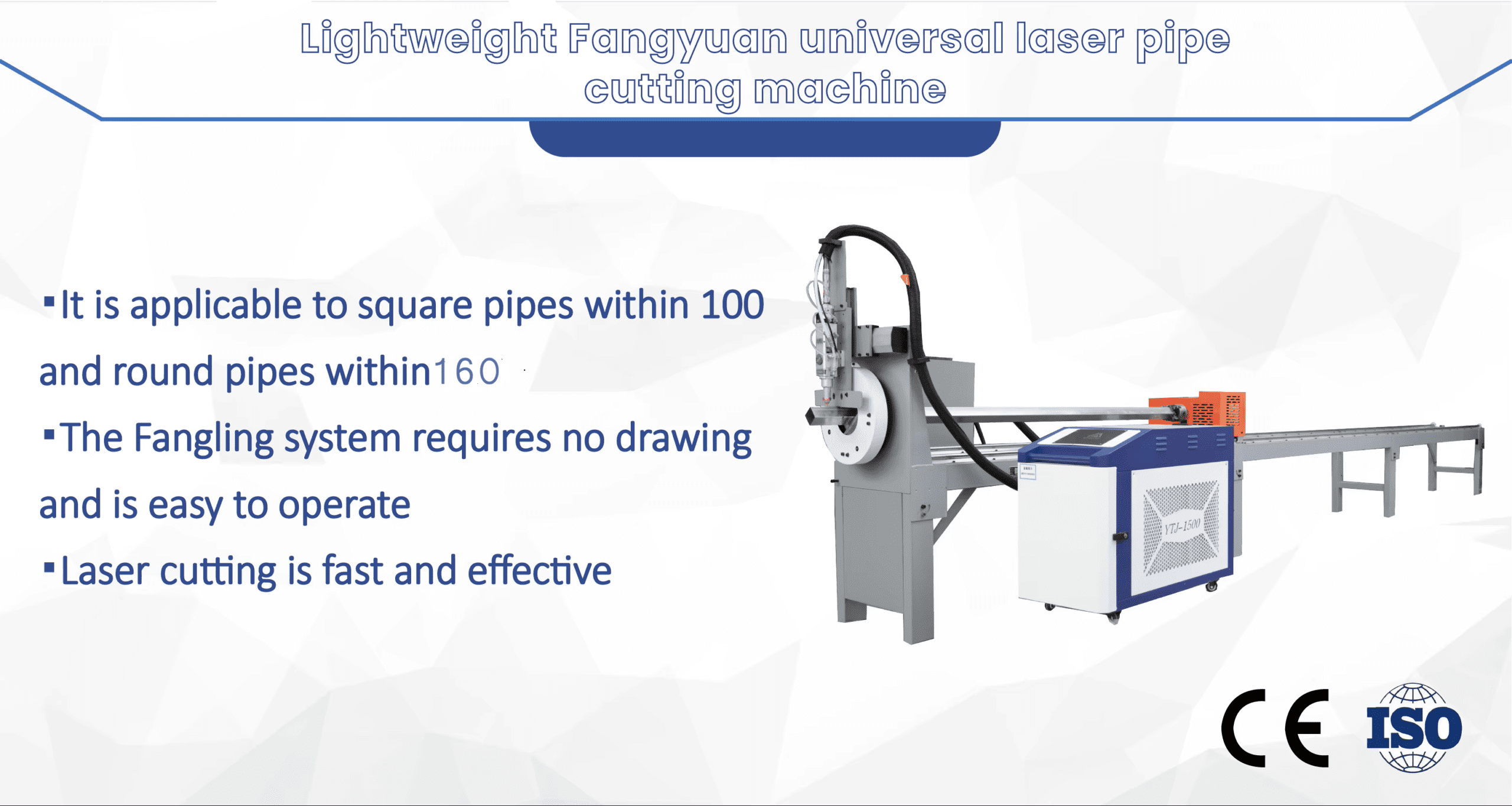 laser cutting machine” style=”width: 100%; max-width: 800px; height: auto; margin: 20px 0;”>
Processing Aluminum Alloys: Material Science and Challenges
Aluminum alloys, particularly the 5000 and 6000 series commonly used in Monterrey’s fabrication shops, present unique challenges for laser cutting. Aluminum is highly reflective and has a high thermal conductivity. This means that the energy from the laser is quickly dissipated into the surrounding material, which can lead to a larger Heat Affected Zone (HAZ) if the parameters are not optimized.
Managing Reflectivity and Back-Reflection
One of the primary concerns when laser cutting aluminum with a 2kW source is back-reflection. If the laser beam is reflected directly back into the cutting head, it can damage the optical fibers and the resonator. Modern 2kW tube laser cutting machines are equipped with back-reflection isolators and sensors that automatically shut down the beam if a dangerous level of reflected light is detected. However, the real solution lies in the cutting parameters—using a high-frequency pulse to “pierce” the surface and initiate the melt pool quickly, thereby reducing the window for reflection.
The Importance of Assist Gases
For aluminum, the choice of assist gas is critical. Nitrogen is the industry standard for high-quality laser cutting of aluminum. Because Nitrogen is an inert gas, it prevents oxidation of the cut edge, resulting in a clean, bright finish that is ready for welding or painting without secondary cleaning. For a 2kW system, maintaining a high pressure of Nitrogen (typically between 12 and 18 bar) is essential to blow the molten aluminum out of the kerf efficiently. This prevents the formation of “dross” or “burrs” on the underside of the tube, which is a common quality control failure in high-precision engineering.
Optimizing Operations for Monterrey’s Environment
Operating high-precision laser cutting equipment in Monterrey requires consideration of the local environment. The region is known for its extreme temperature fluctuations and high dust levels from industrial activity. These factors can impact the stability of the laser source and the longevity of the optical components.
Thermal Stability and Chiller Systems
A 2kW fiber laser generates significant heat within the resonator and the cutting head. In Monterrey’s summer months, where ambient temperatures can exceed 40°C, a robust dual-circuit water chiller is mandatory. One circuit cools the laser source, while the other maintains the temperature of the cutting head optics. Any deviation in temperature can cause “thermal lensing,” where the focal point of the laser shifts, leading to inconsistent cut quality and potential damage to the protective windows.
Dust Control and Air Filtration
Aluminum laser cutting produces fine metallic dust and fumes. In a high-production environment like those found in Apodaca or Santa Catarina, an integrated dust extraction and filtration system is vital. Not only does this protect the health of the operators, but it also prevents metallic particles from settling on the linear guides and the rotary chuck of the laser cutting machine. Regular maintenance of the bellows and lubrication systems is required to ensure the high-speed positioning accuracy remains within the ±0.05mm range required by aerospace standards.

Applications in Monterrey’s Key Industries
The versatility of the 2kW tube laser cutting system allows it to serve multiple sectors that drive the local economy in Nuevo León.
Automotive Chassis and Space Frames
With the presence of major automotive plants and their suppliers, the demand for lightweight aluminum tube components is at an all-time high. 2kW laser cutting is used to produce suspension components, seat frames, and instrument panel supports. The ability to cut complex notches and holes in 6061-T6 aluminum tubes allows for “tab-and-slot” assembly, which simplifies the welding jigs and reduces assembly time on the production line.
Architectural and Structural Aluminum
Monterrey’s construction boom has led to increased use of aluminum in curtain walls, glass railings, and decorative facades. Square and rectangular aluminum tubes are often processed on a 2kW laser to create precise miters and bolt holes. The precision of the laser ensures that long sections of tubing can be joined with minimal gaps, which is essential for both structural integrity and aesthetic appeal in modern architectural designs.
Software Integration and Nesting Optimization
To maximize the ROI of a 2kW tube laser cutting machine, the role of CAD/CAM software cannot be overstated. Modern systems utilize specialized 3D nesting software that calculates the most efficient way to arrange parts on a standard 6-meter or 9-meter tube. This minimizes the “remnant” or scrap material, which is particularly important given the fluctuating price of aluminum alloys.
Common Cut and Micro-Joints
Advanced laser cutting strategies such as “common cut” (where two parts share a single cut line) can significantly increase throughput. Additionally, the use of micro-joints—tiny tabs of metal that keep the cut part attached to the main tube until the end of the cycle—prevents parts from falling and colliding with the machine’s internal components. This is crucial for maintaining the high-speed automation that Monterrey’s factories demand.
Maintenance and Long-term Reliability
A 2kW fiber laser is a significant investment, and its longevity depends on a rigorous preventative maintenance schedule. Unlike CO2 lasers, fiber lasers do not have moving parts in the resonator, but the “delivery fiber” and the cutting head optics are sensitive. In Monterrey, it is recommended to have a local technical support team that can provide rapid response and spare parts such as nozzles, ceramic rings, and protective windows.
Daily and Weekly Inspections
Operators should perform daily checks on the nozzle centering and the condition of the protective glass. A misaligned nozzle can lead to turbulent gas flow, which causes a “ragged” cut edge on aluminum. Weekly inspections should focus on the chiller’s water levels and the cleanliness of the rack-and-pinion drive system. Given the high-speed movements of a tube laser, any debris in the tracks can lead to vibration, which manifests as “chatter marks” on the cut surface of the aluminum alloy.
Conclusion: The Future of Fabrication in Monterrey
The integration of 2kW tube laser cutting technology represents a leap forward for Monterrey’s metalworking industry. By combining the power and precision of fiber lasers with the flexibility of multi-axis tube processing, local manufacturers can compete on a global stage. Whether it is for the next generation of electric vehicles or for the growing infrastructure of the city, the ability to process aluminum alloys with speed and accuracy is the hallmark of a modern, efficient factory.
As technology continues to evolve, the focus will likely shift toward even higher levels of automation and AI-driven process monitoring. However, the core principles of laser cutting—managing material properties, optimizing gas flow, and maintaining mechanical precision—will remain the foundation of manufacturing excellence in Monterrey.
















