
The Strategic Advantage of 2kW Sheet Metal laser cutting in Queretaro’s Industrial Landscape
Queretaro has solidified its position as the epicenter of Mexico’s aerospace and automotive manufacturing sectors. Within this high-precision environment, the demand for versatile, efficient, and cost-effective fabrication tools has never been higher. The 2kW fiber laser cutting system represents the “sweet spot” for many local workshops and Tier 2 or Tier 3 suppliers. This power level provides the optimal balance between capital investment and processing capability, particularly when dealing with the high-grade stainless steel alloys required by the region’s sophisticated supply chains.
Laser cutting technology has evolved rapidly, moving from the bulky CO2 systems of the past to the high-efficiency fiber resonators used today. For an engineer or plant manager in Queretaro, understanding the specific technical nuances of a 2kW system is essential for optimizing production throughput and maintaining the tight tolerances demanded by international quality standards like AS9100 or IATF 16949.
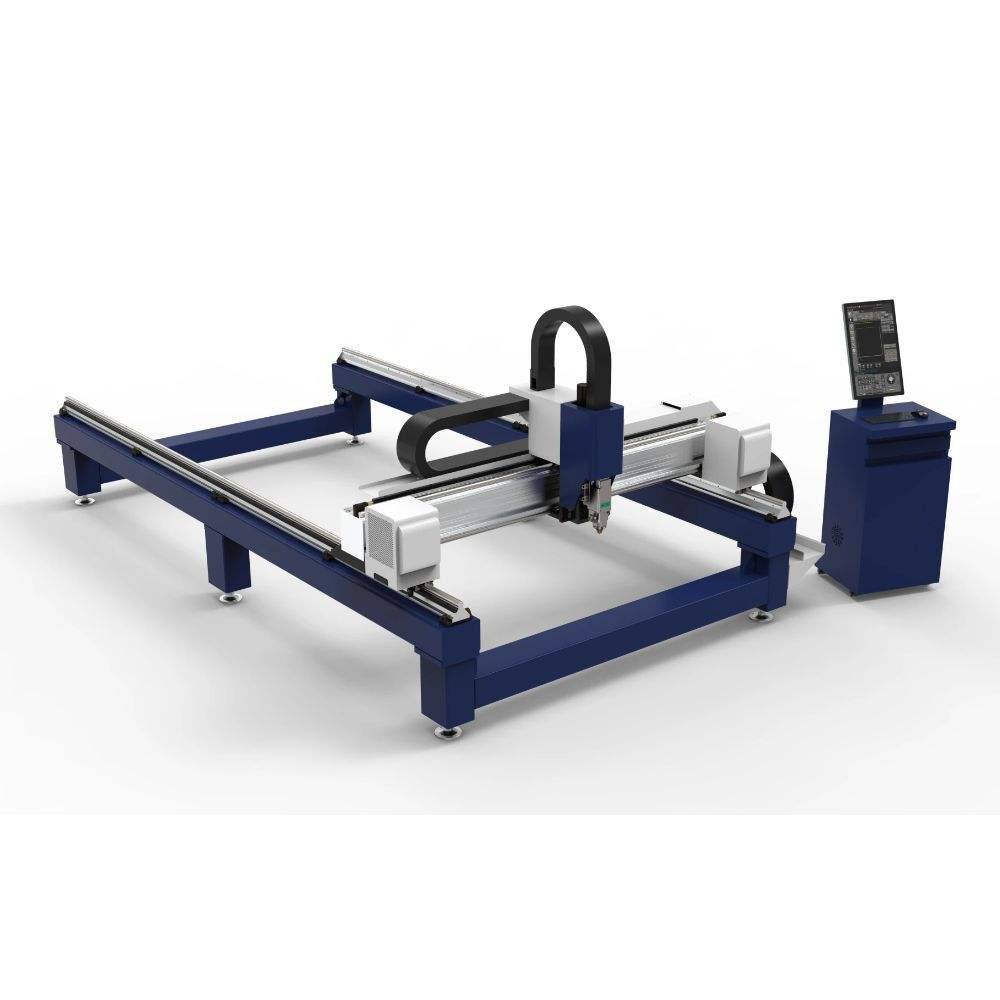 laser cutting machine” style=”max-width: 100%; height: auto; margin: 20px 0;”>
Technical Specifications of the 2kW Fiber Laser
A 2kW fiber laser source delivers a concentrated beam of light at a wavelength of approximately 1.06 microns. This wavelength is highly absorbed by metals, especially stainless steel, compared to the 10.6 microns of a CO2 laser. This high absorption rate translates directly into cutting speed and edge quality. In a 2kW configuration, the machine is typically capable of processing stainless steel up to 8mm in thickness, though its “peak efficiency” zone lies between 1mm and 5mm.
At these thicknesses, the 2kW laser cutting process achieves high-speed traversal without sacrificing the integrity of the material. The beam quality (M²) is usually near-unity, allowing for a incredibly small spot size. This allows for the fabrication of intricate geometries and narrow kerf widths, which are vital for components used in medical devices or aerospace electronics—two growing industries in the Queretaro-El Marqués corridor.
Optimizing Stainless Steel Processing in Central Mexico
Stainless steel, particularly grades 304 and 316, is notorious for its thermal properties. It has lower thermal conductivity and higher thermal expansion than carbon steel. When utilizing laser cutting for these materials, heat management becomes the primary concern for the operator. A 2kW system provides enough power to “vaporize” the metal quickly, minimizing the Heat Affected Zone (HAZ) and preventing warping in thin-gauge sheets.
The Role of Assist Gases: Nitrogen vs. Oxygen
In the Queretaro industrial market, the choice of assist gas is a critical operational decision. For stainless steel, Nitrogen (N2) is the industry standard. Nitrogen acts as a shielding gas, blowing the molten metal out of the kerf before it can react with atmospheric oxygen. This results in a “bright” or “clean” edge that requires no post-processing before welding or painting.
While Oxygen can be used to cut thicker sections of stainless steel by utilizing an exothermic reaction to add heat, it leaves a dark, oxidized layer on the edge. In the context of Queretaro’s food processing equipment manufacturing—where hygiene and corrosion resistance are paramount—oxygen-cut edges are often unacceptable. Therefore, a 2kW laser cutting setup must be paired with a high-pressure Nitrogen delivery system or a high-capacity nitrogen generator to be truly competitive.

Thermal Management and Cooling Requirements
Queretaro’s climate, characterized by its semi-arid conditions and significant diurnal temperature swings, poses specific challenges for fiber laser resonators. A 2kW laser cutting machine requires a robust dual-circuit chilling system. One circuit cools the fiber source itself, while the other cools the cutting head and optics. Maintaining a constant temperature is vital to prevent “thermal drift,” which can shift the focal point of the laser and lead to inconsistent cut quality or even damage to the protective windows of the cutting head.
Operational Excellence: Nozzles, Focus, and Calibration
To achieve engineering-grade results on stainless steel, the operator must master the relationship between nozzle diameter, focal position, and gas pressure. For a 2kW system, a double-layer nozzle is often preferred for nitrogen cutting to ensure a laminar flow of gas that keeps the cut clean.
Focus Position Strategies
Unlike carbon steel, where the focus is typically on the surface, laser cutting stainless steel often requires a “negative focus.” This means the focal point is positioned inside the material or even near the bottom of the sheet. This allows the beam to create a wider kerf at the bottom, facilitating the efficient removal of molten material by the high-pressure nitrogen. In Queretaro’s fast-paced production environments, automated focus adjustment (auto-focus) heads are highly recommended to reduce setup times between different gauges of stainless steel.
Economic Impact and ROI for Queretaro Fabricators
The acquisition of a 2kW sheet metal laser is a significant capital expenditure, but the Return on Investment (ROI) in the Bajío region is driven by three main factors: speed, material utilization, and labor reduction.
Compared to traditional CNC punching or plasma cutting, laser cutting offers significantly higher nesting efficiency. Modern CAD/CAM software can “nest” parts so tightly that material waste is reduced by up to 30%. Given the fluctuating price of stainless steel in Mexico, these material savings can often cover the monthly financing costs of the machine. Furthermore, the precision of a 2kW fiber laser eliminates the need for secondary grinding or deburring, allowing parts to move directly from the laser bed to the assembly line or the welding station.
Integration with Queretaro’s Supply Chain
Queretaro is home to a robust network of material suppliers and technical service providers. Local availability of high-purity gases and specialized stainless steel alloys (including 430 and 310S for high-temperature applications) makes the region an ideal place to operate a laser cutting service bureau. Furthermore, the presence of technical universities like UAQ and UNAQ ensures a pipeline of skilled technicians who can be trained to operate and maintain these high-tech systems.
Maintenance and Long-Term Reliability
While fiber lasers are known for their low maintenance compared to CO2 lasers (which require gas refills and mirror alignments), they are not “maintenance-free.” In the dusty environments common in many Mexican industrial parks, the filtration system of the laser cutting machine is its first line of defense. The dust collectors must be serviced regularly to ensure that metallic dust does not settle on the rack-and-pinion drives or the linear guides.
The “heart” of the 2kW system—the fiber cable—is incredibly durable but also sensitive to tight bends or contamination at the connection points. Professional engineering standards dictate that the machine should be housed in a stabilized environment where possible, or at the very least, protected from the direct ingress of workshop dust and humidity.
Safety Considerations in the Workshop
A 2kW laser is a Class 4 laser product. The beam is invisible and can cause permanent eye damage or skin burns instantly. In Queretaro, compliance with STPS (Secretaría del Trabajo y Previsión Social) regulations is mandatory. This includes the use of fully enclosed machine housings with laser-safe viewing windows and interlocking doors. Proper fume extraction is also critical when laser cutting stainless steel, as the process can release hexavalent chromium—a known carcinogen. High-efficiency particulate air (HEPA) filters are a necessary investment for any responsible fabrication facility.
Conclusion: The Future of Fabrication in the Bajío
As Queretaro continues to attract international investment, the local manufacturing base must upgrade its technological capabilities to remain competitive. The 2kW sheet metal laser cutting system is more than just a tool; it is a gateway to high-precision manufacturing. By mastering the nuances of stainless steel processing—from assist gas dynamics to thermal management—local companies can provide the quality and speed that global OEMs demand.
Whether it is producing components for a jet engine in the Aerospace Park or creating custom stainless steel fixtures for a winery in Tequisquiapan, the 2kW fiber laser remains the most versatile and reliable workhorse for the modern Mexican engineer. Investing in this technology, supported by the local infrastructure and expertise available in Queretaro, is a definitive step toward industrial excellence.
















