
The Strategic Advantage of 2kW laser cutting in Guadalajara’s Industrial Landscape
Guadalajara, often referred to as the “Silicon Valley of Mexico,” has evolved into a powerhouse for high-tech manufacturing, aerospace, and food processing equipment. Within this competitive ecosystem, the demand for precision metal fabrication has surged. The implementation of 2kW fiber laser cutting technology has become a cornerstone for local workshops and industrial plants aiming to balance throughput, precision, and operational costs. Specifically, when processing stainless steel—a material prized for its corrosion resistance and aesthetic appeal—the 2kW power rating offers a “sweet spot” of efficiency and quality.
For engineers and plant managers in Jalisco, understanding the technical nuances of a 2kW fiber laser is essential. This power level is specifically optimized for sheet metal gauges ranging from 0.5mm to 8mm, which covers the vast majority of decorative, structural, and sanitary applications required by Guadalajara’s diverse industry. As the region continues to benefit from nearshoring trends, the ability to produce high-tolerance stainless steel components locally is no longer just an advantage; it is a necessity for integration into global supply chains.
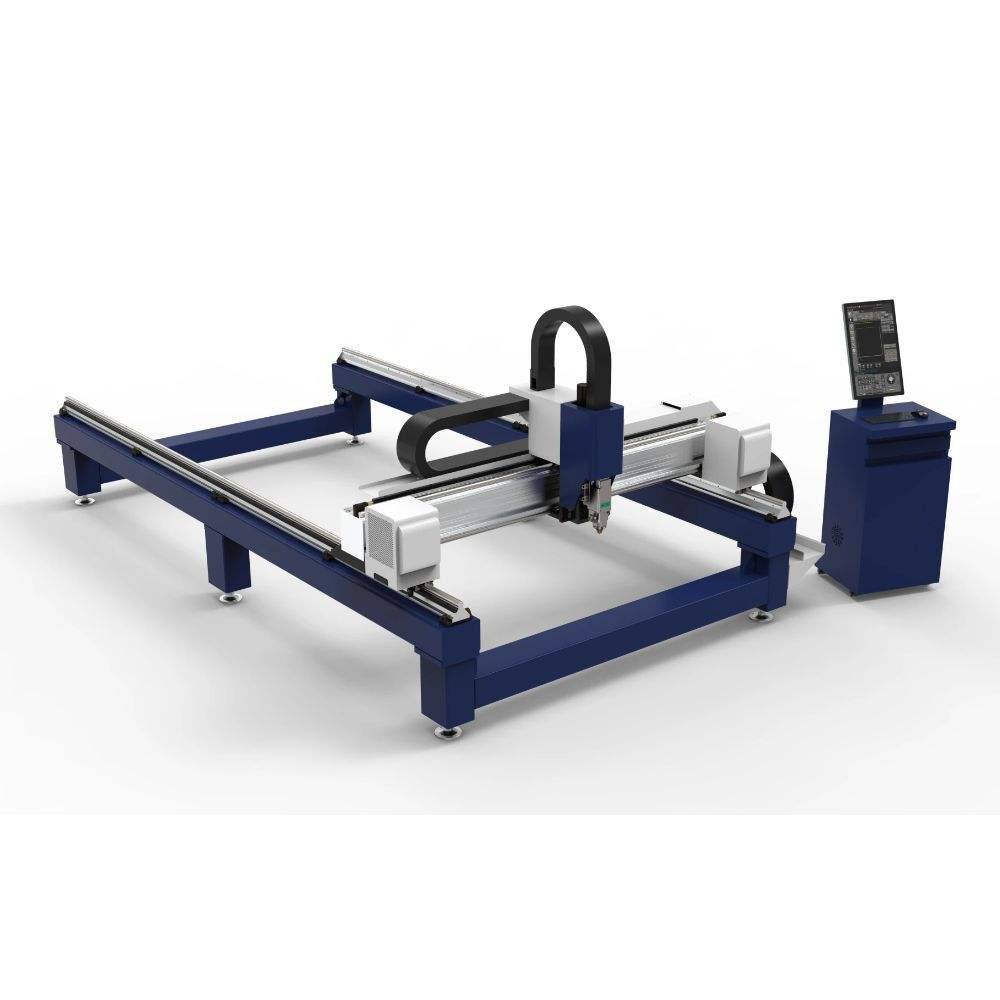
 laser cutting machine” style=”max-width: 100%; height: auto; margin: 20px 0;”>
Technical Architecture of the 2kW Fiber Laser
The 2kW fiber laser operates on a solid-state principle, where the laser beam is generated in an active optical fiber and delivered via a flexible transport fiber to the cutting head. Unlike older CO2 technology, the 1.06-micron wavelength of a fiber laser is more readily absorbed by metallic surfaces, particularly stainless steel. This increased absorption rate translates directly into faster cutting speeds and a smaller heat-affected zone (HAZ).
At the heart of a 2kW system is the resonator. Modern units utilized in the Guadalajara market often feature modular designs, allowing for easier maintenance and high stability. The beam quality, measured by the M2 factor, is typically close to 1.1, ensuring a tightly focused spot size. This focus is critical for laser cutting stainless steel, as it allows the energy to be concentrated enough to melt the material instantaneously, which is then cleared by high-pressure assist gases.
Optimizing Stainless Steel Processing for Local Industries
Stainless steel, particularly grades 304 and 316L, is ubiquitous in Guadalajara’s food and pharmaceutical sectors. However, cutting this material presents unique challenges compared to carbon steel. Stainless steel has a higher melting point and lower thermal conductivity, meaning heat tends to stay localized at the cut edge. Without proper parameter management, this can lead to dross formation or discoloration.
A 2kW system provides sufficient power to employ “Nitrogen Cutting” (or fusion cutting). When using nitrogen as an assist gas at pressures between 12 and 18 bar, the gas acts as a mechanical force to blow away the molten metal without causing oxidation. The result is a silver-bright, weld-ready edge that requires no secondary finishing—a critical factor for companies in Zapopan or Tlaquepaque producing commercial kitchen equipment or medical devices.
The Role of Assist Gases: Nitrogen vs. Oxygen
In the context of 2kW laser cutting, the choice of assist gas is the primary driver of both quality and cost. For stainless steel, Nitrogen is the industry standard. Because Nitrogen is inert, it prevents the chromium in the stainless steel from reacting with oxygen. This maintains the material’s anti-corrosive properties at the edge. In Guadalajara’s humid climate, preventing edge oxidation is vital to ensure that finished products do not develop rust spots over time.
While Oxygen can be used to cut thicker sections of stainless steel by utilizing an exothermic reaction, it results in a blackened, oxidized edge. For a 2kW machine, Oxygen is rarely the first choice for stainless unless the thickness exceeds 6mm and edge aesthetics are secondary to raw separation. Most high-end fabricators in the region invest in nitrogen generation systems or high-pressure liquid nitrogen tanks to support the continuous operation of their 2kW fiber lasers.
Precision and Tolerance Standards in Jalisco’s Manufacturing
The 2kW fiber laser is capable of achieving positioning accuracies within ±0.03mm and repeatability of ±0.02mm. For the electronics industry in Guadalajara, which requires intricate enclosures and heat sinks, this level of precision is non-negotiable. The narrow kerf width—often as small as 0.1mm—allows for tight nesting of parts, significantly reducing material waste. Given the rising cost of stainless steel alloys, maximizing sheet utilization is a key factor in maintaining a competitive edge in the Mexican market.
Furthermore, the 2kW power level allows for the processing of thin-gauge stainless steel at speeds exceeding 30 meters per minute. This high-speed capability ensures that the material does not warp due to excessive heat soak, which is common when using lower-powered lasers or traditional plasma cutting methods. The stability of the gantry and the response time of the height sensor (capacitive sensing) are vital components that work in tandem with the 2kW source to maintain a constant standoff distance, even if the sheet metal has slight undulations.
Environmental and Infrastructure Considerations in Guadalajara
Operating high-precision laser cutting equipment in Guadalajara requires attention to local environmental factors. The region’s altitude and average temperatures can affect the efficiency of the water-cooling systems (chillers) required for the laser source and the cutting head. A 2kW system typically requires a dual-circuit chiller to maintain the resonator at a stable 22-25°C and the optics at a slightly higher temperature to prevent condensation.
Power stability is another critical factor. Industrial zones in Jalisco can occasionally experience voltage fluctuations. It is highly recommended that 2kW laser systems be installed with high-capacity voltage regulators and surge protectors. A clean, stable 220V or 440V three-phase supply ensures that the laser beam remains consistent, preventing “striations” or rough marks on the stainless steel surface that occur when power output fluctuates during a cut.
Maintenance Protocols for Longevity
To ensure a 2kW fiber laser maintains its performance over a 10-year lifespan, a rigorous maintenance schedule must be followed. In a sheet metal environment, dust is the primary enemy. The optical path must be kept under positive pressure with clean, dry air to prevent contamination of the protective windows. For shops in Guadalajara, where industrial dust can be prevalent, changing the air filters and checking the nozzle condition daily is mandatory.
The 2kW fiber source itself is virtually maintenance-free compared to CO2 lasers, as it has no moving parts or mirrors that require alignment. However, the cutting head optics—specifically the collimating lens and the focus lens—must be inspected for “burn spots.” Even a microscopic speck of dust on the lens can absorb the 2000W of energy, leading to thermal cracking and expensive downtime. Training local operators in “clean room” practices when handling optics is a high-return investment for any Jalisco-based fabrication business.
Economic Impact and ROI for Small to Medium Enterprises
The transition to 2kW laser cutting represents a significant capital expenditure, but the Return on Investment (ROI) is often realized within 18 to 24 months for shops running at 60% capacity. The primary cost savings come from the elimination of secondary processes. Because the 2kW laser produces a finished edge on stainless steel, the labor costs associated with grinding, deburring, and polishing are slashed by up to 80%.
Additionally, the energy efficiency of fiber technology is roughly 30-35% (Wall-plug efficiency), compared to the 8-10% of CO2 lasers. In Mexico, where industrial electricity rates are a major operational overhead, the reduced power consumption of a 2kW fiber laser provides a direct boost to the bottom line. When combined with the high speed of processing 16-gauge to 11-gauge stainless steel, the cost-per-part becomes significantly lower than any other thermal cutting method.
Conclusion: The Future of Metal Fabrication in Jalisco
As Guadalajara continues to cement its status as a global manufacturing hub, the adoption of 2kW sheet metal lasers will only accelerate. The ability to handle stainless steel with precision, speed, and cost-effectiveness makes this technology the backbone of modern “Fab Labs” and industrial production lines alike. By mastering the technical parameters of laser cutting, choosing the correct assist gases, and maintaining the equipment against local environmental challenges, Jalisco’s manufacturers can ensure they remain at the forefront of the international industrial stage.
Whether it is for the production of automotive components, aerospace brackets, or high-end architectural features, the 2kW fiber laser stands as a testament to the power of precision engineering in the heart of Mexico’s industrial corridor.
















