
Introduction to 2kW Precision Laser Systems in Puebla’s Industrial Sector
Puebla has long established itself as a cornerstone of Mexico’s manufacturing excellence. From the massive automotive complexes of Volkswagen and Audi to the burgeoning aerospace and food processing sectors, the demand for high-precision metal fabrication has never been higher. At the center of this technological evolution is the 2kW precision laser system, a tool that has redefined the standards for laser cutting stainless steel. This guide explores the technical intricacies, operational advantages, and localized benefits of implementing 2kW fiber laser technology within the unique industrial landscape of Puebla.
The 2kW power rating represents a “sweet spot” in fiber laser technology. It offers a perfect balance between capital investment and operational capability, particularly for shops specializing in thin to medium-gauge stainless steel. In a region where efficiency and precision are non-negotiable, understanding the mechanics of these systems is essential for any engineering firm looking to maintain a competitive edge.
The Technical Architecture of the 2kW Fiber Laser
Core Components and Beam Quality
A 2kW precision system relies on a fiber laser source where the active gain medium is an optical fiber doped with rare-earth elements, typically ytterbium. This configuration allows for a high-quality beam with a low M² factor, which translates to a tighter focal spot. For laser cutting stainless steel, the density of the energy at the focal point is more critical than raw power alone. A 2kW system can achieve energy densities that cleanly vaporize stainless steel, resulting in a narrow kerf and minimal dross.
Motion Control and Drive Systems
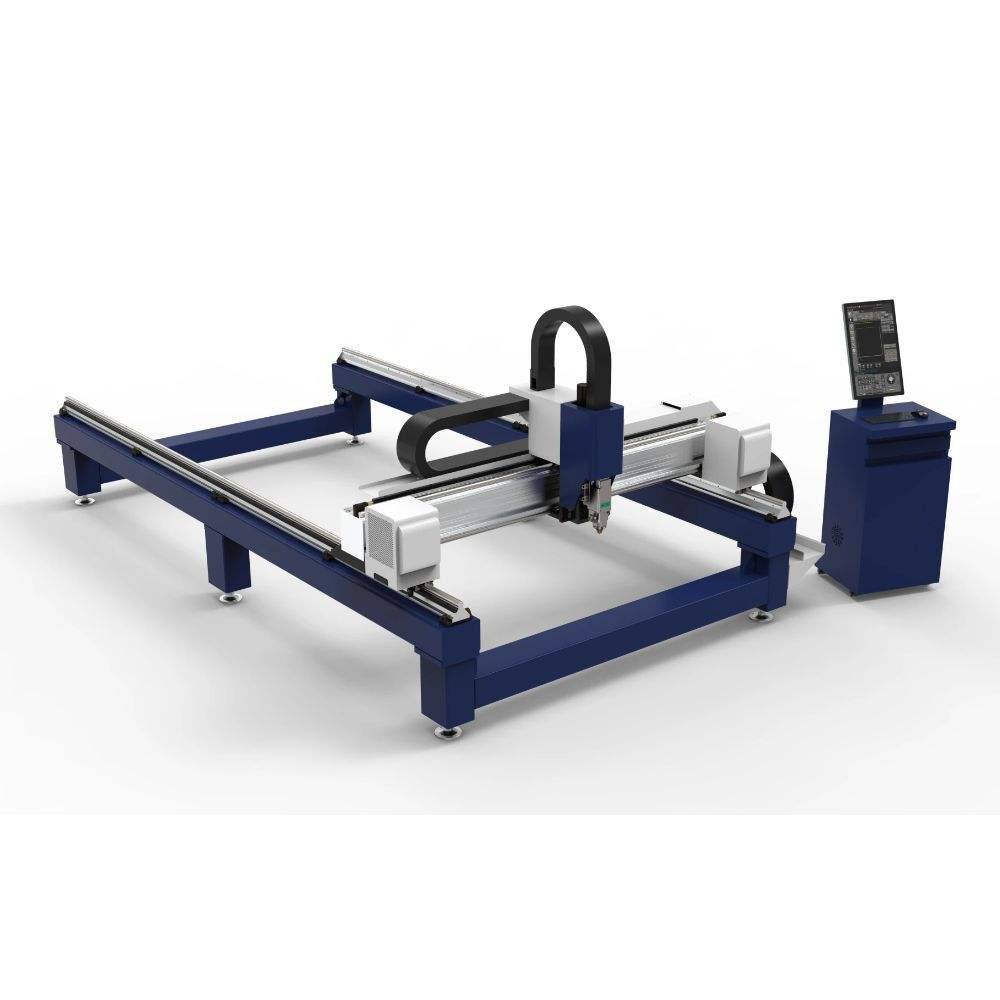
To match the speed of a 2kW laser, the machine’s gantry must be capable of high acceleration and deceleration. Most precision systems utilized in Puebla’s workshops employ linear motors or high-end rack-and-pinion systems. These components ensure that the laser cutting head maintains a constant velocity, even when navigating complex geometries or sharp corners in stainless steel components. Precision is further enhanced by closed-loop feedback systems that correct for micro-vibrations in real-time.
 laser cutting machine” style=”width: 100%; max-width: 800px; margin: 20px 0;”>
Optimizing Laser Cutting for Stainless Steel Grades
Processing 304 and 316 Stainless Steel
In Puebla’s food and pharmaceutical industries, Grade 304 and 316 stainless steel are the standards. These materials are prized for their corrosion resistance, but they present specific challenges during laser cutting. The 2kW system provides sufficient power to maintain a stable melt pool. When cutting Grade 304, the laser must overcome the material’s reflectivity while managing heat dissipation. Grade 316, containing molybdenum, requires slightly different frequency settings to ensure the edges remain surgical-grade and free of oxidation.
The Role of Assist Gases: Nitrogen vs. Oxygen
For precision stainless steel work, Nitrogen is the preferred assist gas. It acts as a shielding agent, preventing oxidation and ensuring the cut edge remains bright and weld-ready. A 2kW system optimized for Nitrogen laser cutting can process 3mm stainless steel at impressive speeds without the need for secondary finishing. Oxygen is rarely used for stainless steel unless the thickness exceeds the 2kW threshold for Nitrogen, as it leaves a dark oxide layer that must be removed before further processing or coating.
Operational Advantages in the Puebla Region
Adapting to High-Altitude Environments
Puebla sits at an average elevation of 2,135 meters above sea level. For high-precision laser cutting, altitude can affect the cooling efficiency of the chiller and the behavior of the assist gases. A professional 2kW system must be calibrated for these atmospheric conditions. Modern systems feature pressurized optical paths to prevent dust ingress, which is particularly important in the dry, dusty seasons characteristic of the Central Mexican Plateau. Ensuring that the beam path remains pristine is vital for maintaining the 2kW output at the nozzle.
Energy Efficiency and Sustainability
Energy costs are a significant factor for manufacturers in Mexico. Fiber lasers are significantly more efficient than older CO2 technology. A 2kW fiber laser typically consumes about 70% less electricity than a CO2 laser of equivalent cutting capacity. This efficiency not only reduces the carbon footprint of Puebla’s industrial parks but also lowers the overhead for small-to-medium enterprises (SMEs) that serve as Tier 2 and Tier 3 suppliers to the automotive giants.
Precision Applications in Key Industries
Automotive Component Manufacturing
With the presence of major OEMs in the region, laser cutting is utilized for everything from structural brackets to intricate interior trim. The 2kW system’s ability to maintain tight tolerances (often within +/- 0.05mm) ensures that parts meet the rigorous quality standards of the German automotive industry. The precision of the fiber laser minimizes the heat-affected zone (HAZ), which is crucial for maintaining the structural integrity of high-strength stainless steel alloys used in safety-critical parts.
Industrial Kitchen and Medical Equipment
Puebla is also a hub for the production of commercial kitchen equipment and medical devices. These sectors require perfectly smooth edges to meet hygiene standards. The 2kW laser cutting process delivers a “burr-free” finish on stainless steel sheets. By utilizing high-pressure nitrogen, fabricators can produce components that go straight from the laser bed to the assembly line, bypassing the time-consuming grinding and polishing phases.
Maintenance and Technical Support in Puebla
Preventative Maintenance Schedules
The longevity of a 2kW laser system depends on a rigorous maintenance regime. In the industrial environment of Puebla, this includes regular inspection of the protective windows, cleaning of the nozzle assembly, and monitoring the water conductivity in the chiller system. Because fiber lasers have no moving parts or mirrors in the beam generation source, the maintenance requirements are lower than other technologies, but the precision components of the cutting head still require expert attention.
Local Supply Chain for Consumables
Successful operation in Puebla requires a reliable supply of consumables, such as copper nozzles, ceramic rings, and protective lenses. Local distributors have improved their inventory management to ensure that laser cutting operations do not face downtime. Furthermore, the availability of high-purity Nitrogen is essential. Many shops in Puebla are now installing Nitrogen generators to gain independence from gas suppliers and ensure a consistent flow for their 2kW systems.
Future Trends: Integration and Automation
Industry 4.0 and Smart Manufacturing
The next step for laser cutting in Puebla is the integration of AI and IoT. Modern 2kW systems are equipped with sensors that monitor the health of the laser source and the quality of the cut in real-time. If the system detects a deviation—perhaps due to a variation in the stainless steel sheet’s composition—it can automatically adjust the focal position or gas pressure. This level of automation is becoming standard in the high-tech corridors of the city.
The Move Toward Hybrid Systems
While plate cutting remains the primary use for 2kW lasers, there is a growing trend toward hybrid systems that can handle both flat sheets and tubes. For Puebla’s construction and furniture industries, this versatility is invaluable. A single 2kW machine can be configured to cut stainless steel tubes for architectural railings and then switch to flat plate cutting for industrial panels, maximizing the return on investment for the owner.
Conclusion: The Strategic Importance of 2kW Lasers
The adoption of 2kW precision laser systems is more than just a technological upgrade; it is a strategic necessity for the manufacturing sector in Puebla. By mastering the laser cutting of stainless steel, local fabricators can meet the global standards required by the automotive, aerospace, and medical industries. The combination of high power density, energy efficiency, and localized technical expertise makes the 2kW fiber laser the tool of choice for the next generation of Mexican engineering.
As the region continues to attract foreign investment and foster domestic innovation, the role of precision laser cutting will only expand. Investing in a 2kW system today ensures that a workshop is prepared for the complexities of tomorrow’s materials and the high-speed demands of a globalized supply chain. In the heart of Puebla, the future of manufacturing is being cut with light.
















