
Introduction to 2kW Precision Laser Systems in Leon’s Industrial Sector
The industrial landscape of Leon, Guanajuato, has undergone a significant transformation over the last decade. As a central hub in the Bajío region, Leon has evolved from its traditional roots in leather and footwear into a sophisticated center for automotive, aerospace, and medical device manufacturing. At the heart of this evolution is the adoption of advanced fabrication technologies, most notably the 2kW precision laser system. This power class represents a strategic “sweet spot” for many manufacturers, offering a perfect balance between speed, edge quality, and operational cost, particularly when processing stainless steel.
In the context of modern engineering, laser cutting has replaced many traditional mechanical punching and shearing methods. A 2kW fiber laser system provides the high power density required to melt and vaporize stainless steel with extreme localized precision. For the industries in Leon, where tight tolerances and aesthetic finishes are non-negotiable, understanding the technical nuances of these systems is essential for maintaining a competitive edge in the global supply chain.
 laser cutting machine“>
Technical Specifications of the 2kW Fiber Laser Source
The Physics of Fiber Laser Technology
A 2kW precision laser system typically utilizes a fiber laser source, where the laser beam is generated in an active optical fiber and delivered via a flexible transport fiber to the cutting head. Unlike CO2 lasers, fiber lasers operate at a wavelength of approximately 1.06 microns. This shorter wavelength is more readily absorbed by metals, especially stainless steel, which significantly increases the efficiency of the laser cutting process. The 2kW power rating refers to the continuous wave (CW) output, allowing for deep penetration and high-speed processing of medium-gauge materials.
Beam Quality and Focusability
In precision engineering, the “Beam Parameter Product” (BPP) is a critical metric. A 2kW system is designed to provide a high-quality beam with a low BPP, meaning the laser can be focused into an incredibly small spot size. This high power density at the focal point allows for a narrower kerf (the width of the cut), which is vital for intricate geometries and tight nesting of parts. For manufacturers in Leon producing components for the food processing or pharmaceutical industries, this precision ensures that every part meets exact dimensional specifications without the need for secondary finishing.
Optimizing Stainless Steel Processing
Material Characteristics: 304 vs. 316 Grade
Stainless steel is prized for its corrosion resistance and mechanical strength, but these same properties can make it challenging to machine. The most common grades processed in Leon are 304 (standard) and 316 (marine/medical grade). A 2kW laser cutting system is exceptionally well-suited for these materials up to a thickness of approximately 8mm. Beyond this thickness, while cutting is possible, the speed and edge quality may diminish. However, within the 1mm to 6mm range, the 2kW system delivers a mirror-like finish that is often required for exposed architectural elements or sanitary equipment.
The Role of Assist Gases: Nitrogen vs. Oxygen
The choice of assist gas is perhaps the most critical factor in stainless steel laser cutting. To maintain the “stainless” property of the material, Nitrogen is almost exclusively used. Nitrogen acts as a shielding gas, blowing away the molten metal before it can react with atmospheric oxygen. This results in an oxide-free, bright cutting edge that is ready for welding or immediate assembly. In contrast, using Oxygen would cause oxidation, leading to a blackened edge that requires manual cleaning—a costly and time-consuming step for Leon’s high-volume production lines.
Precision and Accuracy in the Leon Manufacturing Context
Thermal Management and the Heat-Affected Zone (HAZ)
One of the primary advantages of a 2kW precision system is its ability to minimize the Heat-Affected Zone (HAZ). Because the laser moves at high speeds and the energy is highly concentrated, the surrounding material absorbs very little heat. This is particularly important for stainless steel, which has a higher coefficient of thermal expansion than carbon steel. Excessive heat can lead to warping or “oil-canning” in thin sheets. By utilizing precise CNC control and optimized cutting parameters, manufacturers in Leon can produce large-scale panels and intricate components that remain perfectly flat and dimensionally stable.
Repeatability and Motion Control
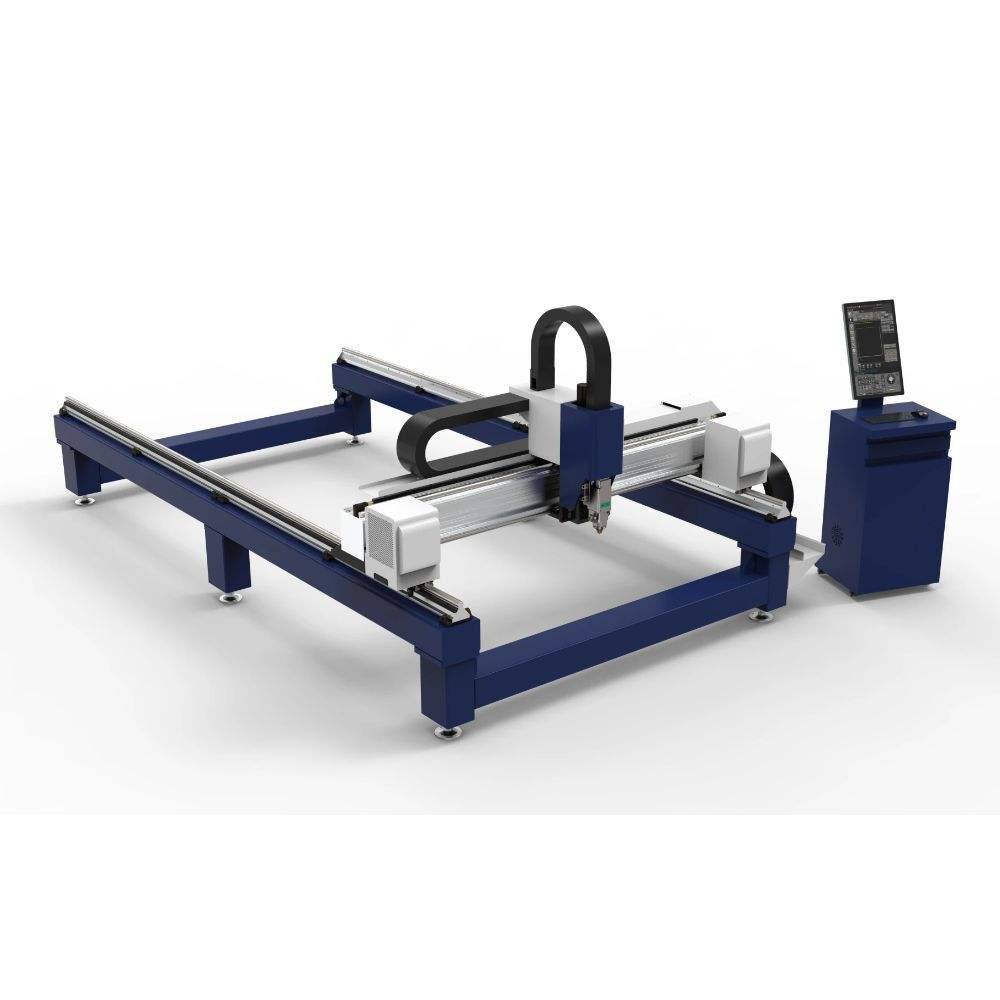
Precision is not just about the laser source; it is also about the motion system. High-end 2kW systems used in Leon are often equipped with linear motors or high-precision rack-and-pinion systems. These components allow for accelerations of up to 1.5G and positioning accuracies within microns. When integrated with advanced CAD/CAM software, the laser cutting process becomes highly repeatable. Whether a shop is producing 10 prototypes or 10,000 production parts, the 2kW system ensures that the first part is identical to the last, which is a requirement for ISO-certified facilities in the region.
Operational Best Practices for Leon-Based Facilities
Maintenance of Optics and Consumables
To maintain peak performance of a 2kW laser, a rigorous maintenance schedule is mandatory. In Leon’s industrial environment, dust and ambient temperature fluctuations can impact sensitive optical components. The cutting head contains protective windows and focusing lenses that must be kept pristine. Even a microscopic speck of dust can absorb laser energy, leading to thermal lensing or permanent damage to the optics. Regular inspection of the nozzle condition and the centering of the beam through the nozzle orifice are essential daily tasks for operators to ensure consistent laser cutting quality.
Software Integration and Nesting Efficiency
The economic viability of laser cutting in Leon is often determined by material utilization. Stainless steel is an expensive raw material. Modern 2kW systems are paired with sophisticated nesting software that calculates the most efficient layout of parts on a sheet. Features such as “common line cutting” (where two parts share a single cut line) and “bridge cutting” (keeping parts attached to the skeleton to prevent tipping) significantly reduce waste and cycle time. For Leon’s metal service centers, maximizing the yield from every 304 or 316 stainless steel sheet is the key to profitability.
The Economic Impact of 2kW Systems in Leon
ROI and Market Competitiveness
Investing in a 2kW precision laser system represents a significant capital expenditure, but the Return on Investment (ROI) in a market like Leon is compelling. Compared to lower-power 1kW systems, the 2kW variant offers nearly double the cutting speed on 3mm stainless steel, effectively doubling the throughput of a single machine. For local job shops, this increased capacity allows them to take on more complex projects from the automotive and aerospace tiers located in the nearby Silao and Queretaro corridors. Furthermore, the energy efficiency of fiber technology compared to older CO2 systems results in lower utility bills, which is a critical consideration for sustainable manufacturing.
Skill Development and Local Expertise
The proliferation of 2kW laser cutting technology has also spurred a demand for skilled labor in Leon. Operating these machines requires a blend of traditional metalworking knowledge and modern digital literacy. Local technical colleges and universities are increasingly focusing on CNC programming and photonics, creating a workforce capable of pushing these machines to their theoretical limits. This ecosystem of technology and talent makes Leon one of the most attractive locations in Mexico for high-precision metal fabrication.
Safety Protocols and Environmental Standards
A 2kW laser is a Class 4 laser product, meaning it poses significant risks if not handled correctly. Precision systems are typically fully enclosed with laser-safe glass (certified for the specific wavelength of the fiber laser). In Leon, industrial safety standards (NOM) require strict adherence to eye protection and fume extraction protocols. When laser cutting stainless steel, the process generates fine particulate matter and hexavalent chromium (if cutting certain alloys). High-efficiency dust collectors and filtration systems are not just optional accessories; they are essential components of a responsible manufacturing setup that protects both the operators and the environment.
Conclusion: The Future of Precision Fabrication in Leon
The 2kW precision laser system has become an indispensable tool for the stainless steel fabrication industry in Leon. By providing the perfect intersection of power, precision, and efficiency, it enables local manufacturers to meet the rigorous demands of modern engineering. As the region continues to attract international investment, the reliance on high-quality laser cutting will only grow. For companies looking to upgrade their capabilities, the 2kW fiber laser stands as the cornerstone of a modern, productive, and highly competitive fabrication facility. Through the mastery of beam physics, gas dynamics, and CNC precision, Leon’s industrial sector is well-positioned to lead the way in the future of North American manufacturing.
















