
Optimizing 2kW Precision Laser Systems for Stainless Steel Fabrication in Guadalajara
The industrial landscape of Guadalajara, often referred to as the “Silicon Valley of Mexico,” has undergone a significant transformation over the last decade. As the region evolves into a premier hub for electronics, aerospace, and food processing equipment, the demand for high-precision metal fabrication has reached an all-time high. At the center of this manufacturing revolution is the 2kW precision laser system, a versatile and powerful tool specifically engineered to handle the complexities of stainless steel. For fabricators in Jalisco, mastering the nuances of laser cutting with a 2kW fiber source is no longer just a competitive advantage—it is a technical necessity for meeting international quality standards.
The Technical Superiority of 2kW Fiber Laser Technology
A 2kW fiber laser system represents the “sweet spot” for many medium-scale fabrication shops in Guadalajara. Unlike CO2 lasers of the past, fiber laser technology utilizes a solid-state gain medium, typically an optical fiber doped with rare-earth elements like ytterbium. This configuration allows for a wavelength of approximately 1.06 microns, which is significantly more readily absorbed by metals, particularly stainless steel. This absorption efficiency translates directly into higher cutting speeds and a reduced Heat Affected Zone (HAZ).
In the context of stainless steel, the 2kW power level is exceptionally efficient for material thicknesses ranging from 1mm to 8mm. While higher power systems exist, the 2kW variant offers an optimal balance of capital investment and operational cost. It provides enough energy density to achieve high-speed nitrogen-assisted cutting, which is critical for maintaining the aesthetic and structural integrity of the alloy. For the local medical device and food processing industries, where 304 and 316L stainless steel are prevalent, the precision of a 2kW system ensures that edges remain clean, burr-free, and resistant to corrosion.

Stainless Steel Dynamics: The Guadalajara Industrial Context
Guadalajara’s industrial sectors—ranging from the production of tequila distillation tanks to high-tech electronic enclosures—require varying grades of stainless steel. The 2kW laser cutting process must be calibrated differently for each application. For example, the food and beverage industry relies heavily on Grade 304 stainless steel for its excellent corrosion resistance. When cutting this material, the 2kW laser must maintain a high feed rate to prevent overheating, which can lead to carbide precipitation and a loss of corrosion resistance at the cut edge.
Furthermore, the pharmaceutical and chemical sectors in the region often utilize Grade 316 stainless steel, which contains molybdenum. This addition makes the material slightly more difficult to cut than 304. A precision 2kW system allows for fine-tuning the pulse frequency and duty cycle, ensuring that the molybdenum-enriched alloy is severed with a narrow kerf and minimal dross. In a city where precision engineering is the benchmark, the ability to produce components that require zero post-processing is a major logistical benefit.
Optimizing Gas Selection for Precision Cutting
In laser cutting, the choice of assist gas is as critical as the laser power itself. For stainless steel fabrication in Guadalajara, nitrogen is the gold standard. When using a 2kW system, nitrogen acts as a shielding gas, blowing the molten metal out of the kerf before it can react with atmospheric oxygen. This results in a “bright” or “clean” cut edge that retains the original properties of the stainless steel.
If oxygen were used as an assist gas, the resulting exothermic reaction would increase cutting speed but would also leave a dark, oxidized layer on the edge. For industries like aerospace or high-end architectural metalwork in Zapopan and Tlaquepaque, this oxidation is unacceptable as it prevents proper paint adhesion and compromises the material’s stainless properties. The 2kW system provides the necessary power to overcome the lack of exothermic heat when using nitrogen, allowing for high-quality finishes on sheets up to 6mm or 8mm thick, depending on the specific machine configuration and nozzle design.
Beam Quality and Focusing Optics
The precision of a 2kW laser system is largely determined by its beam quality, often measured by the M² factor. A lower M² factor indicates a beam that can be focused to a smaller spot size, resulting in higher power density. For stainless steel, this means the laser cutting process can achieve tighter tolerances and more intricate geometries. This is particularly vital for Guadalajara’s electronics sector, where small, complex brackets and chassis components are common.
Modern 2kW systems often feature “auto-focus” cutting heads. These heads can dynamically adjust the focal position during the cutting process. When cutting thin stainless steel (1-2mm), the focus is typically set slightly above or at the surface of the material. As the thickness increases to 5mm or 6mm, the focal point is shifted deeper into the material to ensure a consistent kerf width throughout the depth of the cut. This level of control is what separates industrial-grade precision systems from entry-level equipment.
Operational Efficiency and Maintenance in the Jalisco Region
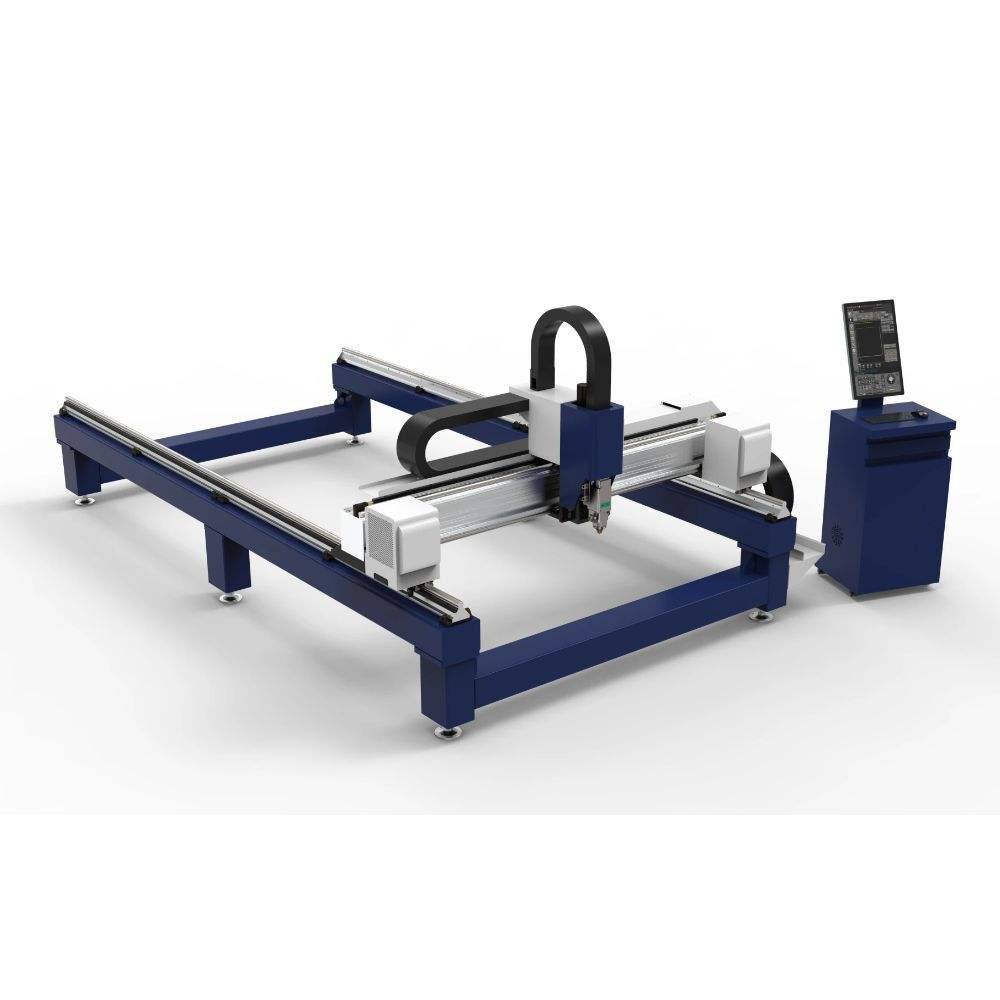
Maintaining a 2kW laser cutting system in Guadalajara requires attention to the local environment. The region’s climate, characterized by a distinct rainy season and varying humidity levels, can impact the performance of the laser’s chilling system and the purity of the compressed air used in the pneumatic components. A dual-circuit water chiller is essential for a 2kW fiber laser: one circuit cools the fiber laser source itself, while the second circuit cools the cutting head and optics.
Preventative maintenance schedules should focus on the cleanliness of the protective windows (cover slides). Even a microscopic speck of dust can absorb laser energy, leading to thermal deformation of the lens or, in worst-case scenarios, a “burn-through” that damages the internal optics. For shops running multi-shift operations to keep up with the demands of the Mexican manufacturing market, daily inspections of the optical path and nozzle alignment are mandatory to ensure consistent precision.
Economic Impact and ROI for Local Fabricators
The investment in a 2kW precision laser system offers a rapid Return on Investment (ROI) for Guadalajara-based fabricators. The high cutting speeds—often exceeding 20 meters per minute on thin gauge stainless steel—allow shops to increase their throughput significantly compared to traditional plasma or mechanical shearing methods. Furthermore, the nesting software integrated with modern CNC controllers minimizes material waste, which is a critical factor given the fluctuating price of high-grade stainless steel alloys.
By reducing the need for secondary operations like grinding, deburring, or edge cleaning, the 2kW laser cutting process lowers the labor cost per part. In an increasingly competitive global market, where Guadalajara competes with both North American and Asian manufacturing hubs, these efficiencies are vital. The ability to offer “Just-In-Time” (JIT) delivery of precision-cut parts allows local suppliers to integrate seamlessly into the supply chains of multinational corporations operating in Mexico.
Future-Proofing with Precision Technology
As we look toward the future of manufacturing in Jalisco, the role of 2kW precision laser systems will only grow. The trend toward Industry 4.0 means these machines are becoming more “intelligent,” with sensors that can monitor cut quality in real-time and adjust parameters on the fly. For stainless steel specialists, this means higher yields and the ability to tackle increasingly complex designs that were previously impossible.
Whether it is for the production of specialized laboratory equipment, custom automotive components, or high-volume consumer goods, the 2kW fiber laser remains the backbone of precision fabrication. By understanding the interplay between laser physics, material science, and local industrial requirements, Guadalajara’s engineering community can continue to lead the way in metal processing excellence. The synergy of high-power density, advanced motion control, and optimized gas dynamics ensures that laser cutting remains the most efficient method for transforming stainless steel into the products that drive the modern world.
Conclusion
The 2kW precision laser system is more than just a piece of machinery; it is a catalyst for industrial growth in Guadalajara. Its ability to handle stainless steel with unmatched accuracy and speed makes it an indispensable asset for any serious fabrication facility. By focusing on technical mastery—from gas selection to optical maintenance—local manufacturers can ensure they remain at the forefront of the global manufacturing stage, delivering high-quality stainless steel components that meet the rigorous demands of today’s technology-driven industries.
















