
Engineering Analysis: The Role of 2kW Fiber Lasers in Tijuana’s Automotive Supply Chain
The manufacturing landscape in Tijuana, Baja California, has evolved into one of the most sophisticated automotive clusters in North America. With the proximity to major assembly plants and the logistical advantages of the Cali-Baja mega-region, Tier 2 and Tier 3 suppliers are under increasing pressure to deliver high-precision components with zero-defect tolerances. Central to this production capability is the 2kW precision fiber laser system. This engineering guide examines the technical integration of 2kW systems, specifically focusing on the structural integrity of plate-welded heavy-duty beds and the metallurgical challenges of processing galvanized steel for automotive applications.
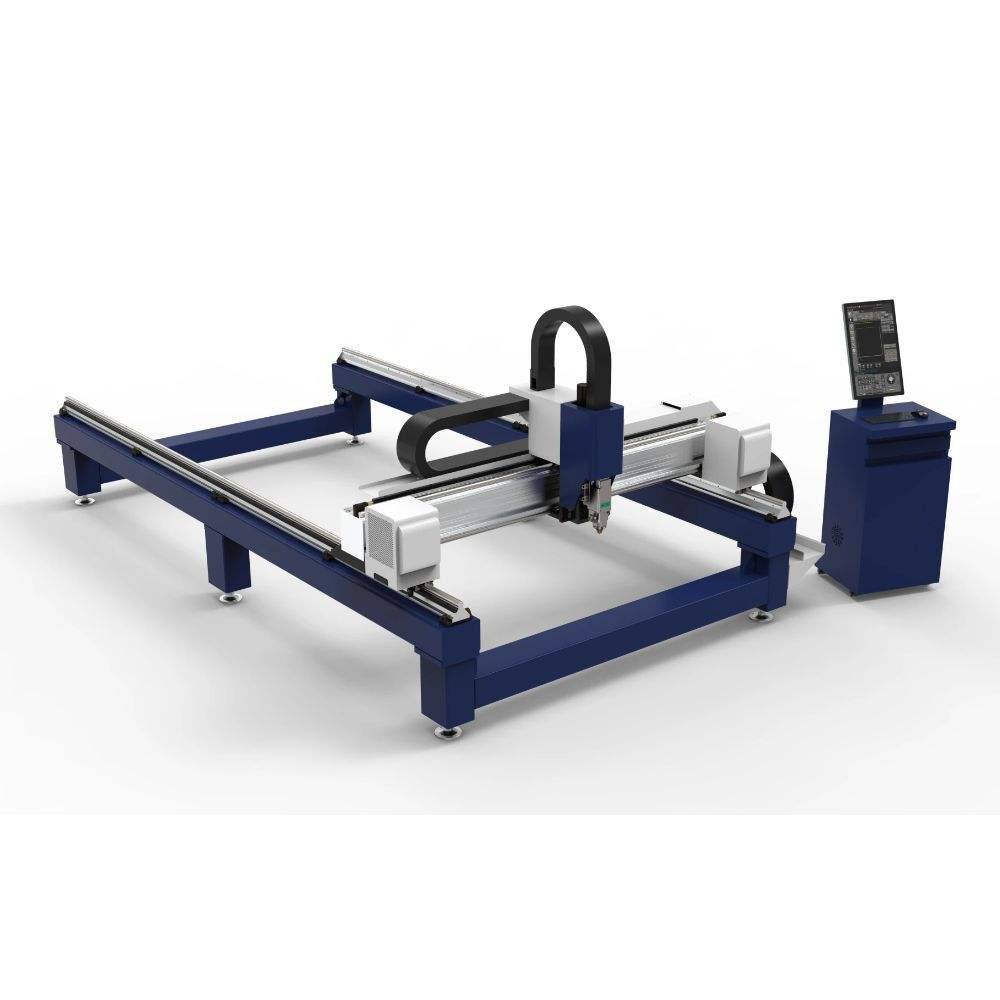
Structural Integrity: The Engineering Behind Plate-welded Heavy Duty Beds
In precision laser cutting, the machine frame is not merely a support structure; it is the foundation of dynamic accuracy. For a 2kW system operating at high feed rates, the bed must counteract significant inertial forces generated by the gantry’s acceleration and deceleration.
The plate-welded heavy-duty bed is engineered using high-tensile strength structural steel plates. Unlike lighter aluminum or thin-walled tube frames, the plate-welded construction offers superior vibration damping. In the context of Tijuana’s high-volume production environments, where machines often run 24/7, structural fatigue is a critical concern.
The fabrication process involves rigorous stress-relief protocols. After the initial welding of the heavy plates, the entire structure undergoes high-temperature annealing. This process reorganizes the molecular structure of the weld points, eliminating internal stresses that could otherwise lead to microscopic warping over years of operation. For an automotive engineer, this translates to a machine that maintains a positioning accuracy of ±0.03mm even after 10,000 hours of service. The mass of the plate-welded bed provides the necessary counter-ballast to 1.2G to 1.5G accelerations, ensuring that the laser head remains perfectly synchronized with the motion control system without resonance-induced jitter.
Processing Galvanized Steel: Overcoming the Zinc Barrier
Galvanized steel is ubiquitous in the automotive industry due to its corrosion resistance. However, from a laser-cutting perspective, it presents unique challenges. The zinc coating has a significantly lower melting point (approximately 419°C) than the underlying carbon steel (approximately 1500°C). During the cutting process, the zinc layer vaporizes before the steel melts, creating high-pressure gas that can interfere with the laser beam’s stability and the expulsion of molten material.
A 2kW fiber laser is particularly well-suited for the gauges typically found in automotive chassis and bracketry (1.0mm to 4.0mm). At this power level, the energy density is sufficient to achieve a “clean-cut” finish. To optimize the cut, engineers must balance the auxiliary gas pressure. Using high-pressure Nitrogen (N2) is the industry standard for galvanized steel in Tijuana’s factories. The Nitrogen acts as a mechanical force to blow away the vaporized zinc and molten steel before an oxide layer can form, resulting in a silver, burr-free edge that requires no post-processing before welding or painting.
Data-driven adjustments in nozzle standoff distance (typically 0.5mm to 1.0mm) and focal position (slightly negative for galvanized) are essential to prevent “dross” or “slag” accumulation on the underside of the workpiece. By managing the heat-affected zone (HAZ), the 2kW system ensures that the protective properties of the zinc coating remain intact as close to the cut edge as possible.
Precision Components and Motion Control
The synergy between the laser source and the mechanical drive system determines the final part quality. In a 2kW precision system, the use of helical rack and pinion drives combined with high-torque Yaskawa or Delta servo motors is standard. These components are selected for their ability to translate the 2kW power into high-speed linear motion without sacrificing torque.
For automotive engineers, the “Repeatability” metric is paramount. A system utilizing a plate-welded bed allows for a higher mechanical gain in the PID (Proportional-Integral-Derivative) tuning of the servos. Because the frame is rigid, the control loops can be tuned more aggressively, leading to sharper corners and tighter radii in complex automotive geometries. This is particularly vital for components like seat frames, instrument panel supports, and reinforced brackets where tolerances are often tighter than ±0.1mm.

Thermal Management and Long-Term Reliability
Operating in the Tijuana climate, which can vary in humidity and temperature, requires robust thermal management. The 2kW fiber laser source is highly efficient, but the cutting head and the internal optics still require stabilized cooling. Dual-circuit industrial chillers are employed to maintain the laser source and the cutting optics at a constant temperature (typically 22°C – 25°C).
The plate-welded bed also contributes to thermal stability. Its high thermal mass means it responds slowly to ambient temperature fluctuations, preventing the “drift” in accuracy that can occur during the transition from a cool morning shift to a warm afternoon shift. Furthermore, the integration of automatic lubrication systems for the guide rails and racks ensures that friction-induced heat is minimized, preserving the integrity of the motion components over multi-shift operations.
Economic Impact: ROI for Tijuana Manufacturers
For factory owners in Tijuana, the decision to invest in a 2kW system with a heavy-duty bed is driven by Total Cost of Ownership (TCO). While lighter machines may have a lower initial capital expenditure, the maintenance costs and the scrap rates associated with vibration and frame distortion quickly negate those savings.
1. **Reduced Scrap Rates:** The stability of the plate-welded bed ensures that the first part is identical to the 1,000th part. In the automotive sector, where material costs (especially for galvanized and high-strength steels) are volatile, reducing scrap by even 2% can result in thousands of dollars in annual savings.
2. **Lower Secondary Processing:** The ability to produce clean, oxide-free cuts on galvanized steel means that parts can move directly from the laser bed to the robotic welding cell. Eliminating the need for manual grinding or de-burring reduces labor costs and shortens lead times.
3. **Energy Efficiency:** A 2kW fiber laser consumes significantly less power than older CO2 technology or higher-wattage systems that may be overkill for thin-gauge automotive parts. This aligns with the increasing focus on “Green Manufacturing” and energy cost reduction in the Mexican industrial sector.
Technical Specifications and Parameter Optimization
To achieve peak performance on the shop floor, engineers should adhere to the following data-driven parameters for galvanized steel (2.0mm thickness):
– **Laser Power:** 1800W – 2000W
– **Cutting Speed:** 12 – 18 m/min (depending on complex geometry)
– **Gas Pressure (N2):** 14 – 16 Bar
– **Nozzle Diameter:** 1.5mm – 2.0mm Double Chrome
– **Focal Position:** -1.5mm to -2.0mm (below the material surface)
These parameters ensure that the laser beam pierces the zinc layer efficiently and maintains a stable keyhole throughout the cut. The use of a “Frequency Modulation” technique during the piercing phase can also reduce the “splatter” that often damages the protective window of the cutting head when processing galvanized materials.
Conclusion: Future-Proofing Tijuana’s Automotive Production
The integration of 2kW precision laser systems with plate-welded heavy-duty beds represents a strategic upgrade for Tijuana’s manufacturing base. As the industry moves toward electric vehicles (EVs) and lightweighting, the demand for high-precision processing of coated steels and advanced alloys will only increase.
By prioritizing structural rigidity and specialized cutting parameters for galvanized steel, engineers and factory owners can ensure their operations remain competitive in the global supply chain. The combination of local expertise in the Baja region and world-class fiber laser technology creates a formidable production environment capable of meeting the most stringent automotive standards. Investing in heavy-duty architecture today is the most effective way to guarantee the precision and reliability required for the automotive components of tomorrow.
















