
Introduction to 2kW Precision Laser Systems in Toluca’s Industrial Sector
The industrial landscape of Toluca, State of Mexico, stands as one of the most significant manufacturing corridors in North America. As a primary hub for automotive, aerospace, and heavy machinery production, the demand for high-precision metal fabrication has never been higher. Among the various technologies driving this industrial evolution, the 2kW precision fiber laser system has emerged as the definitive standard for processing carbon steel. This guide explores the technical intricacies, operational advantages, and environmental considerations of deploying 2kW laser cutting technology within the unique atmospheric and industrial conditions of the Toluca-Lerma valley.
A 2kW fiber laser represents the “sweet spot” for many regional manufacturers. It offers a balance between capital investment and high-speed throughput, particularly for carbon steel thicknesses ranging from 1mm to 16mm. In an era where “just-in-time” manufacturing is the norm for Tier 1 and Tier 2 automotive suppliers in Toluca, the reliability of a 2kW system provides the necessary uptime to meet stringent delivery schedules while maintaining tolerances that meet international engineering standards.
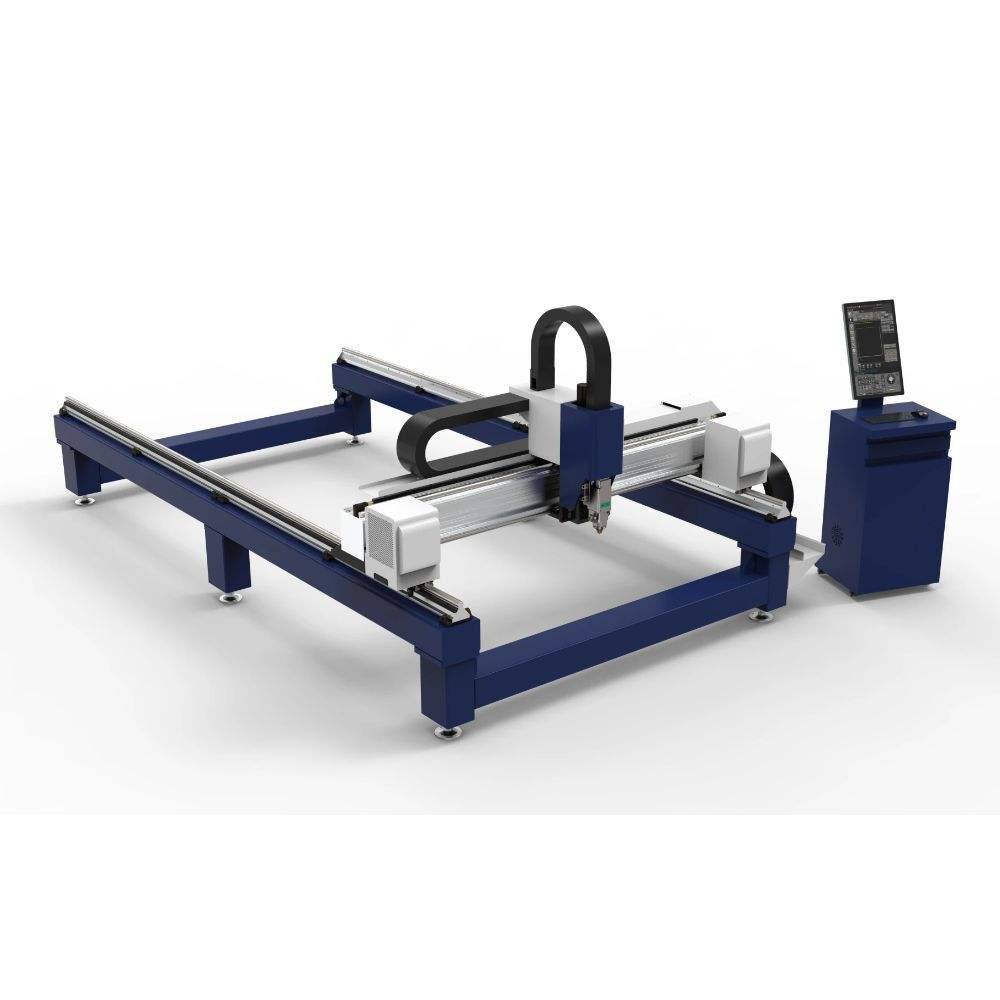
 laser cutting machine” style=”width: 100%; max-width: 800px; height: auto; margin: 20px 0;”>
Technical Specifications of the 2kW Fiber Laser Source
The heart of the precision system is the ytterbium-doped fiber laser source. At a 2000-watt power rating, the beam quality (expressed as M²) is typically near-diffraction-limited, allowing for an incredibly small focal spot. This high power density is what enables laser cutting of carbon steel with minimal Kerf width and reduced Heat Affected Zones (HAZ).
Wavelength and Absorption Characteristics
Fiber lasers operate at a wavelength of approximately 1.064 microns. For carbon steel, this wavelength is highly efficient as the material exhibits excellent absorption characteristics at this frequency. Compared to legacy CO2 lasers, the fiber laser’s energy is more readily absorbed by the iron matrix, leading to faster piercing times and higher feed rates. This efficiency is particularly noticeable in Toluca’s manufacturing plants, where energy costs and production speed are critical KPIs.
Beam Delivery and Focusing Optics
Precision is maintained through advanced collimation and focusing heads. For a 2kW system, an autofocus cutting head is standard, allowing the machine to dynamically adjust the focal point based on the material thickness and real-time feedback from the distance sensors. This ensures that even if the carbon steel sheet has slight deviations in flatness, the laser cutting process remains consistent across the entire worktable.
Processing Carbon Steel: Material Behavior and Best Practices
Carbon steel is the backbone of Toluca’s structural and automotive components. Whether it is A36 hot-rolled steel or 1018 cold-finished plate, the 2kW laser system handles these materials with distinct operational parameters. Understanding the metallurgy of carbon steel is essential for optimizing the cut quality.
Oxygen-Assist vs. Nitrogen-Assist Cutting
For carbon steel, oxygen is the traditional assist gas. It facilitates an exothermic reaction that adds thermal energy to the cutting process, allowing the 2kW beam to penetrate thicker sections (up to 16mm or 18mm in some configurations). However, this leaves a thin oxide layer on the edge. For Toluca-based shops that require immediate powder coating or welding without secondary cleaning, nitrogen-assist (high-pressure cutting) can be used on thinner gauges (up to 4mm or 5mm) to produce a clean, oxide-free edge.
Managing Heat Accumulation
Precision laser cutting requires careful management of thermal build-up. In carbon steel, excessive heat can lead to “self-burning” at sharp corners or intricate geometries. Modern 2kW systems utilize “power ramping” and “frequency modulation” to reduce the energy input during directional changes, ensuring that the integrity of the part’s geometry is preserved regardless of the complexity of the design.
Environmental Factors: Operating in Toluca’s High Altitude
One of the often-overlooked aspects of precision engineering in Toluca is the altitude. Situated at approximately 2,600 meters (8,500 feet) above sea level, the atmospheric pressure is significantly lower than at sea level. This has several implications for laser cutting systems.
Cooling System Efficiency
The lower air density in Toluca affects the heat exchange efficiency of the laser’s chiller units. A 2kW system generates substantial heat that must be dissipated to maintain the stability of the laser diodes. Engineers must ensure that chillers are rated for high-altitude operation or are slightly oversized to compensate for the reduced cooling capacity of the ambient air. Maintaining a stable temperature (usually within ±1°C) is vital for beam stability and the longevity of the fiber source.
Assist Gas Dynamics
The behavior of the assist gas jet at the nozzle is influenced by ambient pressure. In Toluca, the pressure differential between the nozzle exit and the atmosphere is greater than at sea level. This can lead to slight changes in the gas flow laminar characteristics. Precision operators must calibrate their gas pressure settings to ensure that the molten metal is efficiently ejected from the Kerf without causing dross or turbulence-related striations on the cut surface.
Operational Optimization for Toluca’s Manufacturing Hub
To maximize the ROI of a 2kW laser system in the Toluca industrial corridor, facilities must focus on software integration and preventative maintenance. The goal is to transform the laser from a standalone tool into a high-efficiency production cell.
Nesting and Material Utilization
Given the fluctuating price of carbon steel in the Mexican market, material utilization is paramount. Advanced nesting software integrates with the CNC controller to minimize scrap. For 2kW systems, “common-line cutting” can be employed, where two parts share a single cut path. This not only saves material but also reduces the total laser cutting time and gas consumption, directly impacting the bottom line of the fabrication shop.
The Role of CNC Control Systems
A precision system is only as good as its motion control. High-end 2kW machines utilize AC servo motors and precision rack-and-pinion systems to achieve accelerations of up to 1.2G. In the context of Toluca’s automotive sector, where tolerances of ±0.05mm are often required, the synchronization between the laser pulse and the machine’s movement is critical. Modern controllers offer real-time monitoring of the cutting process, allowing for “leapfrog” positioning that minimizes non-productive time between cuts.
Maintenance Protocols for High-Precision Longevity
In the dusty environment of an industrial park, maintaining the optical integrity of a 2kW laser is a daily commitment. Fiber lasers are generally low-maintenance compared to CO2 systems, but they are not maintenance-free.
Optic Protection and Cleanliness
The most vulnerable part of the system is the protective window (cover glass) in the cutting head. Even a microscopic speck of carbon steel dust can absorb the 2kW beam’s energy, leading to thermal cracking and potential damage to the internal lenses. Implementing a “clean room” protocol for lens changes is essential for shops in Toluca to avoid costly downtime. Furthermore, the use of high-purity assist gases (99.95% or higher for Oxygen) prevents contamination of the delivery path.
Calibration of the Z-Axis and Height Sensor
The capacitive height sensor must be calibrated daily. In 2kW laser cutting, the distance between the nozzle and the carbon steel plate is typically between 0.5mm and 1.5mm. Any deviation in this distance changes the focal position and the gas pressure concentration, resulting in poor cut quality or nozzle collisions. Regular calibration ensures the system can handle the slight surface irregularities common in large-format carbon steel sheets.
Economic Advantages for Local Manufacturers
Investing in a 2kW precision system offers a competitive edge in the Mexican market. Compared to 1kW systems, the 2kW variant significantly increases the cutting speed on 3mm to 10mm carbon steel—the most common thicknesses in structural engineering. This increased speed reduces the “cost per part” by spreading the fixed overhead costs over a larger volume of output.
Furthermore, the 2kW system’s ability to produce “weld-ready” parts eliminates the need for secondary grinding or edge preparation. In Toluca’s labor market, where skilled welders are in high demand, providing them with perfectly cut components increases the overall efficiency of the assembly line and ensures the structural integrity of the final product, whether it is a truck chassis or an industrial storage rack.
Conclusion: The Future of Metal Fabrication in Toluca
The 2kW precision laser system is more than just a piece of machinery; it is a catalyst for industrial sophistication in Toluca. By mastering the nuances of laser cutting carbon steel—from managing high-altitude atmospheric challenges to optimizing gas dynamics—local manufacturers can compete on a global stage. As the region continues to attract international investment, the adoption of high-precision fiber laser technology will remain the cornerstone of a productive, efficient, and high-quality manufacturing ecosystem. For engineers and facility managers in Toluca, the 2kW system represents the ideal intersection of power, precision, and profitability.
















