
The Strategic Role of 2kW Precision Laser Systems in Tijuana’s Manufacturing Sector
Tijuana has established itself as a premier global hub for advanced manufacturing, particularly within the aerospace, medical device, and automotive sectors. Central to this industrial prowess is the adoption of high-precision fabrication technology. The 2kW precision laser system represents a critical threshold in fiber laser technology, offering a perfect balance between capital investment and operational capability. For facilities operating within the Otay Mesa and El Florido industrial zones, the ability to process carbon steel with high repeatability and speed is a fundamental requirement for maintaining competitive advantage in the North American supply chain.
A 2kW fiber laser is specifically engineered to handle the rigors of industrial production. Unlike lower-wattage systems that may struggle with thicker gauges or higher-wattage systems that require significantly more power infrastructure, the 2kW system is the “workhorse” of the modern machine shop. It excels in laser cutting applications where precision, edge quality, and thermal management are paramount. In the context of Tijuana’s maquiladora industry, these systems provide the agility needed to switch between prototype development and high-volume production runs without sacrificing the tight tolerances required by international engineering standards.
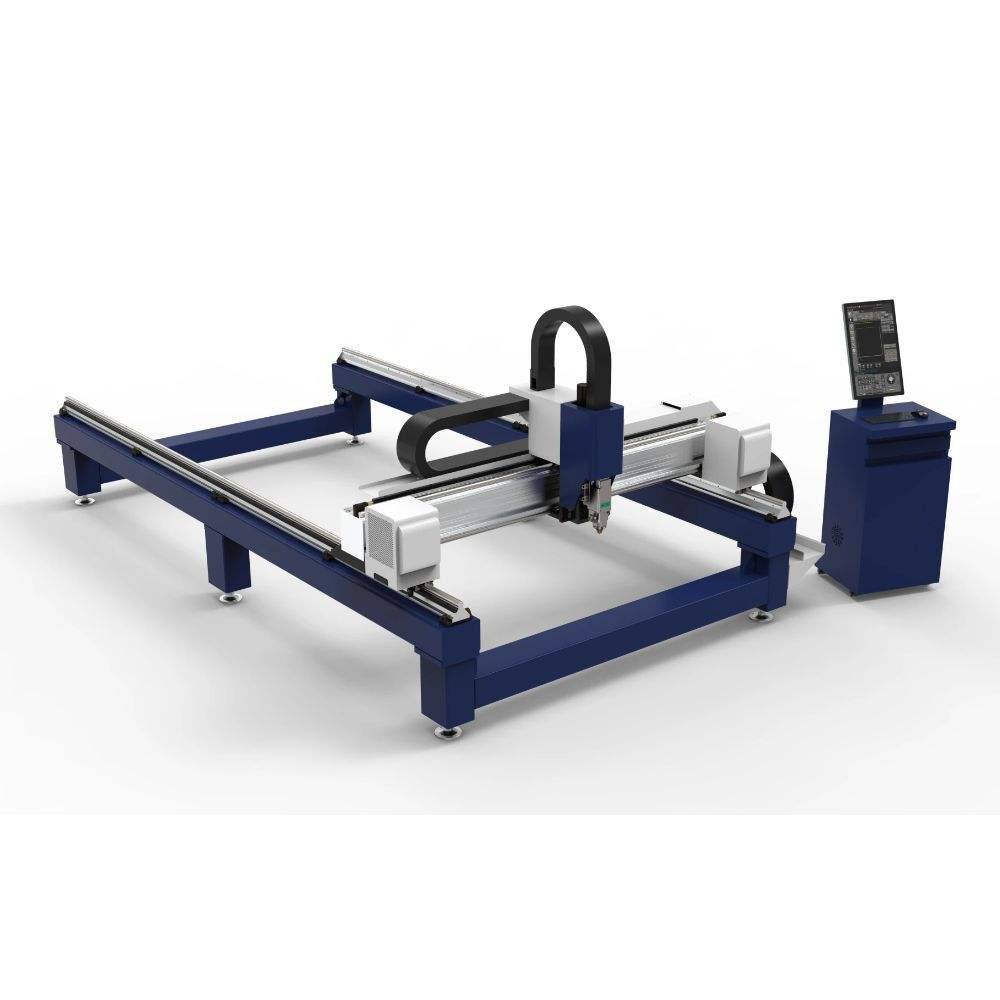 laser cutting machine” style=”width: 100%; max-width: 800px; height: auto; margin: 20px 0;”>
Technical Architecture of 2kW Fiber Laser Technology
The core of a 2kW precision laser system lies in its fiber laser source. Unlike CO2 lasers, which rely on gas mixtures and mirrors, fiber lasers generate the beam through a bank of diodes and amplify it through specially doped optical fibers. This results in a beam with a wavelength of approximately 1.06 microns—roughly ten times shorter than that of a CO2 laser. This shorter wavelength is more readily absorbed by metals, particularly carbon steel, leading to higher cutting speeds and greater energy efficiency.
Precision is further enhanced by the CNC (Computer Numerical Control) integration. Modern 2kW systems utilize high-speed linear motors or precision rack-and-pinion drives to move the cutting head with micron-level accuracy. The “precision” aspect of these systems refers to their ability to maintain a consistent focal point relative to the material surface, even when dealing with slight irregularities in the metal sheet. This is achieved through sophisticated height-sensing capacitors in the cutting head that adjust the Z-axis in real-time, ensuring the laser cutting process remains stable throughout the entire geometry of the part.
Optimizing Carbon Steel Laser Cutting Parameters
Carbon steel is the most frequently processed material in Tijuana’s metal fabrication shops. From structural components to intricate automotive brackets, the versatility of carbon steel makes it indispensable. However, achieving a “burr-free” finish with a 2kW laser requires a deep understanding of the interplay between power, speed, and assist gases. In a 2kW system, the optimal thickness range for carbon steel typically spans from 0.5mm to 16mm, though the “sweet spot” for maximum efficiency and edge quality is generally found between 1mm and 12mm.
Assist Gas Selection: Oxygen vs. Nitrogen
When laser cutting carbon steel, the choice of assist gas is the primary determinant of the final edge quality. For thicknesses exceeding 3mm, oxygen is traditionally used as the assist gas. The oxygen reacts with the heated iron in the carbon steel, creating an exothermic reaction that adds thermal energy to the cutting process. This allows a 2kW system to pierce and cut through thicker plates that would otherwise require much higher laser power. However, the trade-off is the formation of a thin oxide layer on the cut edge, which may need to be removed before painting or welding.
Conversely, for thinner gauges or applications requiring a clean, weld-ready edge, nitrogen is utilized as an inert shielding gas. Nitrogen laser cutting relies purely on the kinetic energy of the high-pressure gas to blow away the molten metal. While this requires more laser power to achieve the same speeds as oxygen, it prevents oxidation, resulting in a bright, silver finish. For a 2kW system in a precision environment, nitrogen is often the preferred choice for carbon steel components destined for the medical or electronics industries in Tijuana, where secondary cleaning processes must be minimized.

Thermal Management and Heat-Affected Zones (HAZ)
One of the significant advantages of a 2kW precision system over traditional plasma or mechanical cutting is the reduction of the Heat-Affected Zone (HAZ). Carbon steel is susceptible to changes in its crystalline structure when exposed to prolonged heat, which can lead to hardening or brittleness along the cut edge. The high power density of a 2kW fiber laser allows for faster travel speeds, which minimizes the time the heat has to dissipate into the surrounding material. This is crucial for precision components in Tijuana’s aerospace sector, where material integrity and fatigue resistance are non-negotiable.
Material Considerations: Processing Carbon Steel in High-Volume Environments
The quality of the carbon steel itself plays a vital role in the success of the laser cutting operation. In the Tijuana market, manufacturers source steel from both Mexican and international mills. Grades such as A36, 1018, and 1045 are common. For precision laser work, “laser-grade” carbon steel is often recommended. This material is processed to be exceptionally flat and features a consistent chemical composition with low silicon and phosphorus content. This consistency ensures that the laser beam interacts with the metal uniformly, preventing “blowouts” or slag accumulation during the piercing phase.
Surface Conditions and Pre-Processing
In the coastal and humid environment of Tijuana, carbon steel is prone to surface oxidation (rust) and is often coated with protective oils. A precision 2kW laser system must be calibrated to handle these surface variations. Advanced CNC controllers now include “pre-piercing” cycles and “oil-film evaporation” passes to ensure the laser maintains a clean path. Furthermore, the presence of mill scale—a flaky surface layer formed during hot rolling—can interfere with beam absorption. Precision systems often utilize pulse-mode cutting to manage the heat buildup in scaled material, ensuring a consistent kerf width across the entire sheet.
Environmental and Logistical Factors in Tijuana
Operating a 2kW precision laser system in Tijuana presents unique environmental considerations. The region’s proximity to the Pacific Ocean means that humidity and salinity levels can be higher than in inland manufacturing centers. For a fiber laser, maintaining a controlled environment is essential. The optical components and the laser source are sensitive to dust and moisture. Therefore, most high-end shops in Tijuana install these systems in temperature-controlled environments with robust air filtration systems to prevent contamination of the beam delivery path.
Power Stability and Infrastructure
While Tijuana has a robust industrial infrastructure, voltage fluctuations can occur. A 2kW precision laser system requires a stable power supply to ensure consistent beam quality. Most professional installations include industrial-grade voltage stabilizers and UPS (Uninterruptible Power Supply) systems. This protects the sensitive diode banks and the CNC controller from power surges, which is critical for maintaining 24/7 production schedules common in the maquiladora industry. Furthermore, the integration of chilled water systems (chillers) is necessary to dissipate the heat generated by the 2kW source, ensuring the laser operates within its optimal temperature range regardless of the external climate.
Local Technical Support and Supply Chain
The success of laser cutting operations in Tijuana is also tied to the local availability of consumables and technical expertise. Nozzles, ceramic rings, and protective windows are wear items that must be replaced regularly to maintain precision. The cross-border synergy between Tijuana and San Diego allows for rapid sourcing of these components. Additionally, the presence of a skilled workforce trained in CAD/CAM software (such as SolidWorks or SigmaNEST) ensures that the 2kW laser systems are utilized to their full potential, optimizing nest patterns to reduce material waste—a key factor in the high-cost environment of carbon steel fabrication.
Maintenance and Performance Longevity
To ensure a 2kW precision laser system maintains its accuracy over a decade of service, a rigorous maintenance schedule is mandatory. In the context of carbon steel processing, the primary challenge is the management of “fume and dust.” The laser cutting process produces fine metallic particulates and oxides. High-efficiency dust collection systems are integrated into the machine bed to pull these contaminants away from the cutting area and the machine’s mechanical guides.
Daily and Weekly Protocols
Operators in Tijuana facilities are typically trained to perform daily inspections of the protective lens and the nozzle condition. Any buildup of “spatter” on the nozzle can distort the assist gas flow, leading to poor cut quality or even damage to the cutting head. Weekly maintenance involves cleaning the rails and lubricating the motion system to ensure that the “precision” aspect of the machine remains intact. For carbon steel applications, checking the gas mixing ratios and pressure regulators is also vital, as even a small drop in oxygen purity can significantly impact the cutting speed and edge smoothness.
Long-term ROI for Tijuana Fabricators
Investing in a 2kW precision laser system offers a rapid Return on Investment (ROI) for Tijuana-based manufacturers. By bringing laser cutting capabilities in-house, companies reduce lead times associated with outsourcing and gain total control over quality. The 2kW system, specifically, offers a lower cost-per-part on carbon steel gauges up to 12mm compared to higher-powered lasers, due to lower electricity consumption and reduced gas usage. In the competitive landscape of North American manufacturing, this efficiency is the difference between winning and losing high-value contracts.
Conclusion: The Future of Precision Fabrication
The 2kW precision laser system is more than just a tool; it is a cornerstone of modern industrial strategy in Tijuana. As the demand for more complex, high-tolerance carbon steel components grows in the automotive and aerospace sectors, the reliance on advanced laser cutting technology will only increase. By understanding the technical nuances of fiber laser physics, optimizing material-specific parameters, and accounting for the local environmental factors of the Baja California region, manufacturers can leverage these systems to achieve world-class production standards. The integration of precision power, intelligent CNC control, and robust mechanical engineering ensures that the 2kW laser remains the definitive solution for carbon steel processing in one of the world’s most dynamic manufacturing environments.
















