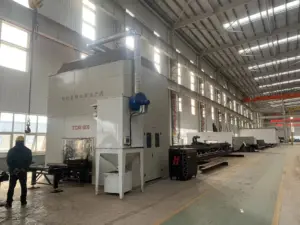
Introduction to 2kW Precision Laser Systems in Puebla’s Industrial Landscape
Puebla has long been established as one of Mexico’s primary industrial corridors, serving as a critical hub for automotive manufacturing, aerospace engineering, and high-end decorative metalwork. In this competitive environment, the demand for high-precision fabrication has led to the widespread adoption of 2kW fiber laser systems. These machines represent the “sweet spot” for many medium-scale enterprises, offering a perfect balance between power consumption, initial investment, and the ability to process non-ferrous metals like brass with extreme accuracy. The integration of laser cutting technology has revolutionized how local workshops approach complex geometries, moving away from traditional mechanical shearing and toward automated, high-speed solutions.
The Technical Superiority of 2kW Fiber Lasers for Brass
Brass, an alloy of copper and zinc, presents unique challenges in thermal processing due to its high thermal conductivity and high reflectivity. In the past, CO2 lasers struggled with brass because the material would reflect the beam back into the resonator, causing catastrophic damage. However, modern 2kW fiber laser systems operate at a wavelength of approximately 1.06 microns. This shorter wavelength is absorbed much more efficiently by yellow metals. A 2kW power rating provides sufficient energy density to overcome the initial reflectance of brass, creating a stable keyhole for consistent laser cutting.
Wavelength Absorption and Beam Quality
The precision of a 2kW system is not merely a function of its raw power but its beam quality, often measured by the M² factor. For brass processing in Puebla’s specialized shops, a low M² value ensures that the laser energy is concentrated into a microscopic spot. This concentration is vital for brass because it allows the material to reach its melting point instantly, minimizing the Heat Affected Zone (HAZ). By keeping the HAZ small, engineers can maintain the structural integrity and the aesthetic finish of the brass, which is often a requirement for architectural accents produced in the region.
 laser cutting machine” style=”width: 100%; max-width: 800px; height: auto; margin: 20px 0;”>
Optimizing Laser Cutting for Brass in the Puebla Region
Operating high-precision machinery in Puebla requires an understanding of local environmental factors. Puebla sits at an elevation of approximately 2,135 meters above sea level. This altitude affects atmospheric pressure, which in turn influences the behavior of assist gases used during the laser cutting process. When cutting brass, the choice of assist gas—typically high-pressure nitrogen or oxygen—is critical. At higher altitudes, the flow dynamics change, necessitating precise calibration of the nozzle pressure to ensure dross-free edges.
The Role of Assist Gases
For a 2kW system, nitrogen is the preferred assist gas for brass when a clean, oxide-free edge is required. The nitrogen acts as a mechanical force to blow the molten brass out of the kerf without reacting chemically with the metal. This is particularly important for Puebla’s decorative hardware industry, where brass components are often polished or plated after laser cutting. If oxygen were used, it would accelerate the cutting speed through an exothermic reaction, but it would leave a dark oxide layer that requires secondary cleaning processes.
Precision Engineering and Tolerance Control
In the context of 2kW systems, precision is defined by the machine’s ability to hold tight tolerances, often within ±0.03mm. This level of accuracy is essential for the automotive supply chain surrounding the Volkswagen and Audi plants in the Puebla-Tlaxcala valley. Brass components used in electrical connectors, bushings, and sensor housings require exact dimensions to function within larger assemblies. The CNC controllers on modern laser cutting machines allow for real-time adjustments, compensating for thermal expansion of the material during long production runs.
Nesting and Material Efficiency
Brass is a costly raw material. Therefore, the software integration of 2kW laser systems is as important as the hardware. Advanced nesting algorithms allow Puebla-based manufacturers to pack parts tightly on a single sheet of brass, significantly reducing scrap rates. Because laser cutting involves a very narrow kerf (the width of the cut), parts can be placed mere millimeters apart. This efficiency directly impacts the bottom line of local fabricators, making them more competitive in the North American market.
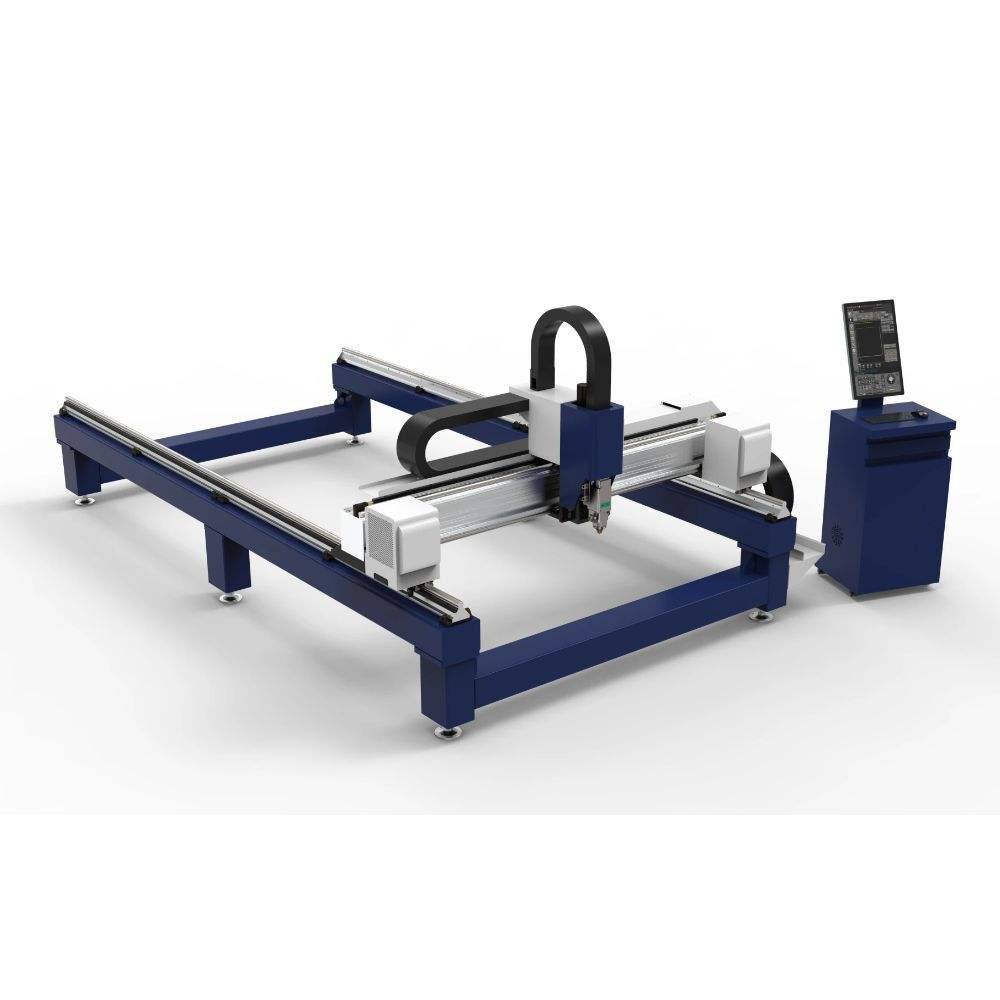
Overcoming the Challenge of Back-Reflection
One of the most significant advancements in 2kW laser cutting technology is the development of back-reflection protection. Brass is highly reflective in its solid state. During the initial “piercing” phase, a portion of the laser beam can be reflected back toward the cutting head. Modern systems used in Puebla are equipped with optical isolators and sensors that detect reflected light. If the reflection exceeds a safe threshold, the system automatically adjusts the pulse frequency or shuts down to protect the fiber source. This allows for the safe and continuous processing of mirror-finish brass sheets without risking expensive equipment downtime.
Maintenance and Longevity in Industrial Environments
The industrial environment in Puebla can be dusty, especially in areas with high concentrations of heavy manufacturing. For a 2kW precision laser, maintaining a clean optical path is paramount. The cutting head must be kept in a climate-controlled or highly filtered environment to prevent dust particles from settling on the protective window. A single speck of dust can absorb laser energy, heat up, and crack the lens. Local engineers emphasize a strict maintenance schedule, including daily inspections of the nozzle condition and the alignment of the laser beam to ensure the laser cutting quality remains consistent over years of operation.
Cooling Systems and Thermal Stability
A 2kW laser generates significant heat within the resonator and the cutting head. In Puebla’s temperate climate, dual-circuit water chillers are used to maintain a constant temperature. One circuit cools the fiber source, while the other cools the optics in the cutting head. Stable temperature control is vital for precision; even a slight fluctuation can cause the focal point of the laser to shift, leading to inconsistent laser cutting results and increased burr formation on the bottom of the brass sheet.
Applications of Laser-Cut Brass in Puebla’s Economy
The versatility of the 2kW laser system has opened new doors for Puebla’s diverse economy. Beyond the automotive sector, the region is famous for its architectural heritage. Modern architects in Puebla are increasingly using laser cutting to create intricate brass screens, signage, and custom furniture components. The ability to cut complex patterns that would be impossible with traditional milling or stamping has allowed local artisans to merge traditional aesthetics with high-tech production methods.
Electrical and Electronic Components
Brass is an excellent conductor of electricity, making it a staple in the electronics industry. 2kW laser cutting systems are used to produce busbars, terminals, and switchgear components. The precision of the laser ensures that these parts meet the stringent conductivity and fitment standards required for modern electrical infrastructure. As Puebla continues to attract investment in green energy and electric vehicle (EV) manufacturing, the demand for precision-cut brass components is expected to grow exponentially.
Economic Advantages for Local Manufacturers
Investing in a 2kW precision laser system offers a rapid Return on Investment (ROI) for Puebla-based companies. Compared to higher-wattage systems (such as 6kW or 12kW), the 2kW unit has lower power consumption and lower maintenance costs, yet it can handle the majority of brass thicknesses used in general manufacturing (typically up to 6mm or 8mm). The reduction in secondary finishing processes—thanks to the high-quality edges produced by laser cutting—further lowers the cost per part, allowing local shops to take on both small-batch custom work and large-scale production contracts.
Conclusion: The Future of Metal Fabrication in Puebla
The adoption of 2kW precision laser systems marks a significant milestone in Puebla’s industrial evolution. By mastering the nuances of laser cutting brass—from managing reflectivity to optimizing assist gas flow at high altitudes—local manufacturers are positioning themselves at the forefront of the global supply chain. As technology continues to advance, the synergy between high-precision hardware and Puebla’s skilled engineering workforce will ensure that the region remains a powerhouse of metal fabrication excellence. Whether for automotive precision or architectural beauty, the 2kW fiber laser is the tool defining the future of brasswork in Mexico.