The Evolution of 2kW Precision Laser Systems in Modern Manufacturing
The industrial landscape of Leon has undergone a significant transformation over the last decade. As a hub for automotive, aerospace, and specialized hardware manufacturing, the demand for high-precision components has never been higher. Central to this evolution is the 2kW precision laser system, a tool that has redefined the standards of accuracy and efficiency in metal fabrication. Unlike its predecessors, the modern 2kW fiber laser offers a unique combination of power density and beam quality, making it the ideal choice for processing non-ferrous metals that were once considered difficult to handle.
In the context of laser cutting, the 2kW threshold represents a “sweet spot” for many small to medium-sized enterprises (SMEs) in Leon. It provides enough energy to penetrate thick materials while maintaining the delicate control required for intricate geometries. This balance is particularly crucial when working with alloys like brass, which require specific thermal management to prevent dross formation and ensure a clean edge finish.
Understanding the Physics of Brass and Fiber Lasers
Brass is a copper-zinc alloy known for its high thermal conductivity and significant reflectivity. In the early days of laser cutting, CO2 lasers struggled with brass because the 10.6-micrometer wavelength was largely reflected by the metal’s surface, potentially damaging the machine’s optics. However, the 2kW fiber laser operates at a wavelength of approximately 1.07 micrometers. This shorter wavelength is absorbed much more efficiently by yellow metals.
When a 2kW beam is focused onto a brass sheet, the energy absorption is rapid enough to overcome the material’s high thermal conductivity. This allows the laser to reach the melting point almost instantaneously, creating a narrow kerf. For manufacturers in Leon, this means the ability to produce decorative architectural elements, electrical components, and precision gears with minimal heat-affected zones (HAZ). The precision of a 2kW system ensures that the mechanical properties of the brass remain intact, which is vital for components used in high-stress environments.
 laser cutting machine“>
Optimizing Laser Cutting for Brass in the Leon Industrial Sector
Leon’s manufacturing sector is diverse, ranging from traditional leatherworking tools to advanced automotive sensors. Integrating a 2kW precision laser system into this ecosystem requires an understanding of localized production needs. When laser cutting brass, several variables must be meticulously controlled to achieve the “Leon standard” of quality—a standard defined by zero-defect manufacturing and high aesthetic appeal.
Assist Gas Selection: Nitrogen vs. Oxygen
The choice of assist gas is perhaps the most critical factor in the laser cutting of brass. For most 2kW applications, high-pressure nitrogen is the preferred choice. Nitrogen acts as a shielding gas, blowing away the molten metal before it can oxidize. This results in a bright, clean edge that often requires no secondary finishing. This is a significant advantage for Leon-based companies producing luxury hardware or high-end furniture accents where the visual quality of the brass is paramount.
In some instances, compressed air can be used as a cost-effective alternative for thicker brass plates where edge discoloration is acceptable. However, for precision engineering, the purity of the gas directly correlates to the stability of the cutting process. A 2kW system optimized with a specialized brass-cutting nozzle can achieve speeds that far outpace traditional mechanical milling or waterjet cutting, significantly reducing the lead time for local projects.
Managing Back-Reflection in High-Reflectivity Alloys
One of the primary concerns for engineers in Leon when adopting fiber technology is back-reflection. Brass, especially when polished, can reflect the laser beam back into the delivery fiber, potentially causing catastrophic failure of the 2kW power source. Modern precision systems are equipped with “back-reflection isolators” and advanced sensors that can detect reflected light in microseconds, shutting down the beam before damage occurs. When laser cutting brass, it is also common practice to tilt the cutting head slightly or use specialized software parameters that manage the piercing phase—the moment when reflection risk is highest.
Technical Specifications and Performance Metrics of 2kW Systems
A 2kW precision laser system is defined by more than just its wattage. The beam quality, often measured by the M² factor, determines how tightly the laser can be focused. For laser cutting brass in Leon, a low M² factor (close to 1.1) is essential. A tighter focus means a higher power density at the focal point, allowing the laser to “vaporize” the brass rather than just melting it. This leads to sharper corners and the ability to cut smaller holes relative to the material thickness.
Cutting Speeds and Thickness Limits
For a standard 2kW fiber laser, the typical performance metrics for brass are as follows:
- 1mm Brass: Cutting speeds can exceed 15-20 meters per minute, providing exceptional throughput for mass-produced shim stock or decorative plates.
- 3mm Brass: The system maintains a stable speed of approximately 4-6 meters per minute, ensuring high edge verticality.
- 6mm Brass: This is generally the upper limit for a 2kW system if high precision is required. While it can cut thicker material, the speed drops significantly, and the risk of dross increases.
For the industrial workshops in Leon, these speeds represent a massive leap in productivity. A job that once took hours on a CNC mill can be completed in minutes through laser cutting, all while maintaining tolerances within +/- 0.05mm.
The Importance of Motion Control and Gantry Stability
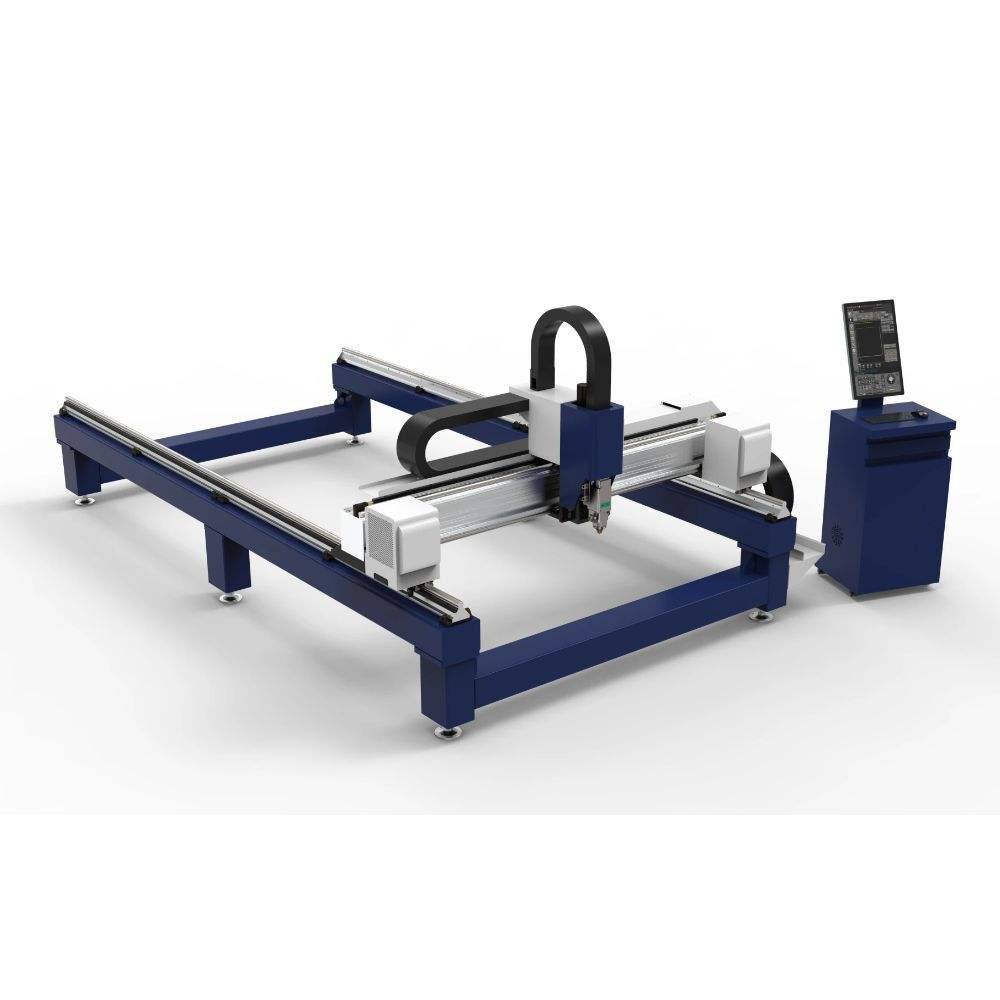
Precision is not solely a function of the laser source; it is equally dependent on the machine’s motion system. In Leon’s high-output environments, the gantry must be capable of high acceleration (often 1.2G or higher) to make the most of the 2kW laser’s capabilities. Linear motors or high-precision rack-and-pinion systems are typically employed. When laser cutting intricate brass patterns, the software must synchronize the laser power with the machine’s velocity—a process known as “power ramping”—to prevent over-burning at corners and start-stop points.
Maintenance and Longevity in the Leon Climate
Operating a 2kW precision laser system in Leon requires attention to environmental factors. The region’s temperature fluctuations and dust levels can impact the sensitive optics of a laser cutting machine. A controlled environment with a dedicated chiller system is mandatory. The chiller maintains the 2kW fiber source and the cutting head at a constant temperature, preventing thermal drift which can cause the focal point to shift during long production runs.
Optical Component Care
The protective windows (cover slips) are the most frequently replaced consumables in a laser cutting system. When processing brass, tiny spatters of molten metal can occasionally reach the lens. Regular inspection and cleaning in a “clean room” environment within the factory are necessary to prevent these contaminants from burning into the glass. For Leon’s manufacturers, implementing a rigorous maintenance schedule ensures that the 2kW system remains at peak performance for its 100,000-hour expected lifespan.
Software Integration and Industry 4.0
Modern 2kW systems in Leon are increasingly integrated into broader ERP (Enterprise Resource Planning) systems. This allows for real-time monitoring of gas consumption, power usage, and cutting efficiency. Advanced nesting software optimizes the layout of brass parts on a sheet, minimizing waste—a critical factor given the high market price of brass alloys. By utilizing these digital tools, laser cutting becomes not just a fabrication process, but a data-driven component of a smart factory.
Conclusion: The Future of Metal Fabrication in Leon
The adoption of 2kW precision laser systems has provided the industrial sector in Leon with a competitive edge. The ability to handle brass and other reflective alloys with high speed and extreme accuracy has opened new markets in electronics, luxury goods, and specialized engineering. As laser cutting technology continues to advance, the focus will shift toward even higher levels of automation and integration.
For any facility in Leon looking to upgrade its capabilities, the 2kW fiber laser represents the perfect entry point into high-performance metal processing. It offers the versatility to handle a wide range of materials while providing the specific technical requirements needed to master the challenges of brass. In the hands of skilled engineers, these systems are not just machines; they are the engines of innovation for the next generation of Leon’s manufacturing excellence.