Introduction to 2kW Precision Laser Systems in the Guadalajara Industrial Sector
The industrial landscape of Guadalajara, often referred to as the “Silicon Valley of Mexico,” has undergone a significant transformation over the last decade. As the region pivots from traditional manufacturing to high-tech electronics, automotive components, and intricate jewelry production, the demand for precision has never been higher. Central to this evolution is the 2kW precision laser system, a tool that has become indispensable for processing non-ferrous metals, particularly brass. laser cutting technology, specifically utilizing fiber laser sources, offers a level of accuracy and efficiency that traditional mechanical stamping or plasma cutting simply cannot match.
Brass, an alloy of copper and zinc, is prized for its conductivity, corrosion resistance, and aesthetic appeal. However, from an engineering perspective, it presents unique challenges due to its high thermal conductivity and reflectivity. A 2kW fiber laser system is engineered to overcome these hurdles, providing a stable and concentrated energy beam that can penetrate the material without damaging the machine’s optical components. This guide explores the technical nuances of implementing 2kW laser cutting solutions for brass within the specific economic and industrial context of Guadalajara.
 laser cutting machine“>
The Physics of 2kW Fiber Lasers and Brass Interaction
The effectiveness of a 2kW system lies in its wavelength. Fiber lasers typically operate at a wavelength of approximately 1.064 microns, which is absorbed much more readily by yellow metals like brass compared to the 10.6-micron wavelength of CO2 lasers. When the 2kW beam hits the brass surface, the energy density is sufficient to instantaneously reach the melting point, creating a narrow kerf width. This precision is vital for Guadalajara’s electronics manufacturers who require intricate busbars and connectors with tolerances often measured in microns.
One of the primary concerns when laser cutting brass is “back-reflection.” Because brass is highly reflective in its solid state, a portion of the laser energy can bounce back into the delivery fiber, potentially damaging the laser source. Modern 2kW systems are equipped with optical isolators and back-reflection protection software. These systems monitor the reflected light levels and can shut down the beam in milliseconds if a dangerous threshold is reached, ensuring the longevity of the equipment in high-volume production environments.
Technical Parameters for Optimizing Brass Cutting
To achieve a burr-free finish on brass, engineers in Guadalajara must calibrate several variables. The 2kW power rating is particularly effective for brass thicknesses ranging from 0.5mm to 5mm. While higher power levels exist, the 2kW threshold offers the best balance between capital investment and operational versatility for mid-sized workshops.
Assist Gas Selection: Nitrogen vs. Oxygen
The choice of assist gas is critical for the quality of the laser cutting process. For brass, Nitrogen is almost universally preferred. Nitrogen acts as a shielding gas, blowing away the molten metal before it can react with atmospheric oxygen. This results in a bright, clean edge that requires little to no post-processing. In Guadalajara’s competitive jewelry and decorative hardware markets, the ability to move a part directly from the laser bed to the assembly line is a significant cost advantage.
Oxygen can be used for thicker brass plates to speed up the process through an exothermic reaction, but it results in a darkened, oxidized edge. For precision components, the carbonization and oxidation associated with oxygen cutting are usually unacceptable. Therefore, high-pressure nitrogen (often exceeding 15-20 bar) is the standard for 2kW systems dedicated to brass.
Focus Position and Nozzle Geometry
Because brass has a low viscosity when molten, the focus position of the laser beam must be set slightly below the material surface. This ensures that the widest part of the beam cone helps eject the melt through the bottom of the kerf. Furthermore, using a “double-layer” nozzle can help stabilize the gas flow, preventing turbulence that might cause “dross” (hardened droplets of metal) to stick to the underside of the workpiece.
Applications in Guadalajara’s Key Industries
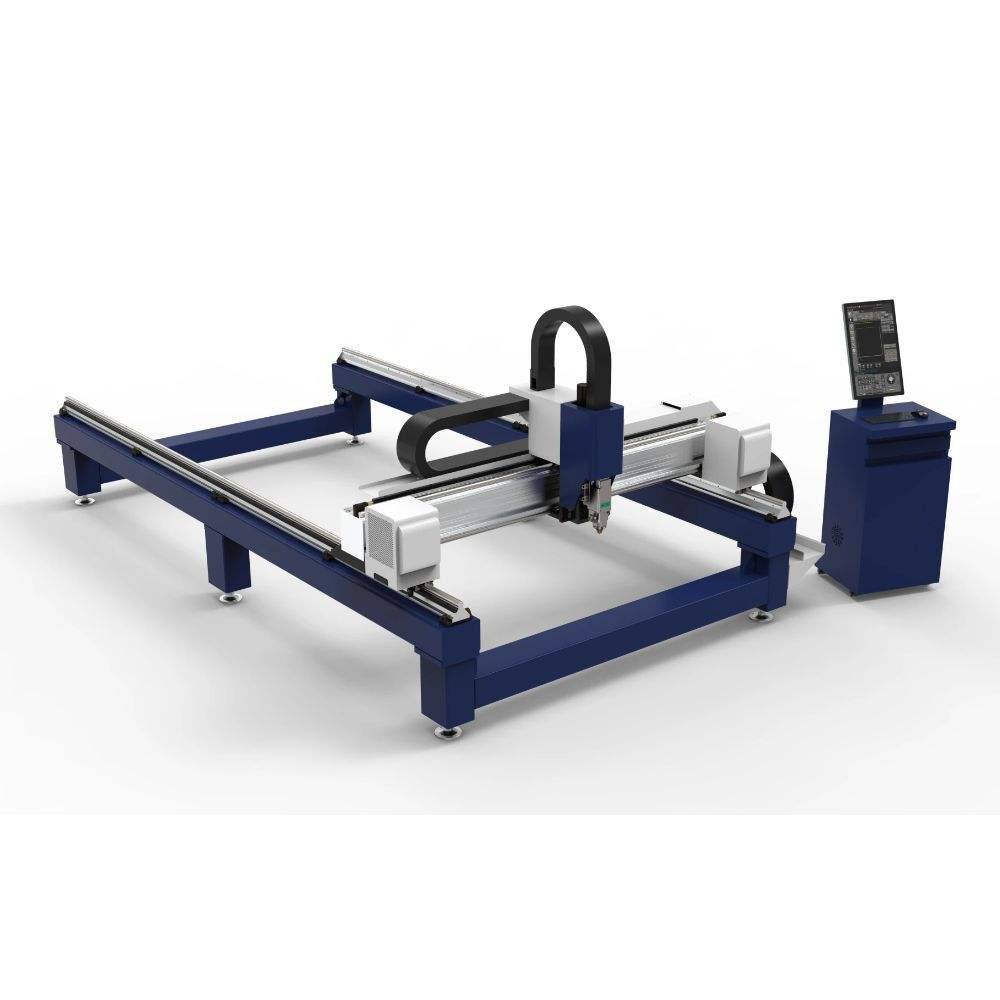
Guadalajara’s economy is a mosaic of traditional craftsmanship and modern technology. The 2kW laser cutting system bridges these two worlds effectively. In the Tlaquepaque and Tonalá districts, famous for artisanal metalwork, laser systems are used to create intricate patterns in brass sheets for high-end lighting fixtures and furniture inlays. The precision of the laser allows for “nested” designs that minimize material waste, which is crucial given the high price of brass alloys.
Electronics and Automotive Integration
In the “Silicon Valley” corridor, companies manufacturing circuit breakers, switchgear, and automotive sensors rely on brass for its electrical properties. A 2kW laser can produce thousands of small, identical parts with high repeatability. The CNC (Computer Numerical Control) integration allows engineers to update designs instantly, facilitating the rapid prototyping cycles required by the global automotive supply chain located in the Jalisco region.
Aerospace Components
The burgeoning aerospace sector in Mexico also utilizes brass for specialized bushings and landing gear components. Here, the 2kW laser’s ability to maintain a small Heat Affected Zone (HAZ) is paramount. By minimizing the heat transferred to the surrounding material, the laser ensures that the structural integrity and metallurgical properties of the brass alloy remain unchanged, meeting stringent aerospace safety standards.
Operational Challenges and Maintenance in a High-Dust Environment
Guadalajara’s climate and industrial environment can pose challenges for sensitive laser optics. The 2kW system requires a climate-controlled enclosure for the power source and a robust filtration system. Brass cutting generates a fine metallic dust that is not only abrasive but can also be conductive. Without proper dust extraction, this particulate matter can settle on linear guides and optical sensors, leading to premature wear or electrical shorts.
Cooling Systems and Thermal Stability
The 2kW fiber laser is highly efficient, but it still generates significant heat within the laser source and the cutting head. A dual-circuit water chiller is mandatory. One circuit cools the fiber source, while the other maintains the temperature of the cutting head and its internal lenses. In the warmer months in Guadalajara, ensuring the chiller is properly rated for the ambient temperature is essential to prevent “thermal drift,” which can cause the laser focus to shift during long production runs.
Lens Maintenance and Protection
The protective window is the most frequently replaced consumable in a laser cutting system. When cutting brass, the risk of “spatter” is higher than with stainless steel. Operators must be trained to inspect the protective lens every few hours. Any tiny speck of dust or metal on the lens will absorb laser energy, heat up, and eventually crack the glass, potentially damaging the more expensive collimating lenses above it.
Economic Impact and ROI for Local Manufacturers
Investing in a 2kW precision laser system is a strategic move for Guadalajara-based manufacturers looking to scale. The Return on Investment (ROI) is typically realized through three avenues: speed, material utilization, and labor reduction. Compared to traditional CNC milling of brass, laser cutting is significantly faster and does not require expensive tool bits that wear out quickly when machining abrasive alloys.
Reducing Material Waste
Brass is an expensive commodity. Advanced nesting software used with 2kW lasers can optimize the layout of parts on a sheet to achieve over 80% material utilization. In a city where manufacturing margins are tightly contested, saving 5-10% on raw material costs can be the difference between a profitable contract and a loss.
Labor and Skill Development
While the initial cost of a 2kW system is significant, it reduces the need for highly skilled manual labor for finishing and deburring. However, it creates a need for a different kind of skill: CNC programming and laser optics maintenance. This shift supports the local government’s initiative to upskill the Jalisco workforce, moving employees from low-wage manual tasks to high-value technical roles.
Conclusion: The Future of Metal Fabrication in Jalisco
The 2kW precision laser system represents the gold standard for brass fabrication in Guadalajara. Its ability to handle the specific physical properties of brass—high reflectivity and thermal conductivity—makes it a superior choice for the region’s diverse industrial base. Whether it is producing delicate jewelry, complex electronic components, or robust automotive parts, the precision of fiber laser cutting ensures that local manufacturers can compete on a global stage.
As technology continues to advance, we can expect even greater integration of AI-driven sensors within these laser systems, further reducing waste and improving the “first-time-right” ratio. For the workshops and factories of Guadalajara, the 2kW laser is not just a piece of machinery; it is a gateway to the future of high-precision manufacturing, ensuring that the region remains a powerhouse of Mexican industry for decades to come.