
The Evolution of Precision Manufacturing: 2kW Laser Systems in Guadalajara
The industrial landscape of Guadalajara, often referred to as the “Silicon Valley of Mexico,” is undergoing a significant transformation. As the region pivots from traditional assembly to high-precision engineering, the demand for advanced 2kW fiber laser systems has surged. These systems represent the pinnacle of efficiency for processing non-ferrous metals, particularly aluminum alloys, which are foundational to the aerospace, automotive, and electronics sectors thriving in the Jalisco region.
A 2kW precision laser system offers a unique balance of power density and beam quality. Unlike lower-wattage systems that may struggle with the high thermal conductivity of aluminum, or higher-wattage systems that might be overkill for thinner gauges, the 2kW variant provides an optimal ROI (Return on Investment) for workshops specializing in precision components. In Guadalajara’s competitive market, the ability to deliver clean edges with minimal post-processing is a critical differentiator for Tier 2 and Tier 3 suppliers.
Understanding the Fiber Laser Advantage for Aluminum
Aluminum alloys are notoriously difficult to process using traditional CO2 lasers due to their high reflectivity and thermal conductivity. However, the 1.06-micron wavelength of a 2kW fiber laser is absorbed much more efficiently by aluminum. This allows for a more stable laser cutting process, reducing the risk of “back-reflection” which can damage the optical components of the machine.
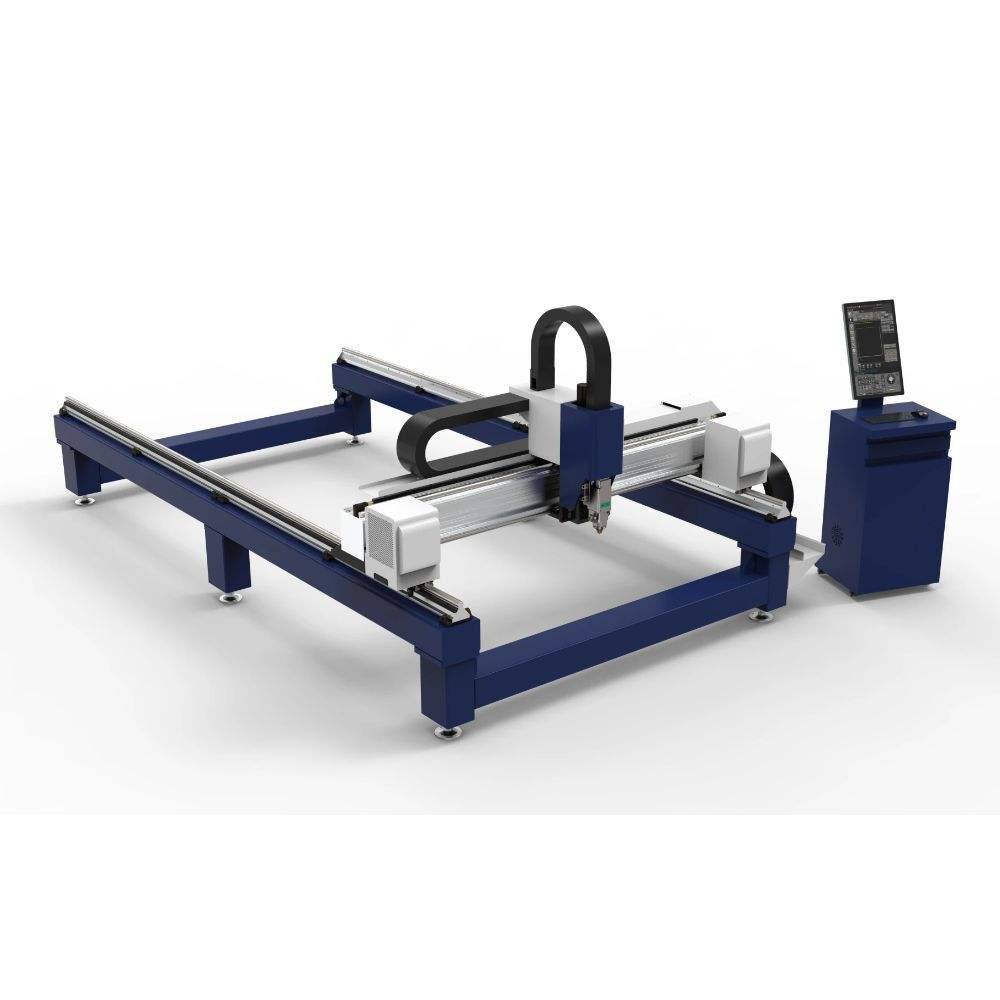
 laser cutting machine” style=”width: 100%; max-width: 800px; height: auto; margin: 20px 0;”>
The precision of a 2kW system is largely dictated by its Beam Parameter Product (BPP). A lower BPP signifies a beam that can be focused into a smaller spot size, resulting in higher power density. For Guadalajara-based manufacturers working with 5052 or 6061 aluminum alloys, this means the ability to execute intricate geometries and tight tolerances that were previously only possible through CNC milling or waterjet cutting, but at a fraction of the operational cost.
Technical Specifications and Performance Metrics
When deploying a 2kW system for aluminum alloy, several technical parameters must be harmonized. Aluminum’s melting point is relatively low (approx. 660°C), but its ability to dissipate heat is rapid. Therefore, the laser cutting speed must be high enough to prevent excessive heat buildup, which leads to dross formation and a large Heat Affected Zone (HAZ).
Optimal Thickness and Cutting Speeds
For a 2kW fiber laser, the “sweet spot” for aluminum alloy typically ranges from 1mm to 6mm. While the machine can often sever up to 8mm or 10mm, the quality and speed decrease significantly beyond 6mm. In a production environment in Guadalajara, where throughput is key, the following estimates generally apply:
- 1mm Aluminum: 25-30 meters per minute.
- 3mm Aluminum: 6-8 meters per minute.
- 6mm Aluminum: 1.5-2.5 meters per minute.
These speeds ensure that the material is vaporized and ejected before the surrounding area can absorb enough heat to deform. This is particularly vital for the electronics enclosures manufactured in Guadalajara’s tech hubs, where dimensional stability is non-negotiable.
The Role of Assist Gases in Precision Cutting
The choice of assist gas is perhaps the most critical operational decision when using a 2kW laser on aluminum. While oxygen can be used to increase speed in carbon steel, it is rarely recommended for aluminum as it causes heavy oxidation on the cut edge. Nitrogen is the standard for precision work, providing a “shrouding” effect that prevents oxidation and results in a bright, weld-ready edge.
High-pressure nitrogen (typically 12-18 bar) acts as a mechanical force to blow the molten aluminum out of the kerf. In Guadalajara’s industrial parks, many facilities are now investing in on-site nitrogen generators to reduce the overhead costs associated with gas cylinders, further enhancing the cost-effectiveness of the 2kW laser cutting process.
Applications in Guadalajara’s Key Industries
The versatility of the 2kW precision laser makes it an indispensable tool for the diverse industrial base of Jalisco. From the “Automotive Corridor” to the aerospace clusters, the applications are vast and demanding.
Automotive Component Manufacturing
With the shift toward Electric Vehicles (EVs), lightweighting has become a priority. Aluminum alloys are replacing steel in many structural and heat-shielding components. A 2kW laser system allows manufacturers to prototype and mass-produce aluminum battery housings and brackets with extreme precision. The ability to switch between different alloy grades with minimal setup time is a significant advantage for Guadalajara’s agile manufacturing plants.
Aerospace and Defense
Guadalajara’s aerospace sector requires adherence to strict AS9100 standards. The 2kW laser’s ability to maintain a consistent kerf width and minimal HAZ ensures that the structural integrity of the aluminum alloy is not compromised. Precision laser cutting of 2024 or 7075 aluminum—alloys known for their strength-to-weight ratio—requires the stable power delivery that only a well-calibrated 2kW fiber source can provide.
Electronics and Telecommunications
As Mexico’s electronics hub, Guadalajara produces a massive volume of server racks, enclosures, and heat sinks. These often involve thin-gauge aluminum (1mm-2mm). The 2kW laser excel here, offering the high-speed “fly-cutting” capabilities needed to produce thousands of ventilation holes or connector cutouts with perfect repeatability.
Maintenance and Operational Excellence in the Mexican Climate
Operating high-precision machinery in Guadalajara requires consideration of the local environment. While the city enjoys a temperate climate, the rainy season can introduce humidity levels that affect the performance of the laser’s chiller system and the stability of the beam path.
Chiller Calibration and Thermal Management
A 2kW fiber laser generates significant heat within the resonator and the cutting head. Dual-circuit chillers are standard, cooling both the fiber source and the optics. In Guadalajara, it is essential to ensure the chiller is rated for the ambient temperatures of the workshop. Maintaining the coolant at a precise temperature (usually around 22-25°C) prevents condensation on the optics, which is a leading cause of lens failure in humid conditions.
Optical Integrity and Nozzle Maintenance
The precision of the laser cutting process is only as good as the cleanliness of the optics. In an industrial environment, dust and metallic particles are ever-present. Protective windows must be inspected daily. For aluminum, nozzle centering is particularly crucial; even a slight misalignment can cause the assist gas to turbulence, leading to “burrs” or dross on the underside of the aluminum part. Operators should use a “tape test” to verify nozzle centering at the start of every shift.
Safety Protocols for High-Power Laser Operations
A 2kW laser falls under Class 4 laser products, meaning it is hazardous to the eyes and skin from both direct and reflected beams. Because aluminum is highly reflective, the risk of stray reflections is higher than with steel. Class-compliant enclosures with laser-rated glass (OD6+ or higher) are mandatory for any precision system deployed in a professional Guadalajara workshop.
Furthermore, cutting aluminum produces fine dust (aluminum oxide) which is both a respiratory hazard and, in high concentrations, potentially explosive. A robust dust extraction and filtration system is not just a regulatory requirement in Mexico under NOM (Normas Oficiales Mexicanas) standards, but a vital component for machine longevity and worker safety.
The Future of Laser Technology in Jalisco
As we look toward the future, the integration of Industry 4.0 with 2kW laser systems is the next frontier for Guadalajara’s manufacturers. Real-time monitoring of beam quality, automated nozzle changers, and AI-driven nesting software are becoming standard features. These technologies allow for maximum material utilization—a critical factor given the fluctuating prices of aluminum alloys in the global market.
The 2kW precision laser system is more than just a tool; it is a catalyst for economic growth in the region. By enabling local shops to take on complex, high-margin projects that were previously outsourced, these machines are strengthening the domestic supply chain. Whether it is a small job shop in Tlaquepaque or a large-scale factory in El Salto, the precision of 2kW laser cutting is defining the next generation of Mexican manufacturing excellence.
Conclusion
Investing in a 2kW precision laser system for aluminum alloy processing is a strategic move for any manufacturing entity in Guadalajara. By understanding the interplay between laser physics, material science, and local operational challenges, businesses can achieve unprecedented levels of productivity. As the demand for high-quality aluminum components continues to rise, those equipped with the right fiber laser technology will lead the way in Mexico’s industrial renaissance.
















