
Engineering Guide: 2kW Fiber Laser Optimization for Guadalajara’s Kitchenware Industry
The industrial landscape of Guadalajara, Jalisco, has evolved into a sophisticated hub for metal fabrication, particularly in the production of professional kitchenware and food processing equipment. For factory owners and engineers in this sector, the transition from traditional mechanical punching or CO2 lasers to high-power fiber laser technology is no longer an option but a competitive necessity. The 2kW Fiber Laser Cutting Machine represents the technical “sweet spot” for stainless steel fabrication, balancing capital investment with high-speed performance on the gauges most commonly used in commercial kitchen environments (1mm to 6mm).
This guide examines the engineering benchmarks of the 2kW system, focusing on the structural superiority of the plate-welded heavy-duty bed and the specific parameters required to achieve medical-grade finishes on stainless steel alloys.
Structural Integrity: The Plate-welded Heavy Duty Bed Advantage
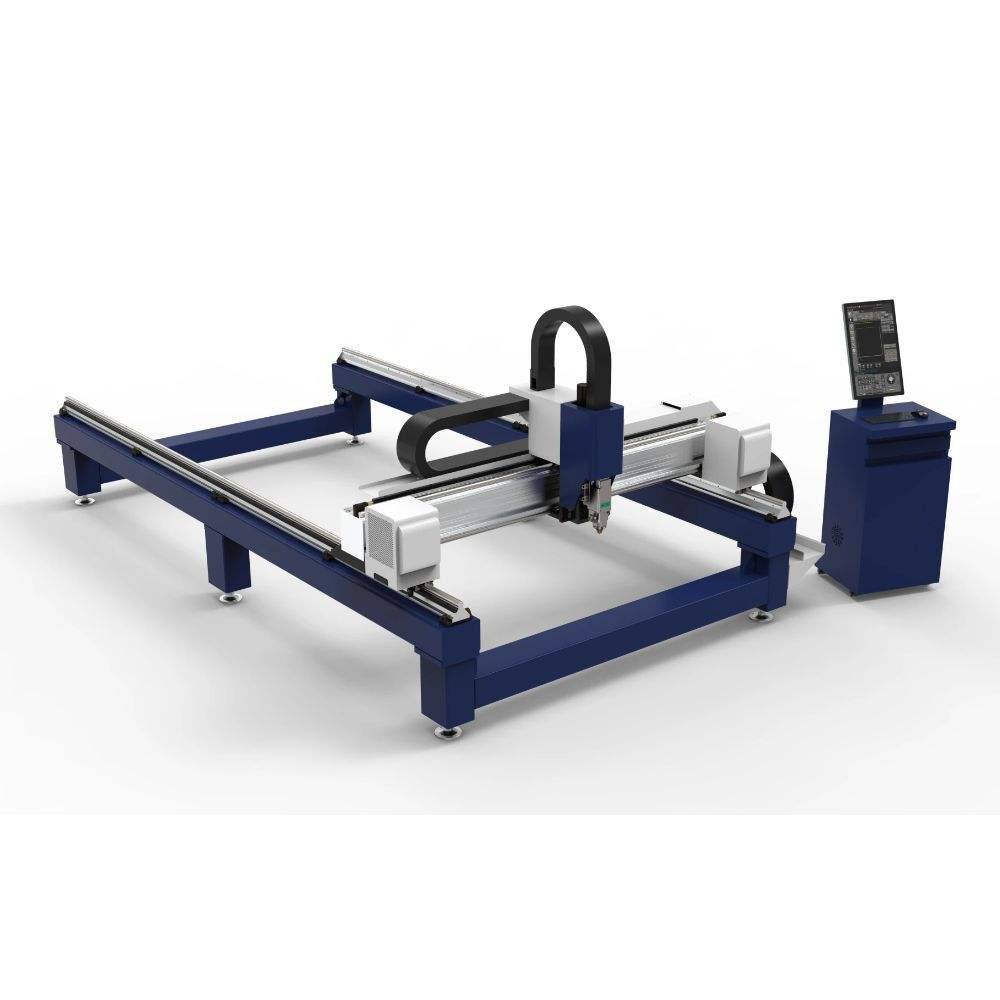
In high-precision laser cutting, the machine bed is the foundation of all accuracy. While lighter, tube-welded frames are common in entry-level machines, the 2kW professional series utilizes a Plate-welded Heavy Duty Bed. This engineering choice is critical for the Guadalajara market, where long-shift production cycles are standard.
The plate-welded bed is constructed from high-tensile carbon steel plates, often exceeding 12mm to 20mm in thickness. Unlike hollow tube frames, these plates are interlocked and welded using a honeycomb structural philosophy. The primary advantage is mass and vibration damping. When the laser head moves at high speeds—often reaching accelerations of 1.0G to 1.2G—the inertia generated can cause micro-vibrations in lesser frames. These vibrations manifest as “chatter marks” on the cut edge of stainless steel, which is unacceptable for high-end kitchenware.
Furthermore, these beds undergo a rigorous thermal treatment process. After welding, the entire structure is placed in an annealing furnace to eliminate internal stresses. This ensures that the bed will not deform over 10 or 15 years of operation. For an engineer, this means the mechanical precision of the X and Y axes remains within the ±0.02mm tolerance range for the entire lifespan of the machine, regardless of the ambient temperature fluctuations common in the Jalisco region.
Stainless Steel Processing: Precision Metrics for 2kW Systems
Stainless steel (specifically AISI 304 and 316) is the primary material for kitchenware due to its corrosion resistance and hygienic properties. However, it presents unique challenges: high reflectivity and a high melting point. A 2kW fiber laser source provides the power density required to overcome these challenges through a focused beam diameter of approximately 0.1mm.
In a 2kW configuration, the cutting speeds for stainless steel are significantly higher than CO2 counterparts. For example:
– 1.0mm Stainless Steel: 35 – 40 m/min
– 2.0mm Stainless Steel: 15 – 18 m/min
– 3.0mm Stainless Steel: 8 – 10 m/min
– 5.0mm Stainless Steel: 2.5 – 3.5 m/min
To achieve a “mirror-like” edge finish, the use of High-Pressure Nitrogen (N2) as an assist gas is mandatory. Nitrogen prevents the oxidation of the cut edge, ensuring the stainless steel retains its silver color and anti-corrosive properties without the need for secondary grinding or polishing. For Guadalajara kitchenware manufacturers, this reduces labor costs by up to 30% by eliminating post-processing stages.
The Role of High-Precision Motion Control
The 2kW laser must be paired with high-performance motion components to translate power into precision. This includes the use of helical gear racks and high-end servo motors (such as Yaskawa or Delta). Because stainless steel kitchen components often involve intricate patterns, vent holes, and interlocking tabs, the synchronization between the CNC controller and the laser pulse is vital.
The “Fly-Cutting” feature is particularly relevant for kitchenware engineers. This technique allows the cutting head to move in a continuous motion across a series of holes without stopping, significantly reducing the cycle time for perforated drain boards or steamer trays. When combined with the stability of the plate-welded bed, fly-cutting can be executed at higher speeds without sacrificing the circularity of the holes.
Optical Path and Cutting Head Dynamics
The 2kW system typically employs an autofocus cutting head. In the production of kitchen sinks or industrial refrigerators, material flatness can vary slightly. An autofocus head utilizes a capacitive sensor to maintain a constant distance (within 0.1mm) between the nozzle and the stainless steel sheet.
For stainless steel, the focal point is usually positioned “negative” (inside the material). A 2kW source provides enough energy to maintain a stable plasma cloud within the kerf, ensuring that the molten material is ejected cleanly by the nitrogen gas. This prevents the formation of “dross” or “burrs” on the bottom of the sheet. For the food industry, where bacterial growth in crevices is a major concern, these clean, dross-free cuts are a critical safety and quality requirement.
Economic Impact and ROI for the Guadalajara Market
For a factory owner in Zapopan or Tlaquepaque, the investment in a 2kW fiber laser with a heavy-duty bed must be justified by the Return on Investment (ROI). The 2kW fiber laser is roughly 70% more energy-efficient than a CO2 laser of equivalent cutting capacity. Furthermore, the absence of mirrors and bellows in the fiber optical path reduces maintenance costs by nearly 50%.
In the context of Guadalajara’s competitive kitchenware market, the ability to nest parts more tightly due to the narrow laser kerf (0.1mm – 0.15mm) results in a 5% to 10% reduction in material waste. Given the high cost of stainless steel coils and sheets, these material savings alone can often cover the monthly financing of the machine.
Furthermore, the plate-welded bed’s durability ensures a high resale value. In the industrial second-hand market, machines with heavy-duty beds are valued significantly higher than those with light-duty frames, as the core geometry of the machine remains intact after years of heavy use.
Technical Maintenance and Environmental Considerations
Guadalajara’s industrial environment can be dusty, and during the rainy season, humidity levels rise. A professional 2kW fiber laser system should be equipped with an independent electrical cabinet with industrial air conditioning. This protects the laser source and the CNC drivers from dust ingress and thermal failure.
Engineers should implement a daily maintenance protocol:
1. Cleaning of the protective window in the cutting head.
2. Checking the nitrogen gas pressure and purity (99.99% purity is recommended for stainless steel).
3. Lubrication of the heavy-duty linear guides and gear racks.
4. Inspection of the water chiller temperature (usually set to 25°C for the laser source and 28°C for the cutting head).
The heavy-duty bed also requires periodic leveling checks. Although the plate-welded structure is resistant to deformation, the floor of a factory can settle. Ensuring the machine remains perfectly level is essential for maintaining the ±0.02mm positioning accuracy required for high-end stainless steel assemblies.
Conclusion: The Future of Stainless Fabrication
The 2kW Fiber Laser Cutting Machine, characterized by its Plate-welded Heavy Duty Bed and specialized stainless steel parameters, is the definitive tool for the modern Guadalajara kitchenware factory. It offers the precision required for high-end aesthetic finishes, the speed necessary for high-volume production, and the structural longevity to withstand the rigors of an industrial environment.
For engineers, the data is clear: the transition to a high-stability, high-efficiency fiber system results in lower per-part costs, higher product quality, and a significantly safer, cleaner production floor. As the Jalisco manufacturing sector continues to modernize, the integration of these heavy-duty laser systems will be the hallmark of the region’s leading fabricators.
















