Comprehensive Guide to 2kW Fiber laser cutting of Galvanized Steel in Monterrey
The industrial landscape of Monterrey, Nuevo León, has long been the powerhouse of Mexico’s manufacturing sector. As the city continues to evolve into a global hub for automotive, HVAC, and aerospace production, the demand for high-precision metal fabrication has surged. Among the various technologies driving this evolution, the 2kW fiber laser cutting machine stands out as a pivotal tool for small to medium-sized enterprises (SMEs) and large-scale contractors alike. Specifically, when dealing with galvanized steel—a material ubiquitous in Monterrey’s construction and industrial sectors—understanding the nuances of fiber laser technology is essential for maintaining a competitive edge.
A 2kW fiber laser cutting system offers a unique balance of power, speed, and cost-effectiveness. While higher wattage machines exist, the 2kW threshold is often considered the “sweet spot” for processing thin to medium-gauge galvanized sheets, providing enough energy to penetrate the material quickly while maintaining the delicate balance required to manage the volatile zinc coating. In this guide, we explore the technical requirements, operational strategies, and regional advantages of utilizing 2kW laser cutting technology in the heart of Mexico’s industrial capital.
Why 2kW is the Optimal Power for Monterrey’s Fabricators
In the context of Monterrey’s diverse manufacturing base, the 2kW fiber laser is highly versatile. It is capable of processing carbon steel up to 16mm and stainless steel up to 6mm or 8mm. However, its performance on galvanized steel is where many local workshops find the most value. Galvanized steel, which is carbon steel coated with a protective layer of zinc, presents unique thermal challenges. A 2kW source provides a high enough power density to ensure a clean kerf without excessive heat-affected zones (HAZ), which can compromise the anti-corrosive properties of the zinc coating.
Furthermore, the energy efficiency of a 2kW fiber laser is significantly higher than older CO2 technology. For businesses in Monterrey facing rising energy costs, the lower power consumption and minimal maintenance requirements of a fiber source lead to a lower cost-per-part. This efficiency allows local manufacturers to bid more competitively on international contracts, particularly those related to the “nearshoring” trend currently boosting the region’s economy.

The Technical Challenges of Galvanized Steel
Laser cutting galvanized steel is notoriously more complex than cutting standard cold-rolled steel. The primary issue lies in the boiling point of the materials. Zinc vaporizes at approximately 907°C, while steel melts at around 1,535°C. When the laser beam hits the surface, the zinc coating vaporizes before the steel melts. This vapor can interfere with the laser beam and the assist gas flow, leading to “spattering” or “dross” on the underside of the cut.
In a 2kW system, the precision of the CNC controller and the quality of the cutting head are paramount. To achieve a clean finish, the machine must move at high speeds to prevent the zinc vapor from being trapped in the molten pool of steel. If the speed is too slow, the vaporized zinc can blow back into the nozzle, damaging the protective lens or causing “pops” that interrupt the cutting process. Professional laser cutting operators in Monterrey typically utilize specific nozzle designs and pressurized assist gases to mitigate these effects.
Managing the Zinc Coating Vaporization
To successfully navigate the vaporization of zinc, the 2kW fiber laser cutting process must be finely tuned. One common technique used in Monterrey’s fabrication shops is the use of high-pressure assist gases. By utilizing Nitrogen at high pressures (often exceeding 15 bar), the vaporized zinc is physically blown out of the kerf before it can react with the molten steel or the atmosphere. This results in a bright, clean edge that requires little to no post-processing.
Another factor is the “focus position.” When laser cutting galvanized material, the focus is often set slightly deeper into the material or even below the bottom surface, depending on the thickness. This helps in widening the bottom of the kerf, allowing the high-pressure gas to evacuate the zinc and dross more effectively. For a 2kW machine, finding this “sweet spot” is the difference between a part that is ready for assembly and one that requires hours of manual grinding.
Assist Gas Optimization: Nitrogen vs. Compressed Air
The choice of assist gas is a critical decision for any Monterrey-based operation. Nitrogen is the gold standard for galvanized steel because it prevents oxidation. Since the zinc coating is already compromised at the cut edge, preventing further oxidation of the underlying steel is vital for the part’s longevity. Nitrogen ensures the edge remains weldable and paintable without additional cleaning.
However, many shops in the Santa Catarina or Apodaca industrial zones are increasingly turning to high-pressure compressed air. With a 2kW laser cutting machine, compressed air (properly filtered and dried) can offer a significantly lower operating cost. While it may leave a slight oxide layer, for many construction-grade galvanized components, the speed and cost savings outweigh the aesthetic requirements of a Nitrogen cut. The 2kW power level is particularly well-suited for air-assist cutting on gauges between 1mm and 3mm, which are common in HVAC ducting.
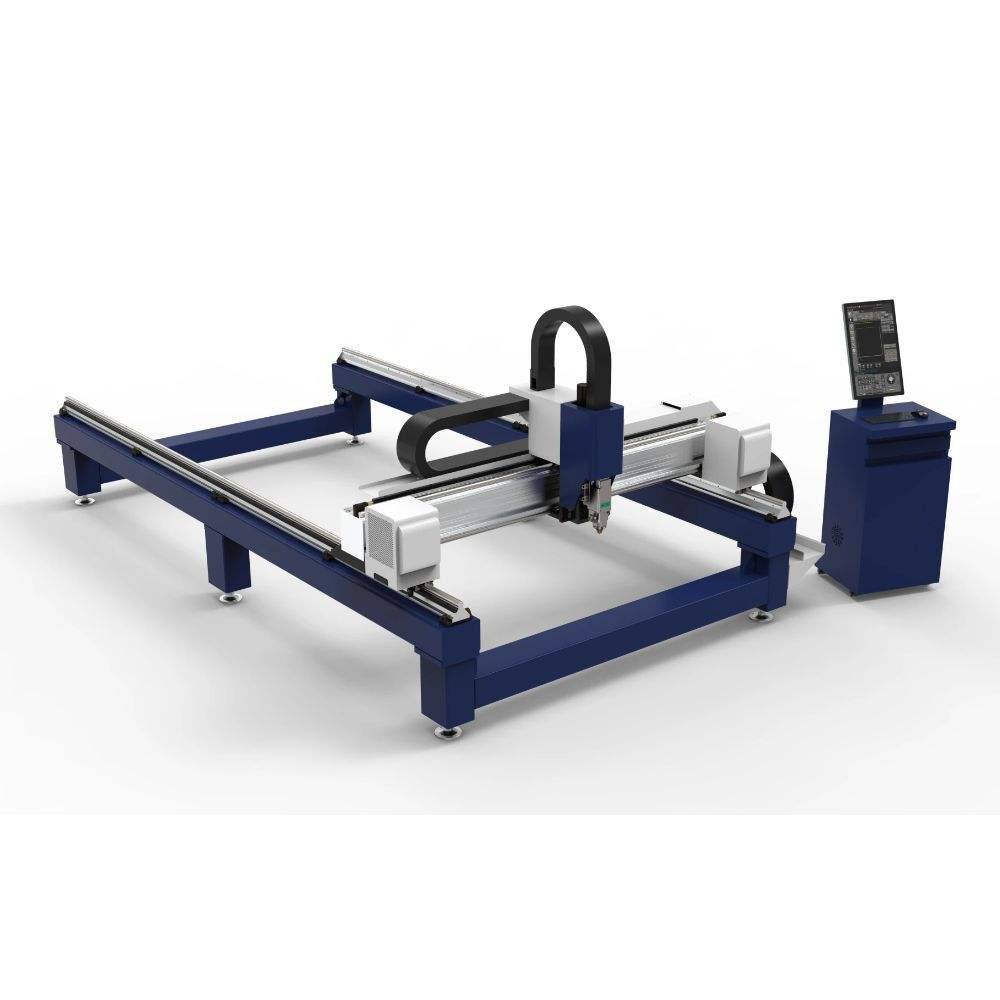
Key Components of a 2kW Fiber Laser Cutting System
A high-performance 2kW fiber laser cutting machine is comprised of several sophisticated subsystems that must work in harmony. The laser source itself—often from brands like IPG, Raycus, or MaxPhotonics—is the heart of the machine. A 2kW source provides a stable beam with high BPP (Beam Parameter Product), which is essential for maintaining consistency across a full 3000mm x 1500mm cutting bed.
The motion system is equally important. In the fast-paced Monterrey market, downtime is costly. High-quality machines utilize Japanese Yaskawa or Delta servo motors and precision gear racks to ensure that the 2kW power is matched by rapid acceleration. When cutting thin galvanized sheets, the machine often needs to move at speeds exceeding 60 meters per minute; any vibration or mechanical play will result in jagged edges or dimensional inaccuracies.
High-Precision Laser Sources and Cutting Heads
The cutting head, such as those produced by Raytools or Precitec, must feature autofocus capabilities. Because galvanized sheets can sometimes have slight warps due to the galvanizing process, the “capacitive height sensing” of the cutting head is critical. It maintains a constant distance between the nozzle and the material, ensuring the laser cutting parameters remain uniform even if the sheet is not perfectly flat. For a 2kW system, an autofocus head significantly reduces setup time and scrap rates when switching between different thicknesses of galvanized steel.
Industrial Applications in the Monterrey Metropolitan Area
Monterrey’s economy is built on heavy industry and manufacturing. The 2kW fiber laser cutting machine finds its home in several key sectors across the region. From the production of electrical cabinets in Guadalupe to the fabrication of automotive brackets in Pesquería, the versatility of this machine is unmatched.
HVAC and Ductwork Manufacturing
The HVAC industry is a massive consumer of galvanized steel in Northern Mexico. Air conditioning ducts, ventilation housings, and industrial fans require precise cutting of thin-gauge galvanized sheets. A 2kW laser cutting system allows manufacturers to nest parts tightly, reducing material waste. The speed of fiber laser technology means that thousands of complex duct components can be produced in a fraction of the time required by traditional plasma cutting or mechanical shearing, with much higher accuracy.
Automotive and Electrical Enclosures
As a major hub for the automotive supply chain (Tier 1 and Tier 2 suppliers), Monterrey demands parts that meet rigorous international standards. 2kW laser cutting is used to produce internal structural components, brackets, and heat shields. Similarly, for the electrical industry, galvanized steel is the material of choice for outdoor enclosures and junction boxes. The precision of the 2kW laser ensures that knockouts, hinges, and mounting holes are cut with tolerances of +/- 0.05mm, ensuring perfect fitment during final assembly.
Maintenance and Operational Efficiency
Operating a fiber laser in Monterrey’s climate presents specific challenges. The region is known for high temperatures and, at times, significant dust levels from surrounding industrial activity. For a 2kW laser cutting machine to maintain peak performance, the cooling system (chiller) must be robust. Fiber lasers are sensitive to temperature fluctuations; therefore, a dual-circuit chiller that cools both the laser source and the cutting head is mandatory.
Environmental Factors in Nuevo León
Dust management is another critical factor. The optical components of a fiber laser are extremely sensitive. Even a microscopic particle of dust on the protective window can absorb laser energy, heat up, and shatter the lens. Shops in Monterrey are advised to operate their laser cutting machines in a controlled environment or ensure that the machine’s bellows and filtration systems are maintained weekly. Furthermore, given the power fluctuations that can occur in heavy industrial zones, the use of a high-quality voltage stabilizer is strongly recommended to protect the sensitive electronics of the 2kW system.
Conclusion: Competitive Advantage in the Mexican Market
Investing in a 2kW fiber laser cutting machine represents a strategic move for any fabrication business in Monterrey. The ability to process galvanized steel with speed, precision, and low operational costs aligns perfectly with the demands of the modern “Made in Mexico” manufacturing era. By mastering the technical nuances of zinc vaporization, optimizing assist gas usage, and maintaining the machine against the local environmental variables, fabricators can achieve a rapid return on investment.
As laser cutting technology continues to become more accessible, the differentiator will be the quality of the output and the efficiency of the workflow. For the galvanized steel applications that dominate the Monterrey skyline—from the buildings themselves to the vehicles driving through the city—the 2kW fiber laser remains the most effective tool for turning raw metal into high-value industrial components.