
Introduction to 2kW Fiber laser cutting Technology
The manufacturing landscape in León, Guanajuato, has undergone a significant transformation over the last decade. As a central hub for the automotive and aerospace industries in Mexico’s Bajío region, the demand for precision, speed, and cost-effectiveness has never been higher. At the heart of this industrial evolution is the 2kW fiber laser cutting machine. This specific power rating—2,000 watts—represents the “sweet spot” for many medium-to-large scale fabricators who require a balance between capital investment and high-performance output.
Laser cutting technology has largely superseded traditional CO2 lasers and mechanical punching in the region due to its superior energy efficiency and minimal maintenance requirements. A 2kW fiber laser utilizes a solid-state gain medium, where the laser beam is generated in an optical fiber doped with rare-earth elements. This beam is then delivered via a flexible fiber optic cable to the cutting head, eliminating the need for complex mirrors and bellows. For businesses in León focusing on sheet metal fabrication, this technology offers a competitive edge in both domestic and export markets.
The Strategic Importance of Laser Cutting in León
León is strategically positioned within the “Diamond of Mexico,” making it a critical node for logistics and manufacturing. The local industry, which ranges from heavy machinery components to intricate automotive brackets, relies heavily on the ability to process various alloys. However, the processing of galvanized steel stands out as a primary requirement for the construction and automotive sectors. A 2kW fiber laser cutting machine provides the necessary beam density to penetrate these materials with extreme precision.
The adoption of fiber laser cutting allows local shops to handle high-volume orders with tighter tolerances than ever before. In an environment where “Just-In-Time” (JIT) manufacturing is the standard, the reliability of a 2kW system ensures that production lines remain active, reducing downtime and optimizing the supply chain for the surrounding industrial parks.
Processing Galvanized Steel: Technical Challenges
Galvanized steel is a carbon steel coated with a layer of zinc to prevent corrosion. While highly functional for end-use, it presents unique challenges during the laser cutting process. The primary issue stems from the differing melting and vaporization points of zinc and the underlying steel. Zinc vaporizes at a much lower temperature (approximately 907°C) than steel melts (approximately 1,500°C). This discrepancy can lead to instability in the cutting kerf, resulting in dross, burrs, or “spitting” during the process.
When using a 2kW fiber laser, the high power density allows for rapid vaporization of the zinc layer, but the operator must carefully manage the assist gas and focal position to ensure a clean finish. Without the correct parameters, the vaporized zinc can interfere with the laser beam or contaminate the protective window of the laser head.

Optimizing 2kW Laser Cutting Parameters for Galvanized Sheets
To achieve a high-quality edge on galvanized steel, several technical variables must be synchronized. For a 2kW system, the optimal thickness for galvanized material typically ranges from 0.5mm to 4.0mm for high-speed production, though it can cut thicker sections at slower speeds. The following parameters are critical for engineering success:
Assist Gas Selection: Nitrogen vs. Oxygen
The choice of assist gas is the most influential factor when laser cutting galvanized steel. Nitrogen is the preferred choice for most high-end applications in León. Using high-pressure nitrogen (typically between 12 and 18 bar) allows the laser to melt the material while the gas blows the molten metal and zinc vapor out of the kerf. Because nitrogen is inert, it prevents oxidation of the cut edge, leaving a clean, silver finish that is ready for welding or painting without secondary cleaning.
Oxygen can be used for thicker galvanized plates to take advantage of the exothermic reaction, which adds heat to the process. However, oxygen will cause the zinc to oxidize and may leave a charred or darkened edge. For the precision components required by León’s automotive Tier 2 and Tier 3 suppliers, nitrogen is almost universally mandated.
Nozzle Selection and Stand-off Distance
For galvanized steel, a double-layer nozzle is often recommended. This design helps stabilize the gas flow and protects the internal components of the laser head from the zinc “spatter” that occurs during the initial piercing phase. The stand-off distance—the gap between the nozzle and the workpiece—should be kept relatively low (between 0.5mm and 1.0mm) to maintain high gas pressure within the cut, ensuring that the vaporized zinc is efficiently removed.
Mechanical Advantages of the 2kW Fiber Laser
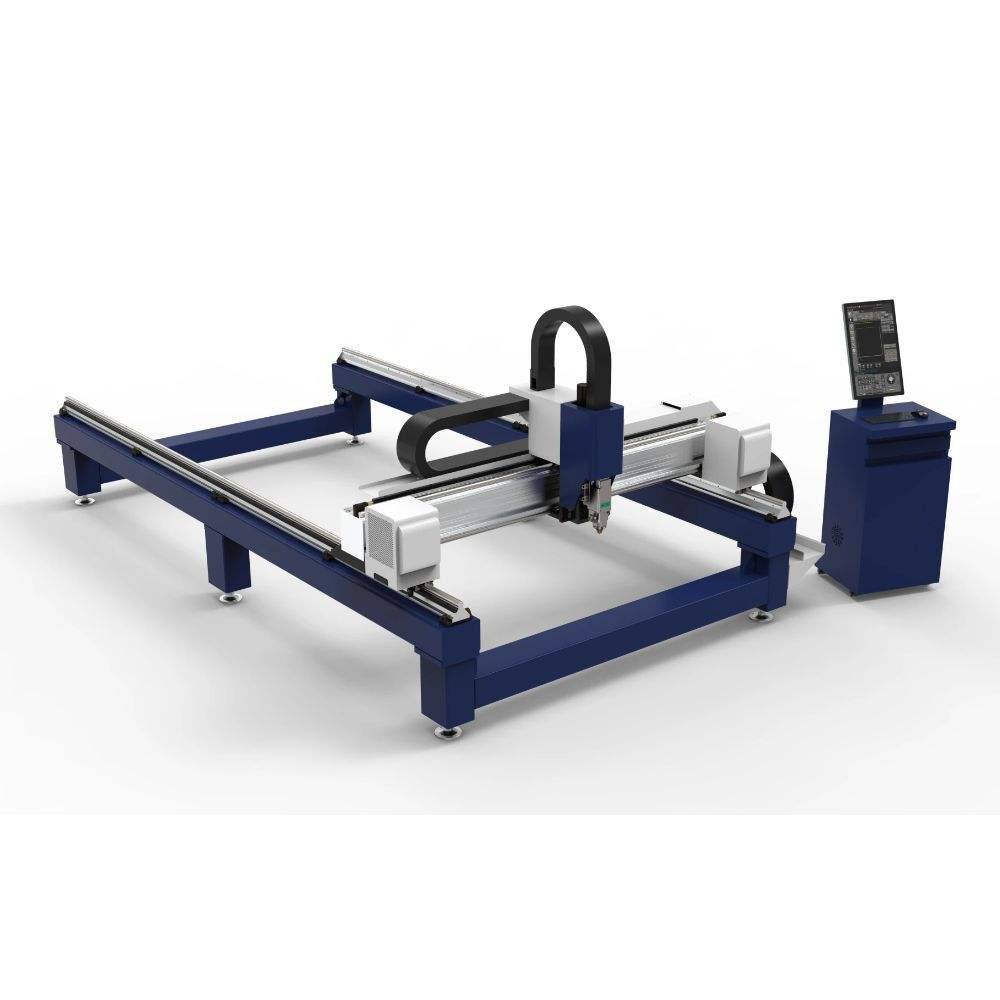
A 2kW fiber laser cutting machine is engineered for durability. The frame is typically a heavy-duty, heat-treated weldment or a cast-iron bed designed to withstand the high accelerations (often up to 1.2G or higher) required for thin-sheet processing. In León’s industrial environment, where ambient temperatures can fluctuate, the thermal stability of the machine bed is paramount to maintaining accuracy over long shifts.
The motion system, usually comprised of high-precision rack-and-pinion drives or linear motors, ensures that the laser cutting head moves with a positioning accuracy of ±0.03mm. This level of precision is essential when producing interlocking parts or components that require automated assembly further down the production line.
The Role of CNC Control Systems
Modern 2kW machines are equipped with sophisticated CNC (Computer Numerical Control) systems. these systems handle the complex algorithms required to adjust laser power in real-time as the head accelerates through corners. This prevents “over-burning” at sharp angles, which is a common defect when laser cutting galvanized steel. Advanced nesting software also integrates with these controllers to minimize material waste, a critical factor in maintaining profitability when working with expensive coated alloys.
Maintenance and Environmental Considerations in León
León’s climate and industrial atmosphere necessitate a rigorous maintenance schedule for fiber laser equipment. Dust and humidity can impact the performance of the electrical cabinets and the chiller units. The 2kW fiber laser is a closed-loop system, but the external optics (the protective window) and the water cooling system require regular attention.
Chiller Maintenance
The laser source and the cutting head generate heat that must be dissipated. A dual-circuit chiller is used to maintain a constant temperature. In the Bajío region, it is essential to use treated water or specialized coolants to prevent mineral buildup and algae growth within the cooling lines, which could lead to overheating and expensive downtime.
Fume Extraction and Safety
Laser cutting galvanized steel releases zinc oxide fumes, which are hazardous if inhaled. A robust dust extraction and filtration system is not just a recommendation; it is a safety requirement for any facility in León. High-efficiency particulate air (HEPA) filters and spark arrestors should be integrated into the machine’s exhaust system to ensure a clean working environment and compliance with Mexican environmental regulations (NOM).
Economic Impact and ROI for Local Fabricators
Investing in a 2kW fiber laser cutting machine offers a rapid Return on Investment (ROI) for fabrication shops in León. Compared to a 1kW system, the 2kW model significantly increases cutting speeds on 2mm and 3mm galvanized sheets—often by more than 50%. This increased throughput allows shops to take on more work without increasing their footprint.
Furthermore, the energy efficiency of fiber technology is roughly 30-40% higher than CO2 lasers. Given the rising costs of industrial electricity, this reduction in “per-part” cost is vital for maintaining competitive pricing in the global market. When combined with the low cost of consumables (primarily nozzles and protective windows), the 2kW fiber laser stands as the most economically viable solution for high-precision galvanized steel processing.
Conclusion
The 2kW fiber laser cutting machine is a cornerstone of modern manufacturing in León. Its ability to navigate the complexities of galvanized steel—overcoming the challenges of zinc vaporization and reflective coatings—makes it an indispensable tool for the region’s diverse industrial base. By mastering the technical parameters of gas pressure, focal positioning, and CNC optimization, fabricators can produce world-class components that drive the automotive and construction sectors forward. As technology continues to advance, the integration of these high-power fiber systems will remain a defining factor in the industrial success of the Bajío region.
















