
The Strategic Advantage of 2kW Fiber laser cutting in Guadalajara’s Industrial Sector
The industrial landscape of Guadalajara, Jalisco, often referred to as the “Silicon Valley of Mexico,” has undergone a massive transformation over the last decade. As the region solidifies its position as a hub for electronics, automotive components, and aerospace manufacturing, the demand for precision metal fabrication has skyrocketed. Among the various technologies driving this evolution, the 2kW fiber laser cutting machine stands out as a cornerstone for medium-scale enterprises and high-volume production facilities alike. Specifically, when processing galvanized steel—a material ubiquitous in the construction and HVAC sectors of Western Mexico—the 2kW power threshold offers an ideal balance between capital investment and operational throughput.
Fiber laser technology utilizes a solid-state gain medium, as opposed to the gas or liquid mediums found in legacy CO2 lasers. The 2kW variant is particularly effective because its wavelength is absorbed more efficiently by metallic surfaces. This efficiency is paramount when dealing with the reflective properties of galvanized coatings. In Guadalajara’s competitive market, where lead times and edge quality determine contract wins, understanding the technical nuances of 2kW laser cutting is essential for any engineering firm looking to optimize its shop floor.
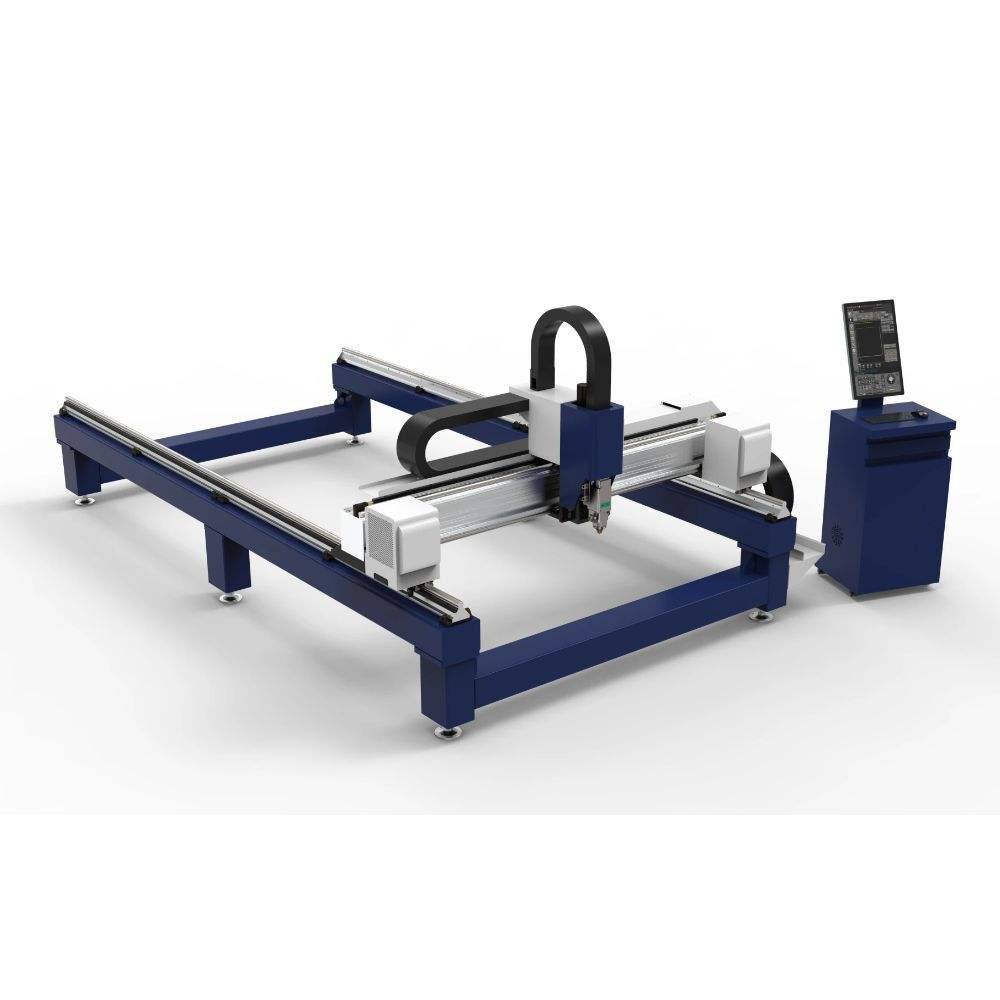
Technical Specifications and Performance of 2kW Fiber Lasers
A 2kW fiber laser cutting system is engineered to handle a wide range of material thicknesses, typically excelling in the 1mm to 6mm range for carbon steel and up to 4mm for stainless steel. However, its performance on galvanized steel is where it truly shines for regional manufacturers. Galvanized steel, which is carbon steel coated with a layer of zinc, presents unique challenges. The zinc coating has a significantly lower melting point (approximately 419°C) than the base steel (approximately 1500°C). A 2kW power source provides sufficient energy density to vaporize the zinc and melt the steel simultaneously, ensuring a clean kerf without excessive dross.
From an engineering perspective, the beam quality (M² factor) of a 2kW fiber source allows for a very small focal spot. This high power density enables faster cutting speeds—often exceeding 20 meters per minute on thin-gauge galvanized sheets. For shops in the El Salto or Zapopan industrial corridors, this translates to higher parts-per-hour metrics compared to older plasma or CO2 systems. Furthermore, the 2kW system is remarkably energy-efficient, consuming significantly less power than CO2 alternatives, which is a critical consideration given the fluctuating energy costs in the Mexican industrial sector.
The Challenges of Cutting Galvanized Steel
Processing galvanized steel via laser cutting requires a sophisticated understanding of thermodynamics. The primary issue is the “zinc explosion” effect. As the laser beam hits the material, the zinc coating vaporizes rapidly. If the cutting parameters are not perfectly calibrated, this vapor can interfere with the laser beam or become trapped in the molten pool, leading to porosity or a jagged edge finish. For Guadalajara-based fabricators, maintaining the integrity of the corrosion-resistant zinc layer near the cut edge is often a contractual requirement for outdoor structural components.
To mitigate these issues, 2kW machines utilize high-pressure assist gases. While oxygen can be used for thicker mild steel to add exothermic energy, nitrogen is the preferred choice for galvanized steel. Nitrogen acts as a shielding gas, blowing away the molten material and zinc vapor before they can react with atmospheric oxygen. This results in a “bright” cut edge that requires little to no post-processing. In the context of Guadalajara’s electronics industry, where enclosures must be burr-free and aesthetically consistent, the nitrogen-assisted 2kW fiber laser cutting process is the industry standard.

Optimizing Parameters for the Guadalajara Climate
Environmental factors in Guadalajara, such as altitude (approx. 1,566 meters) and seasonal humidity, can subtly influence the performance of laser cutting machinery. High-altitude environments have lower air density, which can affect the cooling efficiency of the laser’s chiller units and the dynamics of the assist gas flow. A 2kW fiber laser cutting machine must be equipped with a high-performance, dual-circuit cooling system to maintain the stability of the laser source and the cutting head optics.
Furthermore, the dust levels in certain industrial zones require robust filtration systems. Fiber lasers are sensitive to optical contamination. A single dust particle on the protective window can absorb the 2kW energy, heat up, and shatter the lens. Engineering teams in Jalisco must implement strict maintenance schedules, focusing on the “clean room” integrity of the laser head. Utilizing pressurized bellows and high-quality air dryers for the pneumatic systems ensures that the laser cutting process remains uninterrupted by the local environmental variables.
Economic Impact and ROI for Local Manufacturers
The decision to implement a 2kW fiber laser cutting machine in a Guadalajara workshop is often driven by the Total Cost of Ownership (TCO). While the initial purchase price is a factor, the long-term savings in consumables and maintenance are where the 2kW fiber system excels. Unlike CO2 lasers, fiber lasers have no moving parts in the light-generating source and no mirrors that require alignment. This reduces downtime significantly—a vital factor for companies serving the “just-in-time” supply chains of the nearby automotive plants.
In terms of ROI, the 2kW system is often considered the “sweet spot” for galvanized steel applications. It is powerful enough to handle 90% of the sheet metal thicknesses used in general fabrication (10-20 gauge) but lacks the extreme electrical requirements and higher price tag of 6kW or 12kW systems. For a medium-sized workshop in Tlaquepaque, a 2kW laser cutting machine can typically pay for itself within 18 to 24 months through increased throughput and the elimination of secondary finishing processes.
Software Integration and Industry 4.0
Modern 2kW fiber laser cutting machines are not standalone tools; they are integrated nodes in a digital manufacturing ecosystem. In Guadalajara’s forward-thinking tech scene, the use of advanced CAD/CAM software for nesting is essential. Nesting software optimizes the layout of parts on a galvanized sheet to minimize scrap. Given that galvanized steel prices can be volatile, reducing waste by even 5% can result in thousands of dollars in annual savings.
Furthermore, these machines often feature CNC controllers that support Industry 4.0 protocols. This allows production managers to monitor the laser cutting status, gas consumption, and power usage in real-time from remote locations. For large-scale operations with multiple facilities across Mexico, this connectivity ensures standardized quality and enables predictive maintenance, preventing costly unscheduled stops during peak production cycles.
Safety Protocols and Engineering Standards
Operating a 2kW fiber laser requires stringent adherence to safety standards, specifically those outlined by the ANSI Z136.1 or equivalent international norms. The 1.06-micron wavelength of a fiber laser is particularly dangerous to the human eye, as it can pass through the cornea and focus directly on the retina. Therefore, all 2kW laser cutting machines must be housed in a Class 1 certified enclosure with laser-safe viewing windows.
In addition to optical safety, the cutting of galvanized steel produces zinc oxide fumes. These fumes can cause “metal fume fever” if inhaled in significant quantities. Engineering the ventilation system is a non-negotiable step in the installation process. High-capacity dust collectors with HEPA filtration are required to exhaust the fumes safely, ensuring the health of the operators and compliance with Mexican environmental regulations (SEMARNAT). Proper grounding of the machine is also critical, especially in regions of Jalisco prone to electrical storms, to protect the sensitive fiber source and CNC electronics.
The Future of Metal Fabrication in Jalisco
As Guadalajara continues to attract international investment, the bar for manufacturing quality continues to rise. The 2kW fiber laser cutting machine represents the bridge between traditional fabrication and high-tech manufacturing. Its ability to handle galvanized steel with precision, speed, and cost-effectiveness makes it an indispensable asset for the local supply chain. Whether it is producing brackets for the electronics industry, ducting for commercial HVAC, or structural components for the growing residential sector, fiber laser technology provides the competitive edge necessary to thrive in the global market.
In conclusion, the adoption of 2kW laser cutting technology is more than just an equipment upgrade; it is a strategic move toward operational excellence. By mastering the technical requirements of galvanized steel processing and adapting to the local environmental and economic conditions of Guadalajara, manufacturers can ensure long-term viability and lead the way in Mexico’s industrial renaissance. The precision, efficiency, and reliability of the 2kW fiber laser remain unmatched for the high-demand, high-accuracy requirements of today’s engineering challenges.
















