
Introduction: The Evolution of Industrial Metal Fabrication in Puebla
The industrial landscape of Puebla, Mexico, has undergone a radical transformation over the last decade. As a primary hub for the automotive and aerospace sectors—anchored by giants such as Volkswagen de México and Audi—the demand for precision metal components has never been higher. At the heart of this manufacturing revolution is the 2kW fiber laser cutting machine. This specific power configuration has emerged as the “sweet spot” for small to medium-sized enterprises (SMEs) and Tier 2 suppliers who require a balance between speed, precision, and operational cost when processing carbon steel.
Laser cutting technology has effectively marginalized older methods like plasma cutting and CO2 lasers for thin-to-medium gauge materials. In Puebla’s competitive market, where turnaround times and material yield are critical to profitability, the 2kW fiber laser offers a technical advantage that is difficult to ignore. This guide explores the technical nuances of utilizing a 2kW system specifically for carbon steel, tailored to the unique industrial environment of the Puebla region.
Understanding the 2kW Fiber Laser Power Profile
A 2kW fiber laser utilizes an active optical fiber doped with rare-earth elements, typically ytterbium, to amplify light. This light is then delivered through a flexible fiber optic cable to the cutting head. Unlike CO2 lasers, which require complex mirror alignments and gas mixtures to generate a beam, the fiber laser is solid-state, making it significantly more energy-efficient and durable.
For carbon steel, a 2kW output provides sufficient energy density to achieve high-speed melt-shearing. The wavelength of a fiber laser (approximately 1.06 micrometers) is absorbed much more efficiently by metallic surfaces than the 10.6 micrometers of a CO2 laser. This increased absorption rate translates directly into faster cutting speeds on carbon steel thicknesses ranging from 1mm to 16mm. While 2kW is often considered an entry-level power for heavy industry, its performance on carbon steel—the most common material in Puebla’s construction and automotive sectors—remains exemplary.
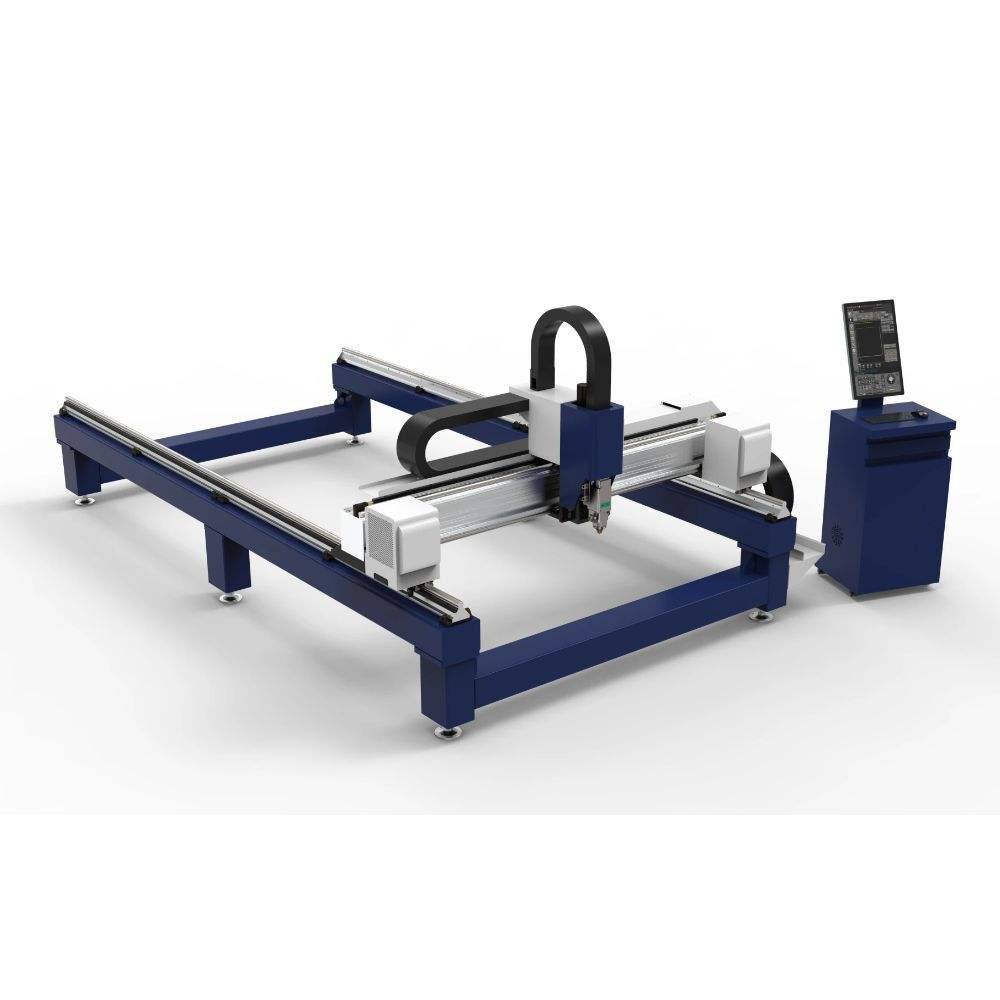
Technical Specifications and Material Capacities
When processing carbon steel with a 2kW fiber laser, the machine typically handles a variety of grades, including ASTM A36, SAE 1018, and high-strength low-alloy (HSLA) steels. The maximum thickness for a clean, industrial-grade cut is generally around 16mm (5/8 inch), although some high-performance systems can push to 18mm under ideal conditions. However, the “productive range”—where the machine maintains high speeds and excellent edge quality—is usually between 1mm and 12mm.
In this range, the 2kW system can achieve speeds that far outpace traditional mechanical methods. For instance, on 3mm carbon steel, a 2kW laser can reach cutting speeds exceeding 8 meters per minute. This efficiency is vital for Puebla-based workshops that handle high-volume production runs for automotive brackets, chassis components, and structural plates.
Carbon Steel Processing: The Role of Assist Gases
The success of laser cutting carbon steel depends heavily on the choice of assist gas. In the context of 2kW systems, Oxygen (O2) is the most common choice for thicker plates, while Nitrogen (N2) or compressed air is increasingly used for thinner sections.
Oxygen Cutting (Flame Cutting)
When cutting carbon steel with Oxygen, the gas acts as an accelerant. The laser heats the metal to its ignition temperature, and the Oxygen initiates an exothermic reaction (burning). This process adds significant thermal energy to the cut, allowing a 2kW laser to penetrate much thicker material than it could with Nitrogen alone. The trade-off is the formation of a thin oxide layer on the cut edge. For many industrial applications in Puebla, this oxide layer must be removed before painting or welding to ensure proper adhesion.
Nitrogen and High-Pressure Air Cutting
For carbon steel thinner than 3mm, many operators in Puebla are switching to Nitrogen or high-pressure dry air. Nitrogen cutting is a purely mechanical process where the laser melts the metal and the high-pressure gas blows it out of the kerf. This prevents oxidation, resulting in a bright, clean edge that is ready for immediate secondary processing. While it requires more power and higher gas consumption, the 2kW laser is efficient enough to make this a viable option for high-precision components.
Optimizing Laser Cutting Parameters for the Puebla Climate
Puebla’s geographical location presents unique challenges for laser cutting operations. Situated at an altitude of approximately 2,135 meters (7,000 feet), the atmospheric pressure is lower than at sea level. This can affect the cooling efficiency of the chiller systems and the behavior of assist gases. Engineers must calibrate their 2kW machines to account for these variables.
Furthermore, Puebla experiences significant temperature fluctuations between day and night. A 2kW fiber laser requires a stable thermal environment to maintain beam consistency. Modern machines used in the region are equipped with dual-circuit water chillers that regulate the temperature of both the laser source and the cutting head. Ensuring these chillers are rated for high-altitude operation is crucial for preventing “beam drift” or premature component failure.

Nozzle Selection and Focal Position
For carbon steel, nozzle selection is critical. A 2kW machine typically uses single-layer nozzles for Oxygen cutting and double-layer nozzles for Nitrogen cutting. The diameter of the nozzle (ranging from 1.0mm to 3.0mm) must be matched to the material thickness. In carbon steel processing, the focal position is usually set slightly above or at the surface of the plate to ensure the energy is concentrated where the exothermic reaction begins. Precision in these settings determines whether the final part has a smooth finish or is marred by dross (hardened slag) on the bottom edge.
Integration into Puebla’s Automotive Supply Chain
The 2kW fiber laser is a cornerstone of the “Industria 4.0” movement in Puebla. Local Tier 2 and Tier 3 suppliers utilize these machines to produce intricate parts that were previously outsourced or manufactured using expensive stamping dies. The flexibility of laser cutting allows for rapid prototyping; a CAD file can be transformed into a physical carbon steel part in minutes.
In the automotive sector, where just-in-time (JIT) manufacturing is the standard, the reliability of the fiber laser is paramount. The 2kW system offers a high “up-time” because it lacks the complex moving parts and sensitive optics found in older laser technologies. This reliability ensures that Puebla’s fabrication shops can meet the rigorous delivery schedules demanded by international OEMs.
Maintenance and Longevity of 2kW Systems
To maintain peak performance when cutting carbon steel, a strict maintenance regimen is required. Despite their “solid-state” nature, 2kW fiber lasers are precision instruments. The primary areas of concern are the protective windows and the nozzle assembly. Carbon steel cutting, especially with Oxygen, generates significant “spatter.” If this molten metal reaches the protective window of the cutting head, it can cause “thermal runaway,” potentially damaging the internal lenses.
Operators in Puebla are encouraged to perform daily inspections of the optics and to ensure that the compressed air used in the system is ultra-dry and oil-free. Contamination is the leading cause of laser source degradation. By investing in high-quality air filtration and following manufacturer-specified cleaning protocols, a 2kW fiber laser can operate for over 100,000 hours with minimal power loss.
Economic Impact: ROI for Puebla Fabricators
The investment in a 2kW fiber laser cutting machine is often justified within 18 to 24 months for a busy shop in Puebla. The primary drivers of this Return on Investment (ROI) are energy savings and increased throughput. A 2kW fiber laser consumes about 30% to 50% less electricity than a CO2 laser of equivalent cutting capacity. Furthermore, the speed at which it processes carbon steel—the bread and butter of the local industry—allows shops to take on more contracts without increasing their footprint.
Additionally, the reduction in secondary processing (such as grinding or deburring) saves labor costs. When a 2kW laser is tuned correctly, the parts coming off the bed are often “assembly-ready.” In a region like Puebla, where labor costs are rising and the demand for high-quality finish is non-negotiable, this efficiency is a major competitive advantage.
Conclusion: The Future of Metal Fabrication in Puebla
The 2kW fiber laser cutting machine represents more than just a tool; it is a catalyst for industrial growth in Puebla. By mastering the nuances of carbon steel processing—from gas dynamics to high-altitude calibration—local manufacturers are positioning themselves as leaders in the North American supply chain. As technology continues to advance, the integration of AI-driven nesting software and automated loading systems will further enhance the capabilities of these 2kW systems.
For any fabrication business in Puebla looking to modernize, the 2kW fiber laser offers the most viable path toward increased precision, lower operational costs, and long-term sustainability. Whether it is for structural steel, automotive components, or custom machinery, the precision of laser cutting remains the gold standard for the modern age of Mexican manufacturing.
















