
Introduction to 2kW Fiber laser cutting in Tijuana
The manufacturing landscape in Tijuana has undergone a significant transformation over the last decade. As one of Mexico’s primary industrial hubs, the city has transitioned from basic assembly to high-precision engineering. Central to this evolution is the adoption of advanced laser cutting technology. Specifically, the 2kW fiber laser cutting machine has emerged as a cornerstone for facilities processing non-ferrous metals. Among these materials, brass presents a unique set of challenges and opportunities that require a sophisticated understanding of laser physics and machine calibration.
A 2kW fiber laser offers a strategic balance of power, precision, and operational cost. For the maquiladoras and local engineering firms in Tijuana, this power level is ideal for the medium-thickness brass components frequently found in the electronics, medical device, and aerospace sectors. Unlike traditional mechanical cutting or older CO2 laser systems, fiber technology utilizes a solid-state gain medium, resulting in a wavelength of approximately 1.064 microns. This shorter wavelength is more readily absorbed by reflective metals like brass, making the 2kW system a formidable tool for high-quality production.

The Evolution of Fiber Laser Technology
The transition to fiber laser cutting represents a paradigm shift in industrial efficiency. In the past, cutting brass was considered a high-risk operation for laser machines due to the material’s high reflectivity. In older CO2 systems, the laser beam could reflect off the brass surface and travel back into the resonator, causing catastrophic damage to the optics. Modern 2kW fiber lasers are equipped with advanced back-reflection isolation systems, allowing operators in Tijuana to process brass with confidence and minimal downtime.
Understanding the 2kW Power Output for Brass
When selecting a laser cutting machine, power is the most critical variable. A 2kW output is often referred to as the “sweet spot” for many Tijuana-based manufacturers. It provides enough energy density to pierce and cut through brass plates up to 6mm or 8mm in thickness while maintaining an exceptionally narrow kerf width for thinner foils and sheets. This versatility is essential for shops that handle a diverse range of contracts, from decorative architectural elements to precision electrical connectors.
Overcoming High Reflectivity
Brass is an alloy of copper and zinc, both of which are highly reflective in their solid state. When a 2kW fiber laser beam first hits the surface of a brass sheet, a significant portion of the energy is reflected. However, because the fiber laser’s wavelength is ten times shorter than that of a CO2 laser, the absorption rate is significantly higher. Once the material reaches its melting point, the absorption increases dramatically, allowing the laser cutting process to proceed efficiently. The 2kW power level ensures there is sufficient “punch” to initiate this melt quickly, reducing the risk of beam bounce-back during the initial piercing phase.
Thermal Conductivity and Heat Management
Another engineering challenge when laser cutting brass is the material’s high thermal conductivity. Brass dissipates heat rapidly away from the cutting zone. If the laser power is too low or the cutting speed is too slow, the heat spreads into the surrounding material, leading to a wider heat-affected zone (HAZ) and potential warping. A 2kW system provides the necessary intensity to outpace the thermal conduction of the brass, ensuring that the energy is concentrated precisely where the cut is required. This results in cleaner edges and higher dimensional accuracy, which are critical requirements for the rigorous quality standards of the Tijuana export market.
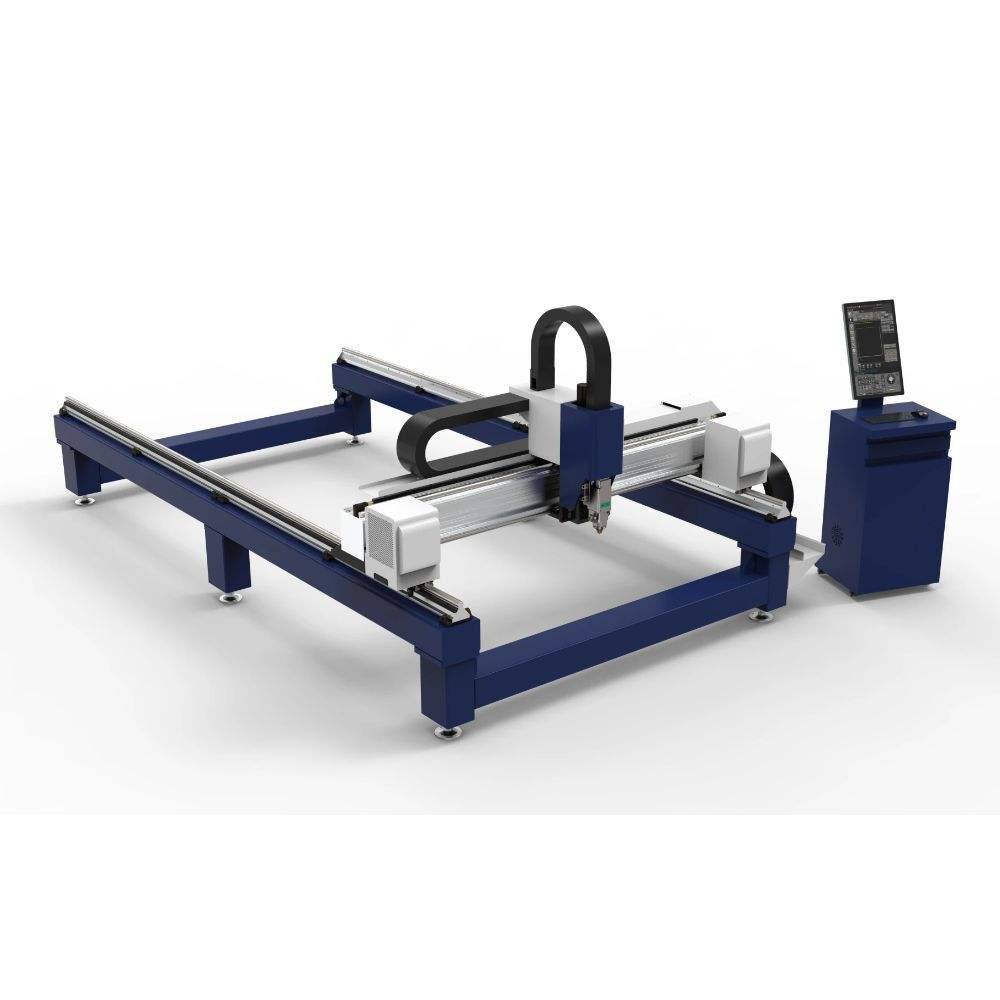
Key Components of a 2kW System
To achieve consistent results with brass, a 2kW fiber laser cutting machine must be composed of high-grade industrial components. The synergy between the laser source, the cutting head, and the motion control system determines the final part quality.
The Fiber Laser Source
The heart of the machine is the 2kW fiber laser source. Leading manufacturers provide resonators that are designed for high “wall-plug” efficiency, meaning they convert electrical energy into laser light with minimal waste. For Tijuana manufacturers looking to reduce overhead, this efficiency translates directly to lower utility bills. Furthermore, these sources are typically modular, allowing for easier maintenance and longer service lives—often exceeding 100,000 hours of operation.
Cutting Head and Autofocus Technology
Processing brass requires a cutting head capable of handling high-pressure auxiliary gases. Most 2kW systems utilize an autofocus cutting head. Since brass thickness can vary slightly across a large sheet, the autofocus mechanism uses capacitive sensors to maintain a constant distance between the nozzle and the workpiece. This constant “stand-off” distance is vital for maintaining the focal point within the material, ensuring a consistent edge quality throughout the entire laser cutting cycle.
Optimizing Laser Cutting for Brass Alloys
In the industrial context of Tijuana, various brass alloys are used, such as C260 (Cartridge Brass) and C360 (Free Machining Brass). Each alloy reacts differently to the laser beam. Optimizing the machine parameters is essential for maximizing throughput and minimizing dross (slag) at the bottom of the cut.
Auxiliary Gas Selection: Nitrogen vs. Oxygen
The choice of assist gas is a critical factor in laser cutting brass. Nitrogen is the most common choice for 2kW systems when a clean, oxide-free edge is required. Nitrogen acts as a shielding gas, blowing the molten brass out of the kerf without reacting with the metal. This is particularly important for parts that will later be soldered or plated. However, using nitrogen requires high pressures (often exceeding 20 bar), which necessitates a robust gas delivery system. In some specific applications where edge discoloration is acceptable, oxygen can be used to speed up the process through an exothermic reaction, though this is less common for brass than for carbon steel.
Cutting Speeds and Precision Parameters
For a 1mm brass sheet, a 2kW fiber laser can achieve cutting speeds in excess of 20 meters per minute. As the thickness increases to 5mm, the speed may drop to approximately 1.5 to 2 meters per minute. Engineering the correct lead-ins and lead-outs is also vital. Because brass is sensitive to heat buildup, using a circular lead-in can prevent “blowouts” at the start of a cut. For the high-precision requirements of Tijuana’s medical device manufacturers, these fine-tuned parameters ensure that every part meets tolerances within +/- 0.05mm.
The Tijuana Industrial Context
Tijuana’s proximity to the United States and its established infrastructure make it a global leader in “nearshoring.” The ability to perform high-quality laser cutting of brass locally provides a significant competitive advantage. It reduces lead times for prototypes and production runs that would otherwise need to be sourced from overseas.
Applications in Medical and Electronics
The medical industry in Tijuana frequently requires brass components for diagnostic equipment and specialized tooling. These parts often feature intricate geometries that are impossible to produce with traditional stamping. Similarly, the electronics sector utilizes brass for busbars, connectors, and shielding. The 2kW fiber laser allows for the rapid iteration of these designs, enabling engineers to move from CAD drawing to finished part in a matter of minutes.
Supply Chain and Cross-Border Advantages
Operating a 2kW laser cutting machine in Tijuana allows companies to tap into a dual-nation supply chain. Raw brass materials can be sourced from either Mexican or US suppliers, and the finished products can be shipped across the Otay Mesa or San Ysidro ports of entry with minimal logistical friction. This geographic advantage, combined with the technical capability of fiber laser technology, positions Tijuana as a hub for high-tech metal fabrication.
Maintenance and Longevity
To maintain the precision of a 2kW fiber laser cutting machine, a strict maintenance schedule is required. In the dusty or humid environments sometimes found in industrial zones, the machine’s cooling system (chiller) must be monitored to prevent overheating of the laser source and optics. The protective windows in the cutting head should be inspected daily; even a small speck of dust can absorb laser energy and crack the lens when processing reflective materials like brass. Regular calibration of the gantry and drive system ensures that the machine maintains its accuracy over years of heavy use in a multi-shift production environment.
Conclusion
The 2kW fiber laser cutting machine represents the pinnacle of efficiency for brass fabrication in Tijuana. By understanding the interaction between the 1.064-micron wavelength and the unique properties of brass alloys, manufacturers can achieve unprecedented levels of precision and productivity. As the industrial sector in Tijuana continues to grow, the integration of such advanced laser cutting systems will remain a defining factor in the region’s ability to compete on the global stage. Whether for aerospace, medical, or electronic applications, the 2kW fiber laser is an indispensable tool for the modern engineer.
















