Mastering the 2kW Fiber laser cutting Machine for Brass in Puebla’s Industrial Sector
The industrial landscape of Puebla, Mexico, has undergone a significant transformation over the last decade. As a primary hub for automotive manufacturing, aerospace components, and intricate metalwork, the demand for precision and efficiency has never been higher. Among the various technologies driving this evolution, the 2kW fiber laser cutting machine stands out as a pivotal tool, particularly when processing highly reflective non-ferrous metals like brass. This guide explores the technical nuances, operational strategies, and local economic advantages of deploying 2kW fiber laser technology for brass fabrication in the Puebla region.
The Technical Superiority of Fiber Laser Technology
For years, CO2 lasers were the industry standard for metal fabrication. However, when dealing with “yellow metals” such as brass and copper, CO2 systems faced immense challenges due to the material’s high reflectivity at the 10.6 µm wavelength. The advent of fiber laser cutting changed this paradigm. Operating at a wavelength of approximately 1.06 µm, fiber lasers are absorbed much more efficiently by brass. At a 2kW power rating, the energy density is sufficient to melt the material instantly, minimizing the risk of back-reflection that could damage the resonator.
A 2kW system offers a “sweet spot” for many workshops in Puebla. It provides enough power to handle brass sheets up to 6mm or 8mm with high precision, while maintaining lower operational costs compared to 6kW or 12kW behemoths. In an engineering context, the beam quality (M²) of a 2kW fiber source allows for a smaller focal spot, which results in a narrower kerf and a reduced Heat Affected Zone (HAZ). This is critical for brass, which has high thermal conductivity and can easily deform if too much heat is dissipated into the surrounding material.

Challenges and Solutions in Brass Laser Cutting
Brass is an alloy of copper and zinc. Its high thermal conductivity means that heat is rapidly pulled away from the cut zone, requiring a concentrated energy source to maintain a continuous melt. Furthermore, the zinc component has a lower vaporization temperature than copper, which can lead to dross formation and “pitting” if the parameters are not perfectly tuned. When laser cutting brass in Puebla’s variable climate—ranging from dry winter days to humid summer afternoons—operators must be diligent with gas pressures and focal positions.
To mitigate the risks of reflectivity, modern 2kW fiber laser cutting machines are equipped with back-reflection isolators. These optical components ensure that any laser light bouncing off the shiny surface of the brass does not travel back into the fiber delivery system, which could cause catastrophic failure of the laser source. In Puebla’s competitive manufacturing corridors, such as the Chachapa or Huejotzingo industrial parks, uptime is everything. Investing in a machine with robust reflection protection is not just a safety measure; it is a business necessity.
Optimizing Gas Selection and Pressure
The choice of assist gas is the most significant factor in the quality of the finished edge when laser cutting brass. Nitrogen is the preferred choice for most 2kW applications. Because nitrogen is an inert gas, it prevents oxidation during the melting process, resulting in a clean, bright edge that often requires no secondary finishing. This is particularly important for decorative architectural elements or high-precision electrical connectors manufactured in Puebla’s electronics sector.
However, the pressure must be carefully regulated. For a 2kW system cutting 3mm brass, nitrogen pressures often range between 12 and 18 bar. If the pressure is too low, the molten brass will not be ejected efficiently, leading to “dross” or burrs on the underside of the sheet. Conversely, if the pressure is too high, it can cause turbulence in the melt pool, resulting in a rougher edge. Engineers in Puebla must also consider the cost of gas; many high-volume shops are moving toward nitrogen generators to stabilize their supply chain and reduce the overhead associated with liquid nitrogen tanks.
Applications in Puebla’s Industrial Ecosystem
Puebla is home to some of the world’s leading automotive OEMs and Tier 1 suppliers. Brass components, though less common than steel in chassis construction, are vital for bushings, specialized valves, and radiator components. The 2kW fiber laser cutting machine allows these suppliers to prototype and produce small-to-medium batches with a lead time that traditional stamping or CNC milling cannot match.
Beyond automotive, Puebla has a rich tradition of decorative metalwork and construction hardware. From ornate signage to custom furniture inlays, the ability to perform intricate laser cutting on brass sheets opens new creative avenues. The 2kW power level is ideal here, as it can handle the thin-gauge decorative sheets (0.5mm to 2mm) at incredibly high speeds, often exceeding 30 meters per minute, while still possessing the “muscle” to cut thicker functional brackets when needed.
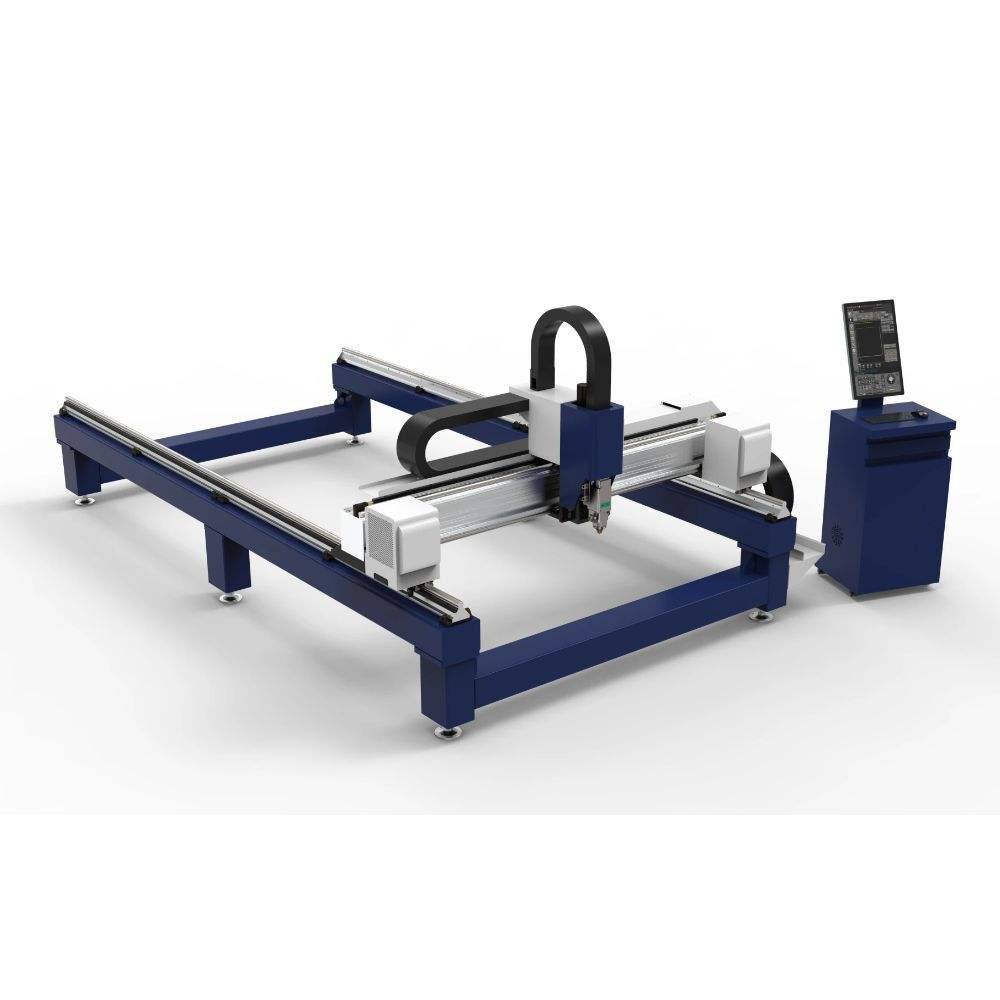
Precision Engineering: Focal Point and Nozzle Calibration
In the realm of laser cutting, the focal point position is measured in millimeters relative to the material surface. For brass, the focal point is typically set “negative”—meaning it is positioned slightly inside the material. This helps to create a wider kerf at the bottom, facilitating the easy exit of molten metal and gas. On a 2kW machine, a deviation of even 0.5mm in focal position can be the difference between a mirror-finish cut and a failed pierce.
Nozzle selection is equally critical. A double-layer nozzle is often used for oxygen cutting of carbon steel, but for nitrogen cutting of brass, a single-layer nozzle is standard. The diameter of the nozzle (typically 1.5mm to 2.5mm for 2kW applications) must be perfectly centered with the laser beam. In Puebla’s high-precision shops, automated nozzle cleaning and calibration stations are becoming standard features, ensuring that the 2kW fiber laser maintains its accuracy over long production shifts without manual intervention.
Maintenance Best Practices for the Puebla Environment
Puebla’s geographic location presents specific environmental challenges for fiber laser cutting machines. The city’s altitude and occasional volcanic ash from Popocatépetl necessitate high-grade filtration systems. Dust and particulate matter are the enemies of optical components. A 2kW fiber laser relies on protective windows (cover slips) to shield the expensive focusing lens from splashes of molten brass. If these windows are not checked daily, dust can burn onto the glass, causing “thermal lensing,” which shifts the focal point and degrades cut quality.
Furthermore, the chiller system is the heart of the 2kW machine. Brass cutting generates significant heat at the nozzle and the laser source. In Puebla’s warmer months, the chiller must work efficiently to maintain a constant temperature (usually around 22-25°C). Using deionized water and specialized additives prevents algae growth and corrosion within the internal cooling channels of the fiber source, ensuring a lifespan that can exceed 100,000 hours of operation.
Economic Outlook and Return on Investment (ROI)
For a fabrication business in Puebla, the transition to a 2kW fiber laser cutting machine represents a strategic investment. While the initial capital expenditure is higher than traditional mechanical cutting tools, the ROI is driven by three factors: speed, material utilization, and labor reduction. Fiber lasers cut brass significantly faster than waterjets or EDM (Electrical Discharge Machining), and the narrow kerf allows for tighter nesting of parts, reducing expensive brass scrap.
Moreover, the integration of user-friendly CNC software means that a single operator can manage the machine, from loading the DXF files to unloading the finished parts. In the context of Puebla’s growing labor market, the ability to produce high-value brass components with minimal manual labor provides a significant competitive edge. As the region continues to attract international investment, shops equipped with 2kW fiber laser technology are best positioned to secure lucrative contracts in the aerospace and medical device sectors.
Conclusion: The Future of Metal Fabrication in Puebla
The 2kW fiber laser cutting machine is more than just a piece of equipment; it is a catalyst for industrial sophistication. For companies in Puebla working with brass, this technology offers the precision of a surgeon and the speed of a high-end manufacturing line. By understanding the physics of the laser-material interaction, optimizing the assist gas parameters, and maintaining the system against environmental factors, local manufacturers can achieve world-class results. As laser cutting continues to evolve, the ability to master reflective metals like brass will remain a hallmark of engineering excellence in Mexico’s industrial heartland.