Comprehensive Engineering Guide to 2kW Fiber laser cutting of Aluminum Alloys in Puebla
The industrial landscape of Puebla, Mexico, has undergone a significant transformation over the last decade, evolving into a premier hub for automotive and aerospace manufacturing. At the heart of this evolution is the adoption of advanced fabrication technologies, specifically the 2kW fiber laser cutting machine. This power level represents a critical “sweet spot” for many regional manufacturers, offering a balance between capital investment and high-performance processing of non-ferrous metals. For engineers and facility managers in Puebla’s industrial parks, such as FINSA or Chachapa, understanding the technical nuances of processing aluminum alloys with fiber technology is essential for maintaining global competitiveness.
The Physics of 2kW Fiber Laser Technology
Fiber laser technology utilizes an optical fiber doped with rare-earth elements, typically ytterbium, to amplify light. A 2kW system produces a high-intensity beam with a wavelength of approximately 1.07 microns. This wavelength is significantly shorter than that of traditional CO2 lasers, which is a decisive factor when processing aluminum. Aluminum is notoriously reflective in its solid state; however, the 1.07-micron wavelength of a fiber laser is absorbed much more efficiently by aluminum alloys than the 10.6-micron wavelength of CO2 systems.
The 2kW power rating provides sufficient energy density to quickly reach the melting point of aluminum, transitioning the material from a reflective state to an absorptive state. Once the “keyhole” is established, the laser cutting process becomes highly efficient. For Puebla-based workshops, a 2kW machine offers the capability to cut aluminum sheets ranging from 0.5mm to 8mm with high precision, which covers the vast majority of automotive bracketry, heat shields, and structural components produced in the region.
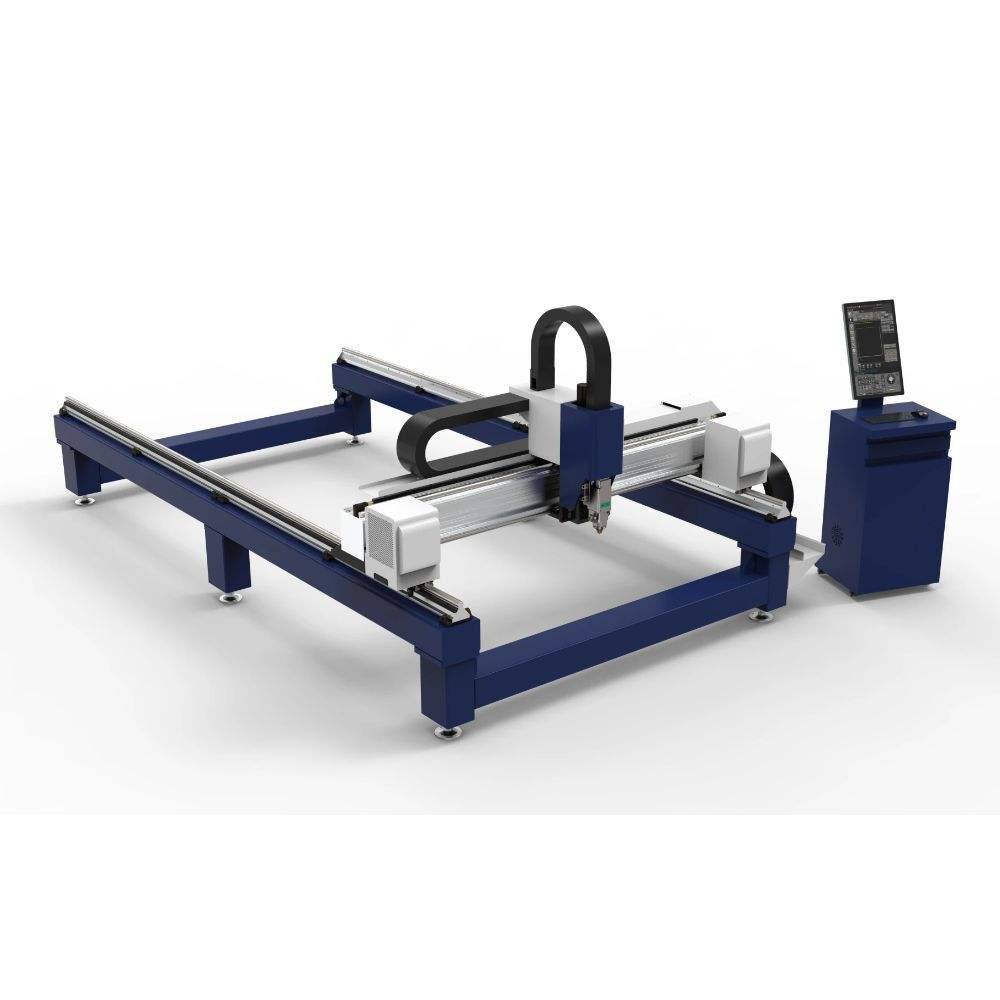
Challenges in Processing Aluminum Alloys
While fiber technology is superior for aluminum, the material’s inherent properties still present challenges that require engineering-grade solutions. Aluminum has high thermal conductivity and a low melting point compared to carbon steel. This means that heat dissipates rapidly from the cut zone into the surrounding material, which can lead to a wider heat-affected zone (HAZ) or dross formation if the cutting parameters are not optimized.
In Puebla’s manufacturing environment, where precision is dictated by international standards (ISO/TS 16949), controlling the laser cutting parameters is vital. The 2kW power level requires a high-pressure assist gas—typically Nitrogen—to expel the molten aluminum from the kerf before it can solidify or oxidize. Nitrogen provides a “clean cut” by preventing the formation of aluminum oxide on the edge, which is crucial if the parts are destined for subsequent welding or coating processes.
Optimizing Parameters for the Puebla Industrial Sector
Puebla’s altitude (approximately 2,135 meters above sea level) results in lower atmospheric pressure and different humidity levels compared to coastal manufacturing sites. While the laser beam itself is not significantly affected by altitude, the cooling systems and the behavior of assist gases can vary. A 2kW fiber laser cutting machine must be equipped with a robust chiller system capable of maintaining a stable temperature for both the laser source and the cutting head, especially during the warm afternoons common in the Valsequillo region.
For 5000 and 6000 series aluminum alloys—the most common types used in Puebla’s automotive supply chain—the following technical considerations apply:
Assist Gas Selection and Pressure
For a 2kW system, Nitrogen is the preferred assist gas for aluminum. It must be delivered at high pressures (often between 12 and 18 bar) to ensure a burr-free finish. Using Oxygen is possible for thicker plates to utilize the exothermic reaction, but it results in a heavily oxidized edge that usually requires secondary cleaning. In the competitive Puebla market, reducing secondary operations is key to maintaining a low cost-per-part.
Nozzle Geometry and Stand-off Distance
The choice of nozzle is critical. For 2kW laser cutting of aluminum, a double nozzle or a specialized “high-flow” nozzle is often recommended. The stand-off distance—the gap between the nozzle tip and the workpiece—should be kept tight (typically 0.5mm to 1.0mm) to ensure the kinetic energy of the gas jet is maximized within the kerf. This prevents the “re-welding” of dross to the bottom of the sheet, a common issue when cutting 6061-T6 alloys.

Focus Position Management
Unlike cutting carbon steel, where the focus is often at or above the surface, laser cutting aluminum with a 2kW source usually requires a “negative” focus. This means the focal point of the beam is positioned inside the material or near the bottom of the sheet. This creates a wider kerf at the exit point, allowing the high-pressure Nitrogen to blow out the melt more effectively. For a 3mm aluminum sheet, a focus position of -2.0mm to -3.0mm is a common starting point for optimization.
Integration into Puebla’s Automotive Supply Chain
The presence of major OEMs like Volkswagen de México and Audi México in the Puebla-Tlaxcala valley has created a massive demand for Tier 2 and Tier 3 suppliers capable of high-precision aluminum fabrication. Aluminum is increasingly used in vehicle light-weighting strategies to improve fuel efficiency and meet emissions standards. A 2kW fiber laser cutting machine allows local shops to produce intricate components such as battery housings for electric vehicles (EVs), specialized brackets, and interior structural reinforcements.
Furthermore, the flexibility of the 2kW fiber laser allows for rapid prototyping. In the automotive industry, design iterations are frequent. The ability to move from a CAD drawing to a finished aluminum part in minutes—without the need for expensive hard tooling or dies—gives Puebla’s fabricators a significant advantage in the “Just-In-Time” (JIT) manufacturing environment.
Maintenance and Optical Integrity
To ensure the longevity of a 2kW fiber laser cutting machine in an industrial setting, maintenance protocols must be rigorous. The most sensitive components are the protective windows and the focusing lenses within the cutting head. When cutting aluminum, “back-reflection” can occur if the beam is not properly absorbed. While modern fiber lasers are equipped with back-reflection isolators that protect the laser source, the optics in the head remain vulnerable to “spatter”—tiny droplets of molten aluminum that can fly upward during the piercing process.
Engineers in Puebla should implement a daily inspection routine for the cover glass. Even a microscopic speck of dust or aluminum dross on the lens can absorb the 2kW of energy, leading to thermal lensing (where the focus shifts during the cut) or catastrophic failure of the optic. Using high-purity assist gases and maintaining a clean-room environment for head maintenance is standard practice for high-output facilities.
Economic Impact and ROI for Local Manufacturers
Investing in a 2kW fiber laser cutting machine is a strategic move for SMEs in Puebla. Compared to higher power levels (6kW or 12kW), the 2kW system has a lower initial purchase price and significantly lower power consumption. For materials under 6mm, the speed difference between a 2kW and a 4kW machine is often negligible when factoring in the total cycle time including loading and unloading.
The return on investment (ROI) is driven by the machine’s reliability and the reduction in scrap. Fiber lasers have no moving parts in the light-generation source and no mirrors to align, which translates to higher uptime. In a region like Puebla, where technical labor is skilled but competitive, the ease of operation of modern CNC laser systems allows companies to scale production without the steep learning curve associated with older CO2 technology.
Conclusion
The 2kW fiber laser cutting machine has become an indispensable tool for the aluminum fabrication industry in Puebla. By mastering the interplay between laser frequency, gas dynamics, and material science, local manufacturers can produce world-class components that meet the exacting standards of the global automotive and aerospace sectors. As the industry moves toward further electrification and light-weighting, the role of precision laser cutting in processing aluminum alloys will only continue to grow, solidifying Puebla’s position as a leader in advanced manufacturing.
For those looking to implement this technology, the focus must remain on technical training, rigorous maintenance, and the optimization of parameters specific to the unique alloys and environmental conditions of the Mexican highlands. With the right approach, a 2kW fiber laser is not just a piece of equipment, but a gateway to higher productivity and technical excellence.