
The Strategic Role of 2kW Fiber laser cutting in Mexico City’s Industrial Sector
Mexico City (CDMX) and its surrounding metropolitan area, including industrial hubs like Naucalpan, Tlalnepantla, and the Vallejo district, represent the heart of Mexico’s manufacturing prowess. As the automotive, aerospace, and electronics sectors continue to expand under the influence of nearshoring, the demand for high-precision fabrication has skyrocketed. Central to this technological shift is the 2kW fiber laser cutting machine, a tool that has become the industry standard for processing non-ferrous metals, particularly aluminum alloys. In an environment characterized by high competition and rigorous quality standards, understanding the technical nuances of 2kW fiber laser technology is essential for local manufacturers aiming to optimize their production lines.
The 2kW power rating is often considered the “sweet spot” for medium-scale fabrication. It offers a perfect balance between capital investment and operational capability. While lower power units may struggle with the thermal conductivity of aluminum and higher power units may be overkill for thin-to-medium sheets, the 2kW system provides the necessary energy density to overcome the reflective nature of aluminum alloys while maintaining high feed rates and exceptional edge quality.

Technical Fundamentals of Fiber Laser Cutting for Aluminum
Laser cutting aluminum alloys presents a unique set of challenges compared to carbon steel. Aluminum is highly reflective and possesses high thermal conductivity. In the early days of CO2 lasers, these properties often led to “back-reflection,” which could damage the resonator. However, fiber laser technology, operating at a wavelength of approximately 1.07 microns, is much more readily absorbed by aluminum. This allows the 2kW beam to penetrate the material efficiently, creating a stable melt pool.
Aluminum alloys commonly used in the Mexican market, such as the 5000 series (marine grade) and 6000 series (architectural and structural), respond differently to the laser. The 6061-T6 alloy, ubiquitous in the automotive clusters surrounding Mexico City, requires precise parameter tuning to avoid dross accumulation on the bottom edge. A 2kW fiber laser cutting machine utilizes a high-quality beam (low BPP) to focus the energy into a microscopic spot, ensuring that the heat-affected zone (HAZ) is minimized, which preserves the structural integrity of the alloy.
Optimizing Parameters for Aluminum Alloy Fabrication
To achieve a burr-free finish on aluminum, engineers in Mexico City must calibrate their 2kW systems with specific focus on gas dynamics and nozzle selection. Unlike steel, which often uses oxygen as an exothermic fuel, aluminum is typically cut using nitrogen as an assist gas. The nitrogen acts as a shielding agent, preventing the formation of aluminum oxide on the cut edge. This results in a “clean cut” that is immediately ready for welding or painting, a critical requirement for Tier 1 and Tier 2 automotive suppliers.
The pressure of the nitrogen gas is paramount. At 2kW, cutting a 3mm aluminum sheet requires high-pressure nitrogen (often exceeding 15 bar) to effectively eject the molten material from the kerf. If the pressure is too low, the high thermal conductivity of the aluminum will cause the melt to solidify before it is cleared, leading to “heavy dross.” Conversely, if the speed is too high for the 2kW threshold, the laser will fail to penetrate, causing a reflection alarm. Finding the equilibrium between feed rate (mm/min) and gas pressure is the hallmark of a skilled laser operator.
The Impact of Mexico City’s Altitude on Laser Cutting Performance
One often overlooked factor in laser cutting is the geographic location of the facility. Mexico City sits at an elevation of approximately 2,240 meters (7,350 feet) above sea level. This high altitude results in lower atmospheric pressure and lower air density. For a 2kW fiber laser cutting machine, this environmental factor influences the cooling systems and the behavior of the assist gases.
Lower air density can affect the efficiency of air-cooled chillers, which are vital for maintaining the temperature of the fiber source and the cutting head. Engineers must ensure that the chilling units are rated for high-altitude operation to prevent overheating during long production shifts. Furthermore, the behavior of the gas jet as it exits the nozzle can vary slightly due to the lower ambient pressure, sometimes requiring a slight increase in assist gas flow to achieve the same kinetic energy as a sea-level operation. Local distributors in CDMX often provide specialized “high-altitude kits” or specific parameter tables adjusted for the local atmosphere.
Material Thickness and Speed Benchmarks for 2kW Systems
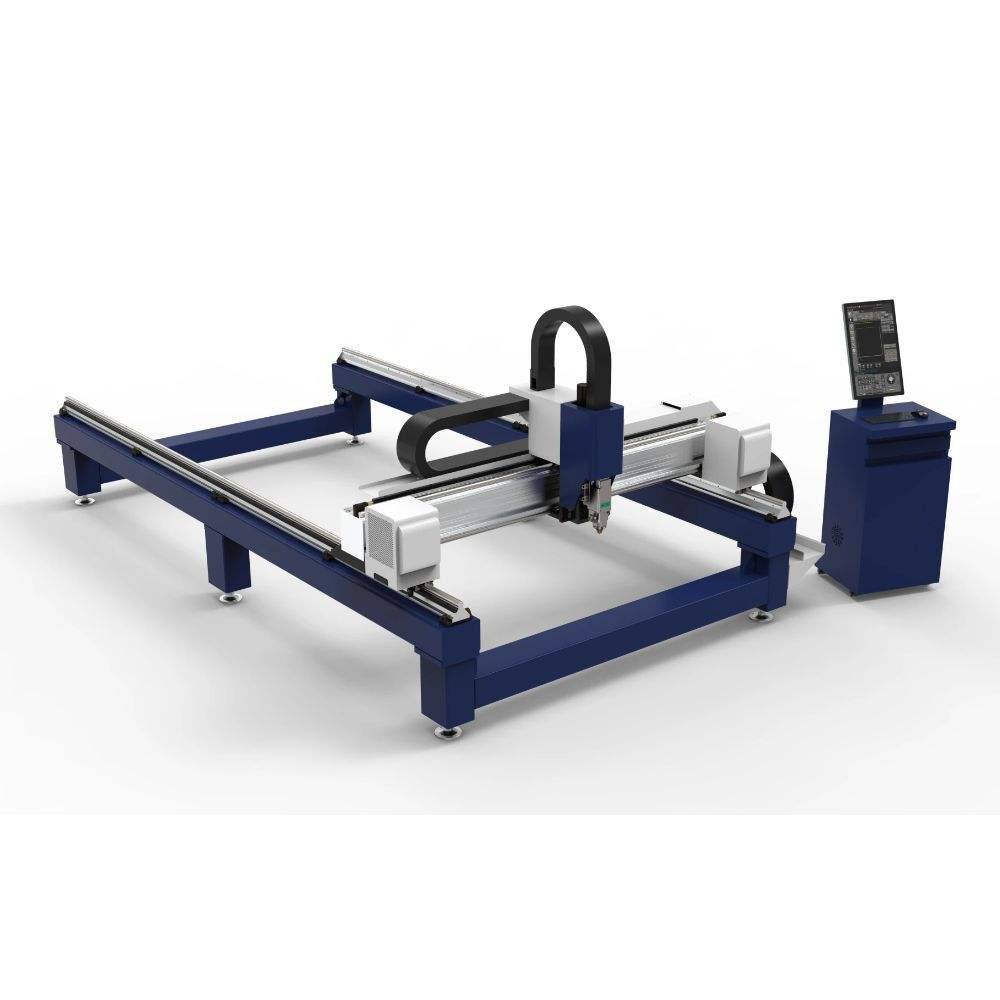
For a 2kW fiber laser cutting machine, the practical thickness limit for aluminum alloy is generally around 8mm, though 6mm is the threshold for high-quality, high-speed production. In the context of Mexico City’s diverse manufacturing base—ranging from custom signage to specialized electronic enclosures—the 2kW system offers the following approximate benchmarks:
- 1mm Aluminum: Cutting speeds can exceed 25-30 meters per minute, providing incredible throughput for light-gauge components.
- 3mm Aluminum: A standard thickness for many structural brackets; 2kW systems can maintain a clean cut at roughly 6-8 meters per minute.
- 6mm Aluminum: This approaches the limit where edge roughness may increase. Speeds typically drop to 1.5-2 meters per minute, requiring precise focal point adjustment (usually slightly negative) to maintain a smooth finish.
These speeds allow Mexican workshops to remain competitive against international imports, as the local turnaround time for custom aluminum parts is significantly reduced compared to traditional mechanical punching or milling.
Maintenance and Longevity in the Mexican Industrial Environment
The industrial zones of Mexico City can be harsh environments for sensitive electronic equipment. Dust, fluctuations in the power grid, and humidity can all impact the lifespan of a fiber laser. To protect a 2kW investment, a rigorous maintenance schedule is non-negotiable. The optical path must be kept pristine; even a microscopic dust particle on the protective window can absorb laser energy, heat up, and shatter the lens, leading to costly downtime.
Given the occasional instability of the electrical grid in some industrial sectors of the State of Mexico (Edomex), the use of a high-quality industrial voltage stabilizer and a dedicated grounding system is mandatory. Fiber lasers are sensitive to voltage spikes. Furthermore, because aluminum cutting produces a very fine, potentially explosive dust (aluminum powder), the dust extraction and filtration system must be robust and regularly cleaned to comply with local environmental and safety regulations (NOM standards).
Economic Advantages for Local Workshops
The transition to 2kW fiber laser cutting represents a significant economic leap for Mexican SMEs (PyMEs). Compared to CO2 lasers, fiber lasers consume roughly 70% less electricity, a vital consideration given the rising energy costs in the industrial sector. Additionally, the lack of mirrors and bellows in the beam delivery system reduces maintenance costs by nearly 50%.
In Mexico City, where floor space in established industrial zones can be expensive, the compact footprint of a 2kW fiber laser allows for higher production density. The ability to switch rapidly between different aluminum alloys and thicknesses without changing the internal optics (thanks to automated focusing heads) allows shops to take on high-mix, low-volume orders that were previously unprofitable. This agility is what allows local manufacturers to integrate seamlessly into global supply chains, providing “just-in-time” delivery to the automotive plants in Puebla, Toluca, and Queretaro.
Conclusion: The Future of Fabrication in CDMX
The 2kW fiber laser cutting machine is more than just a tool; it is a catalyst for industrial modernization in Mexico City. By mastering the processing of aluminum alloys—materials that are increasingly favored for their weight-to-strength ratio and recyclability—local fabricators are positioning themselves at the forefront of the green manufacturing revolution. Whether it is for producing lightweight components for electric vehicles or precision parts for the growing domestic aerospace industry, the 2kW fiber laser provides the precision, speed, and reliability required to compete on a global stage.
As technology continues to evolve, the integration of AI-driven nesting software and remote monitoring will further enhance the capabilities of these machines. For the engineers and business owners in the heart of Mexico, investing in 2kW fiber laser cutting technology is a strategic move toward a more efficient, profitable, and technologically advanced future. The combination of local expertise and world-class hardware ensures that “Hecho en México” remains a mark of quality in the international marketplace.
















